Featured
Rock Steady - Marcus Paine of Hutton Stone
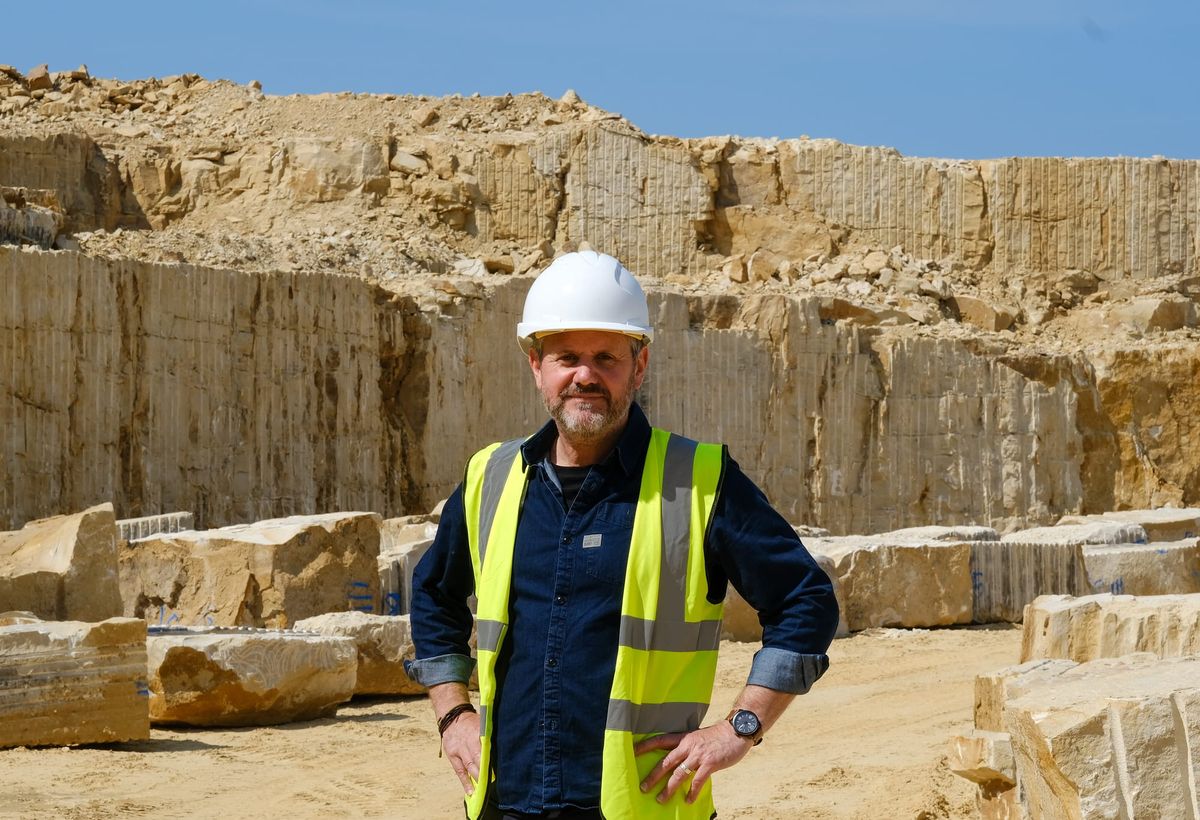
Marcus Paine knows a thing or two about stone. A fifth generation quarrier, Marcus’s family worked in limestones around County Durham before migrating south where his father and grandfather worked in the Purbeck limestone of Dorset’s Jurassic Coast. Marcus launched Hutton Stone in the Scottish Borders over thirty years ago and was initially the company’s only employee, helped by his father. Hutton Stone is now established with a team of 45 skilled staff working over three quarries and two factories supplying stone nationwide.
Marcus is an articulate advocate for the use of stone in architecture and a founding member of The Stone Collective, a group of stonemasons, stone restoration specialists and quarry owners seeking to educate on the use of stone as a low-carbon, structural material. Recent years have seen a marked increase in interest with a new generation of enlightened architects keen to visit Marcus at the quarry in order to expand their knowledge of working with stone.
Stone from the hundreds of quarries of Northumberland built much of the surrounding area including the cities of Edinburgh and Glasgow. Darney sandstone has had an illustrious history. Marcus notes, “Northumberland is synonymous with fine vertical masonry with the Darney sandstone quarry contributing to most of the significant buildings in Edinburgh built between 1890 and 1939. The last one was St Andrew's house, headquarters of the Scottish Parliament, which was finished the day war broke out in 1939.”
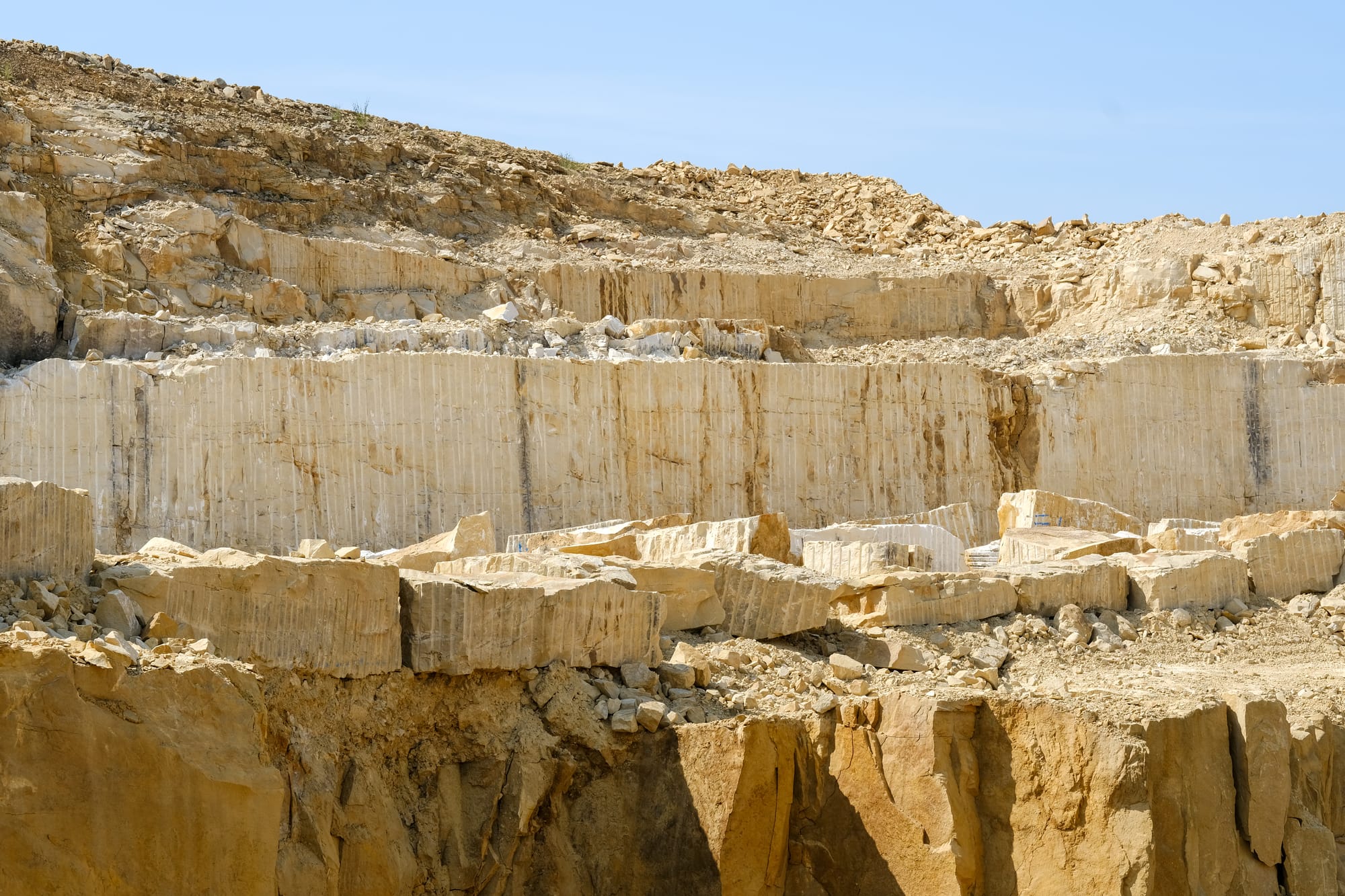
Darney Quarry and the wider stone industry were to face a series of decisions that changed the built environment’s relationship with stone. Marcus explains, “in 1895 you have the first steel framed structure in Liverpool, the Royal Insurance Building. It was clad in stone which fundamentally changed how all of these quarries were used at that point. Then in 1919 we embraced the cavity wall so we moved away from any structural construction and went to a 100mm thick wall gap with oil-based substrates and an internal wall or a timber frame. Suddenly only the clean stone is wanted because the stone is hung on to a steel frame, wanted for its beauty as opposed to its ability to be a building.”
The decades that followed the war marked the decline of stone used structurally in the UK. Whereas France embraced its quarries to rebuild post-war housing, Marcus says, “we spent most of the 40s, 50s and onwards, rebuilding with bricks, breezeblocks, concrete and steel.” The subsequent loss of knowledge regarding stone specification and the ability to embrace all of the stone that emerges from the quarry is a huge omission. Marcus notes, “post-war we've systematically forgotten everything that we knew and we have a construction and consultant industry that has a vested interest in not changing”.
This status-quo is being challenged with an increasing realisation of the importance of material knowledge in the specification process. Marcus is welcoming a growing number of architects to the quarry. He believes furthering the understanding of how stone works and using the full range of stone in the quarry is vital for the future of the material. Marcus describes sitting down with the architects who are, he says “embracing the excitement of letting the material be what it is - and benefiting from all the cost and carbon savings they will get from those choices.”
Seeing the quarry is the first step to understanding the connection between the geology and the natural uses of the material. The quarry wall divides roughly into three horizontal sections with the top third consisting of stone highly fractured by millions of years of freeze-thaw where moisture has come in. Historically, this stone would have been used for gable ends and backs of buildings, or lesser buildings for mass construction. From 1919 this stone began to be discarded.
The middle section of the quarry wall consists of massive block, natural in appearance with a variation of colour range. This material lends itself to mass produced stone: split face walling cropped by a guillotine at 65mm, 140mm or 215mm high. The lower area of the quarry wall is home to the cleaner massive stone used for bespoke work. The concentrated use of just this part of the quarry at the expense of the rest has led to stone being more costly than necessary.
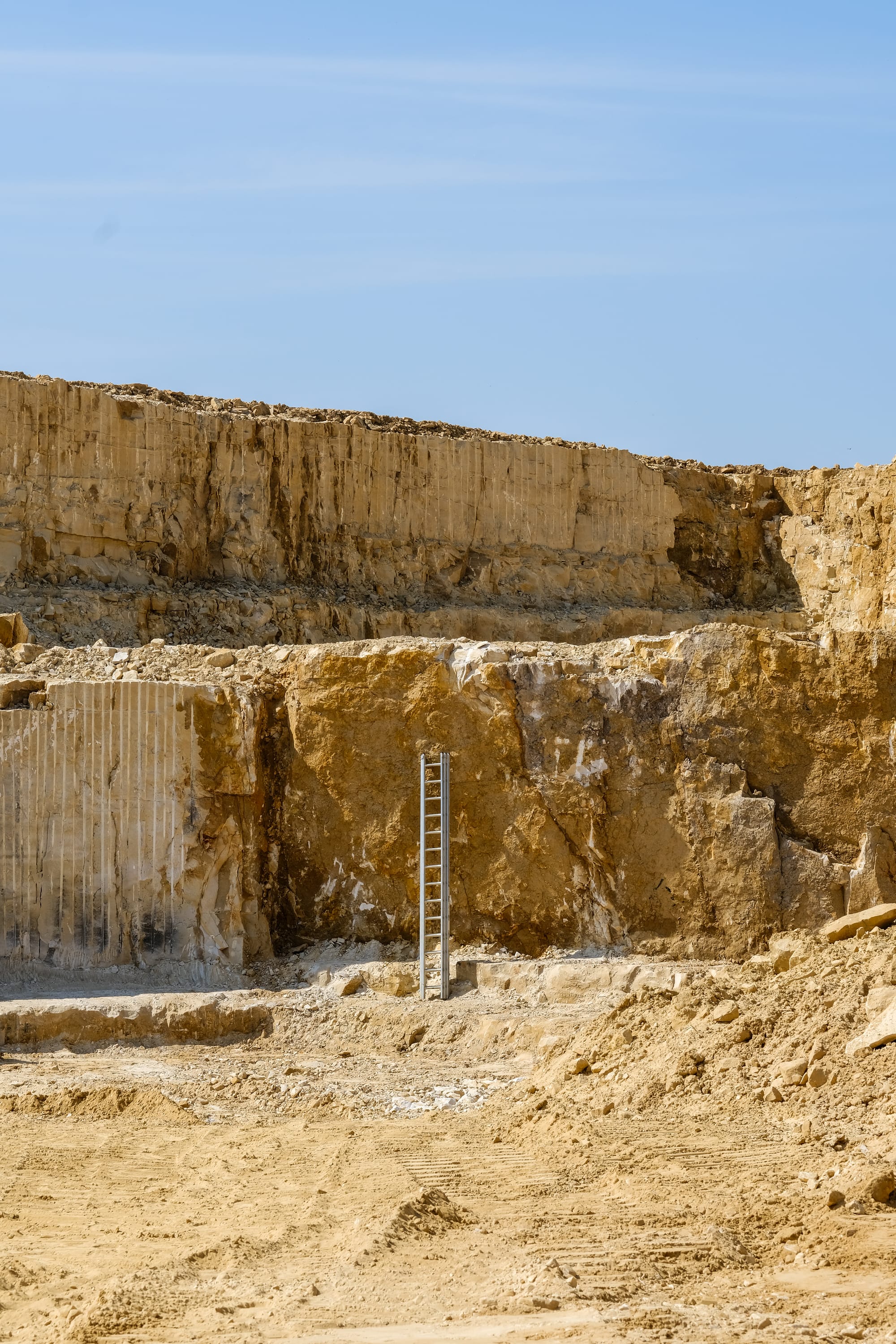
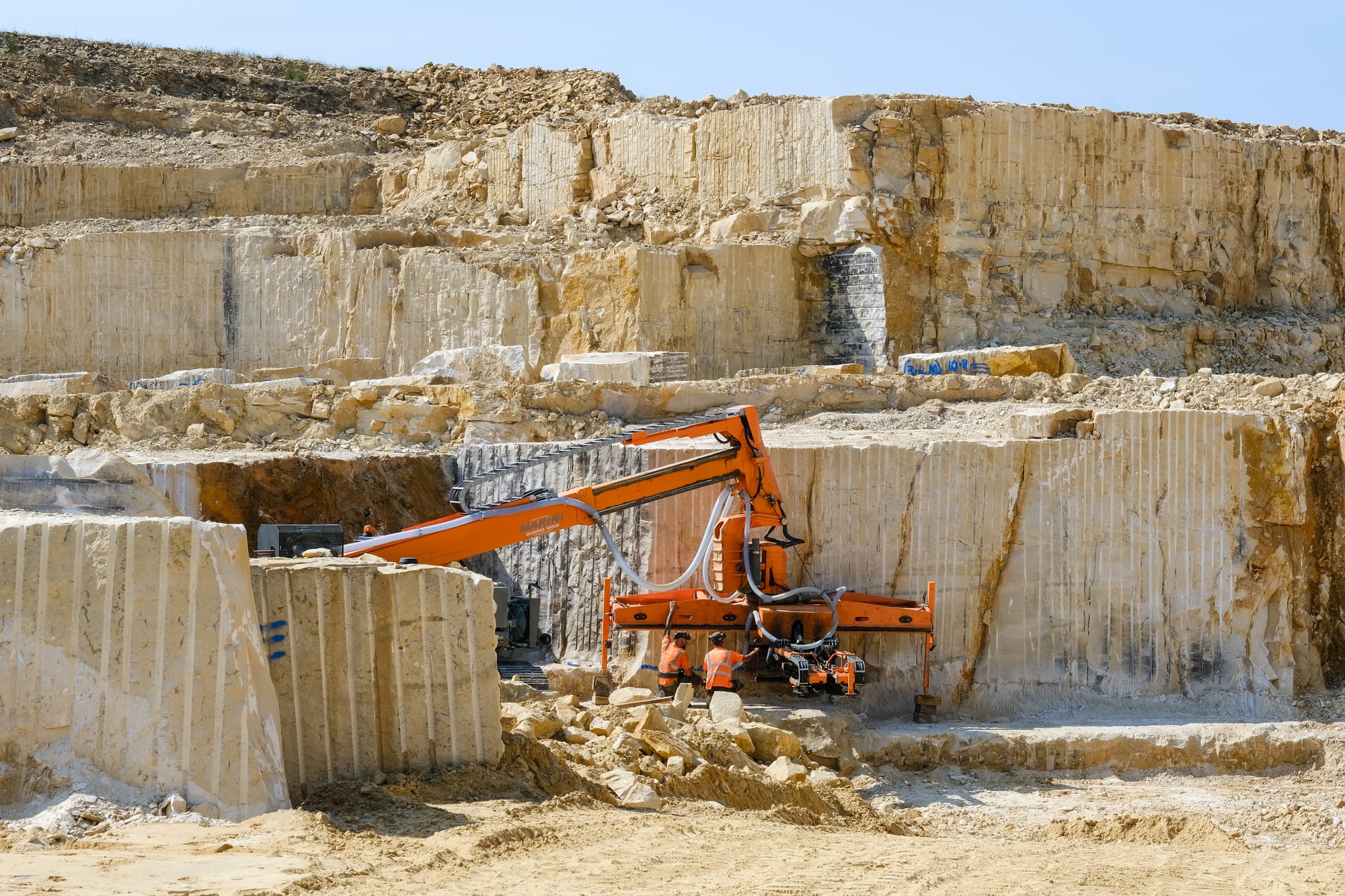
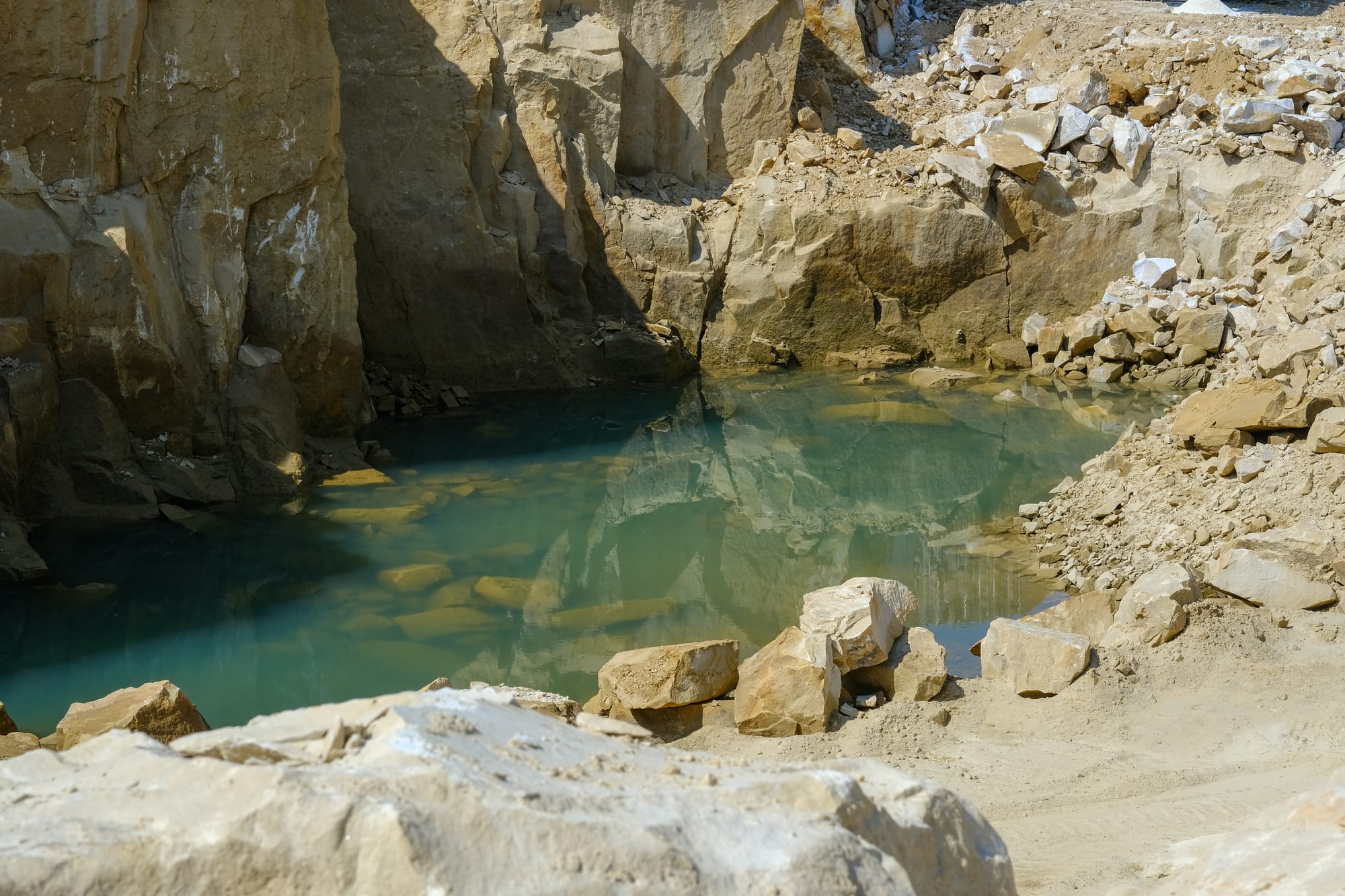
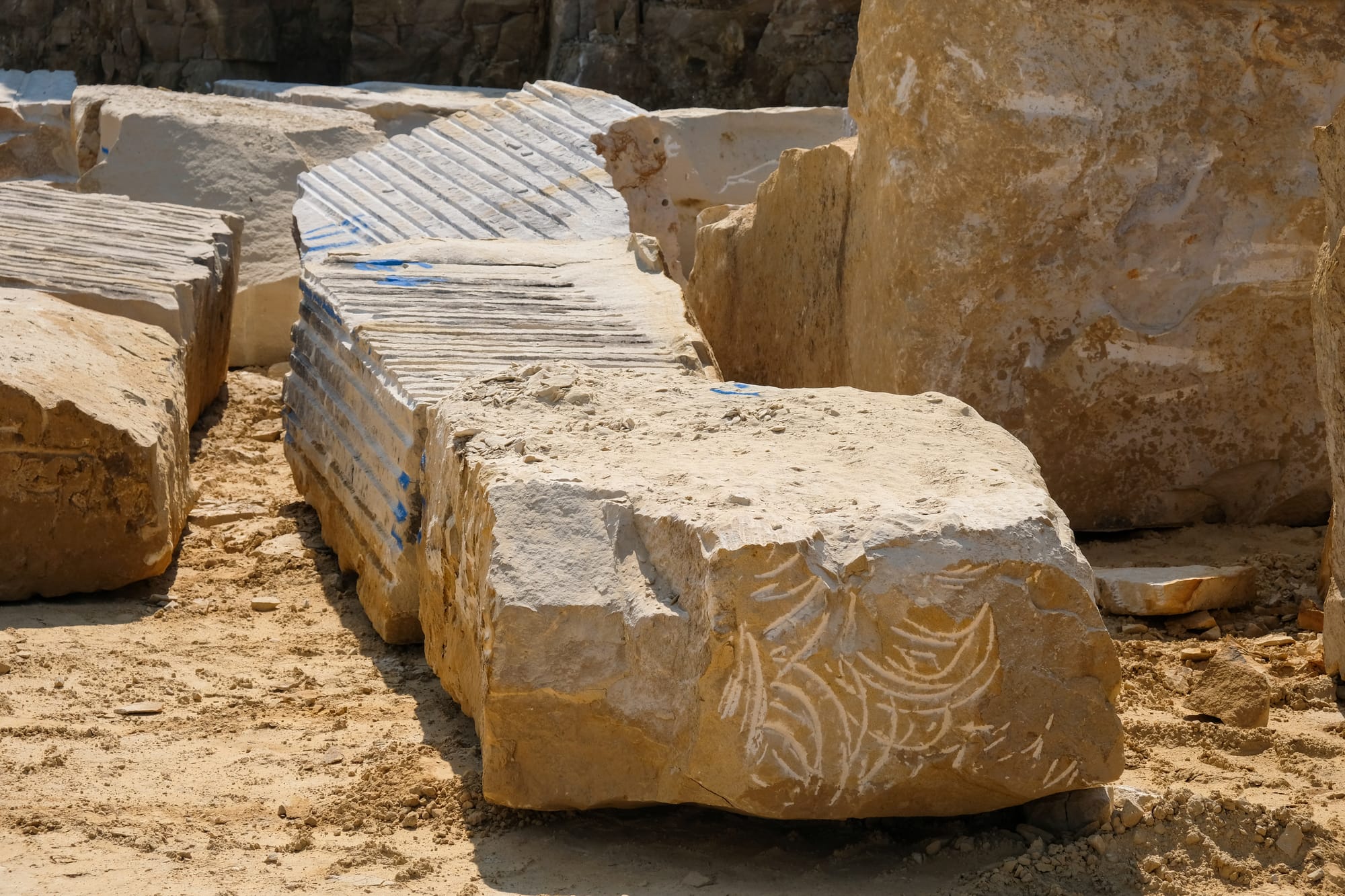
Stones at Darney Quarry
Marcus is pragmatic about the role that the UK stone industry must play in ensuring a future for the material that has shaped his family history. He has a deep knowledge and understanding of the history of stone use and has invested in the technology and machinery to ensure all of the stone is used well - a culinary nose-to-tail equivalent where everything is valued and nothing is wasted.
The investment in automation, buying European machinery developed post-war, means that Hutton Stone are now quarrying differently. This European approach produces a shaped block that sits on the saws better, needing less cutting and creating a better outcome. The new machinery compliments the skills of the quarriers who, as Marcus says, learn to read “the shape of things, to move with the material. You’re always trying to read where the joints are.” This respect for the geology is evident in the restoration of the land when quarrying is finished with strict planning permissions and phasing ensuring the land is carefully restored with an aftercare programme of up to 10 years.
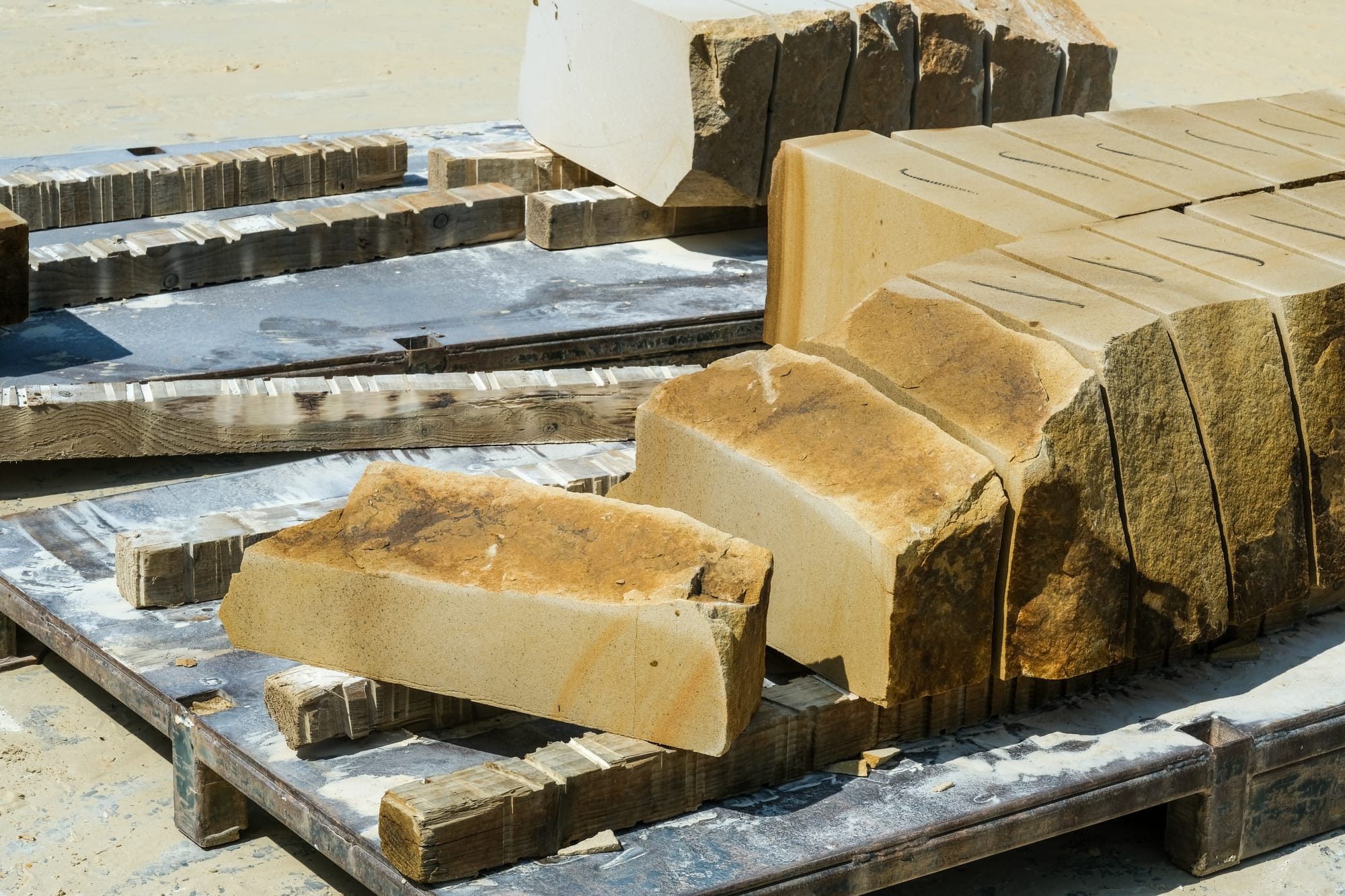
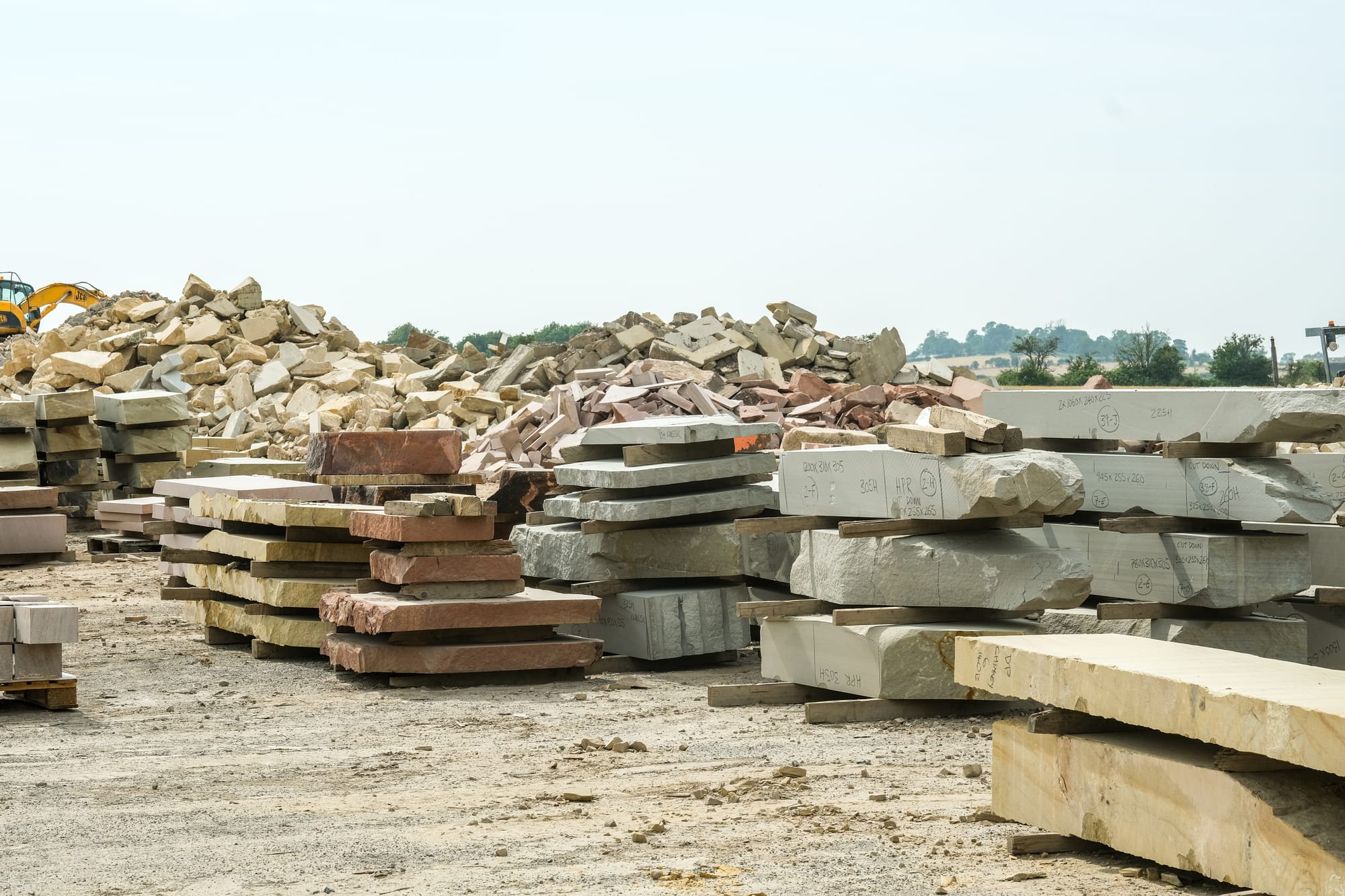
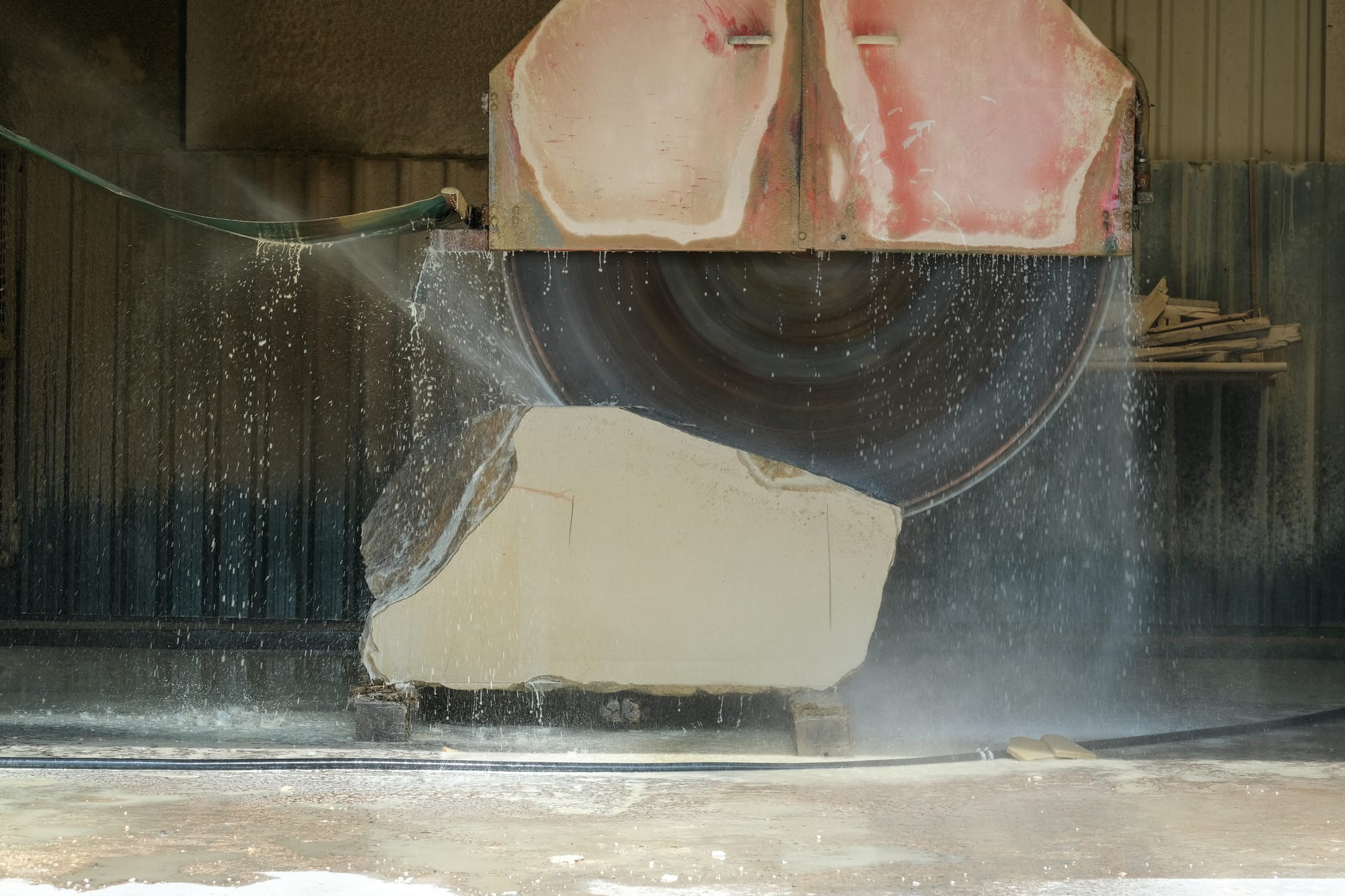
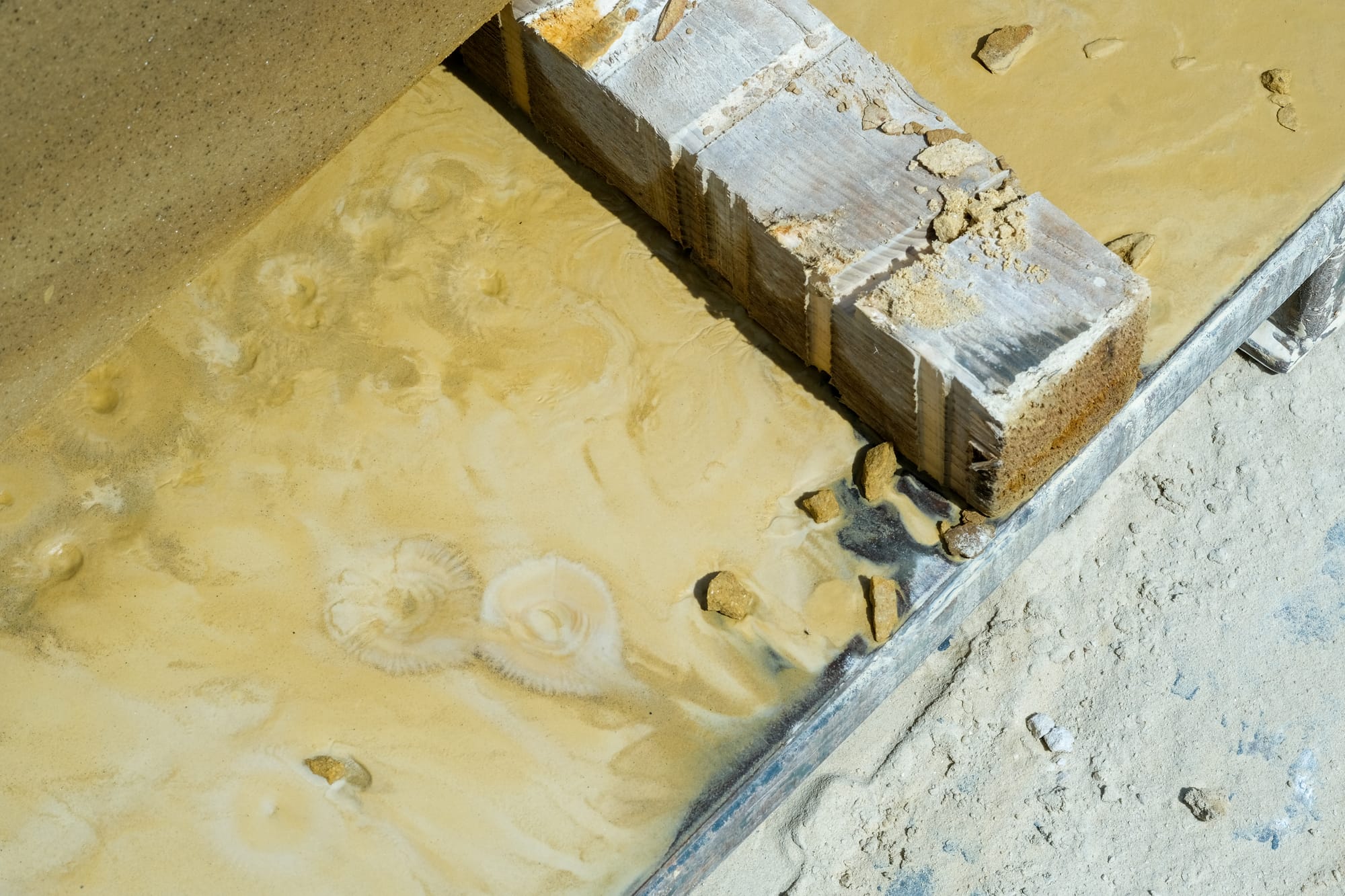
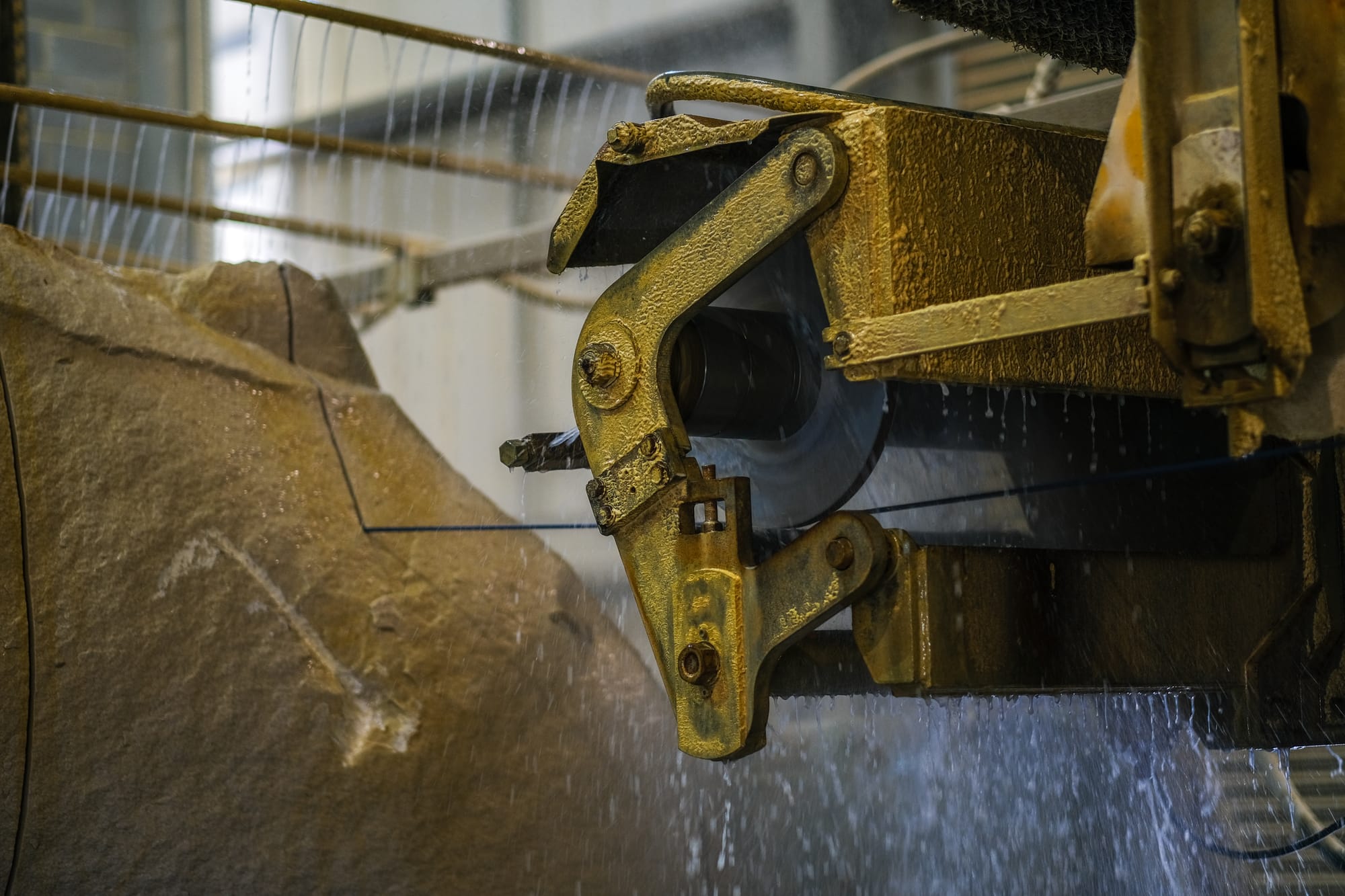
Stones and machinery at Darney Quarry
Stone was never meant to be used as purely decorative material. Marcus describes the connection between ease of specification and the decline in using stone to its full potential; “when you think about 1850s Edinburgh, all of those ashlar sizes were stock catalogue sizes. The fact that bay windows were set sizes was not an accident; that was stock mass production.” Stone bricks now produced on-site are the quarries way of reconnecting stone to standardisation, Marcus explains, “the fact that we make a brick now is our first attempt at reimaging the mass production of something that the geology lends its to and gives cost benefit.” He is cognisant of the current reality that the carbon benefit of stone is not driving the conversation alone - price plays a huge part in specification.
Marcus believes the off-the-shelf cost equivalent stone brick not only provides a significant reduction in embodied carbon but will allow perceptions to change regarding the utilitarian capabilities of natural stone. A series of projects have brought stone bricks to the attention of designers. The 2025 Arch Revival designed by architects Hawkins\Brown with engineers Webb Yates for Clerkenwell Design Week was constructed using Hutton Stone’s Darney Heritage Stone Bricks with Albion Stone’s Heritage Portland Stone Bricks. Both bricks featured in the previous years installation Brick from a Stone by architecture studio Artefact. The bricks can currently be seen at Earls Court Development forming the facade of the Future Observatory’s Stone Demonstrator designed by Groupwork, Webb Yates and the Stonemasonry Company.
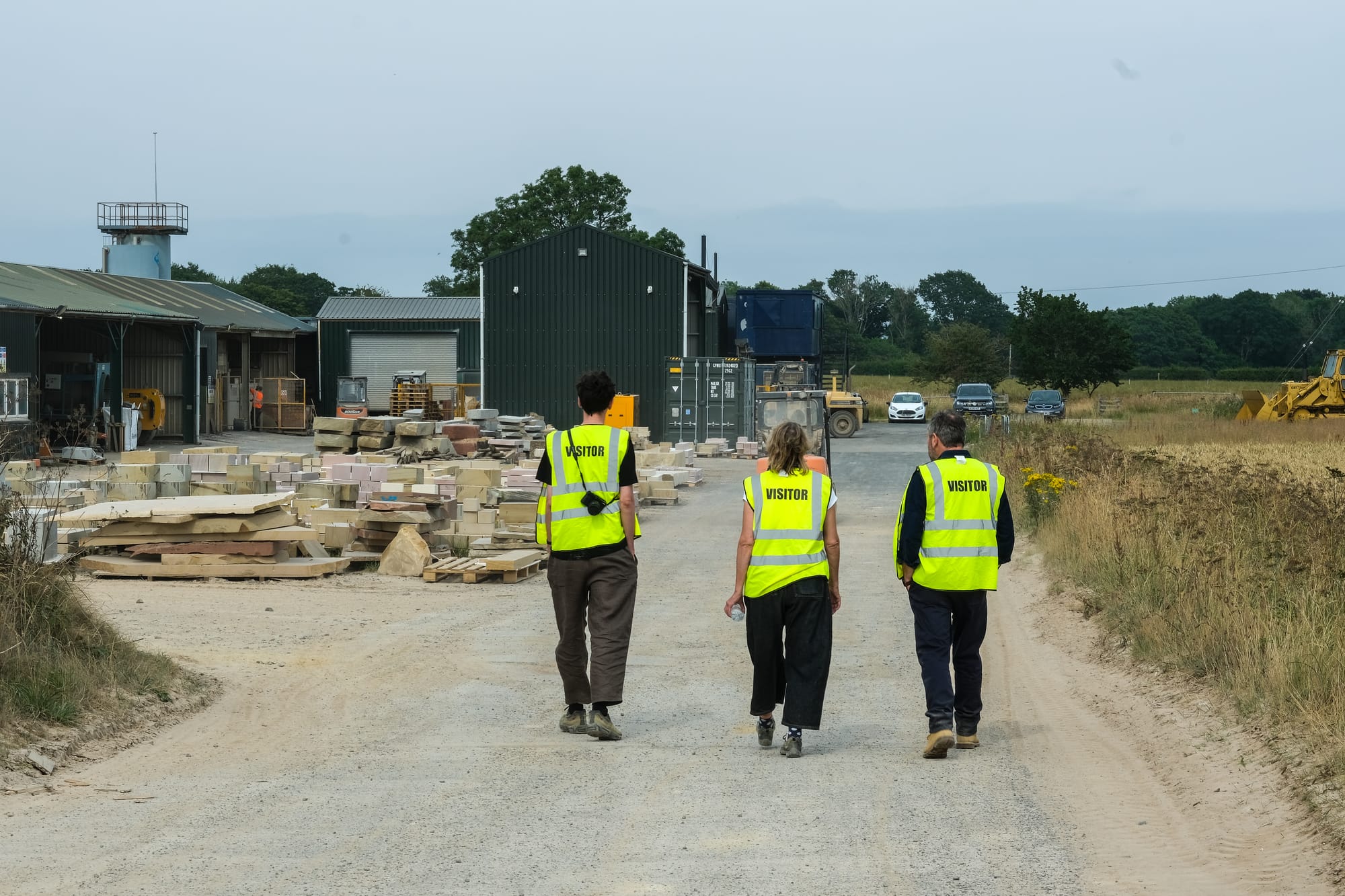
Hutton Stone’s Masonry Yard is 60 miles north of the quarry in Berwick Upon Tweed. The Stoneyard produces bespoke masonry and fine carving created by skilled masons who mix age-old skills with modern technology to cut and dress stone. Here too, architects are visiting to better understand the nature and possibilities of stone use, from weathering, to variations in cutting, dressing and decorative finishes. Marcus encourages conversation early in the creative journey when designs can be simplified by decisions better suited to this indigenous natural material.
Marcus is optimistic about the future of stone. The heavy carbon cost of construction is now more widely understood. Marcus says; “if we understand that there is a climate crisis we must embrace the idea that there are outcomes to our choices or actions. We need to stop saying we care but acting like we don’t.”
The next generation of Marcus’s family, his son Josh, is working with his father like Marcus did before. With an increasing appreciation of the role of stone in building a more responsible future, the hard work and passion so visible at Hutton Stone is playing a pivotal role in this transformation.
Marcus Paine is Managing Director of Hutton Stone, Past President of the Stone Federation and 2025 - 2027 Euroroc President