Block Party - Constructing change with U-Build
First developed in 2016 by award-winning architects Studio Bark, U-Build’s modular self-build system is quietly revolutionising the construction industry, transforming the way we think about building.
U-Build operates across residential, commercial and community spaces with the mission to simplify the construction process, empowering anyone to participate, learn and enjoy the process of making and using sustainably sourced, reliable and recyclable materials.
ARCHITEXTURES Editor-at-Large Vanessa Norwood sat down with U-Build Founding Director, Nick Newman to speak about the circular economy approach to design that applies a ‘leave no trace’ principle to their projects.
Vanessa: Can you describe how U-Build came into being?
Nick: Studio Bark’s always had a passion and interest in timber construction. Some of the founders studied at the University of East London who run Construction Week where students get involved with real projects with real clients, to make things and incorporate the understanding of materials into their architectural thinking and language. We ran some of the construction weeks with UEL, so we became the tutors in a nice cycle of changing the guard. When we started Studio Bark, we very much wanted to carry that on.
Vanessa: You featured on Channel 4’s Grand Designs: The Street in 2019, when you built the Box House. The two-bedroom timber framed home was constructed by the couple with Studio Bark and a team of architecture students. How did that come about?
Nick: We were approached by Grand Designs to be on the shortlist of potential architects for a new series called The Street, which was based around Graven Hill in Oxfordshire, a very interesting self-build community which was taking advantage of the new self-build act where the local authority could create a development vehicle and allocate plots to self-builders rather than just giving it all out to a big house builder.
The idea that we put forward was developed in-house but was effectively a bit of a spin on the client's brief. They originally wanted to build a modular house out of shipping containers. And we said to them that's an oxymoron in that you can't really self-build with shipping containers; you're going to need cranes, welding, all the sort of skills that they didn't have, and it was too big in scale for them. The modularity seemed to be the key thing so we called it Box House, but we just made the boxes a different size, human scale. Our idea was to try and come up with a modular build that they could physically handle themselves.
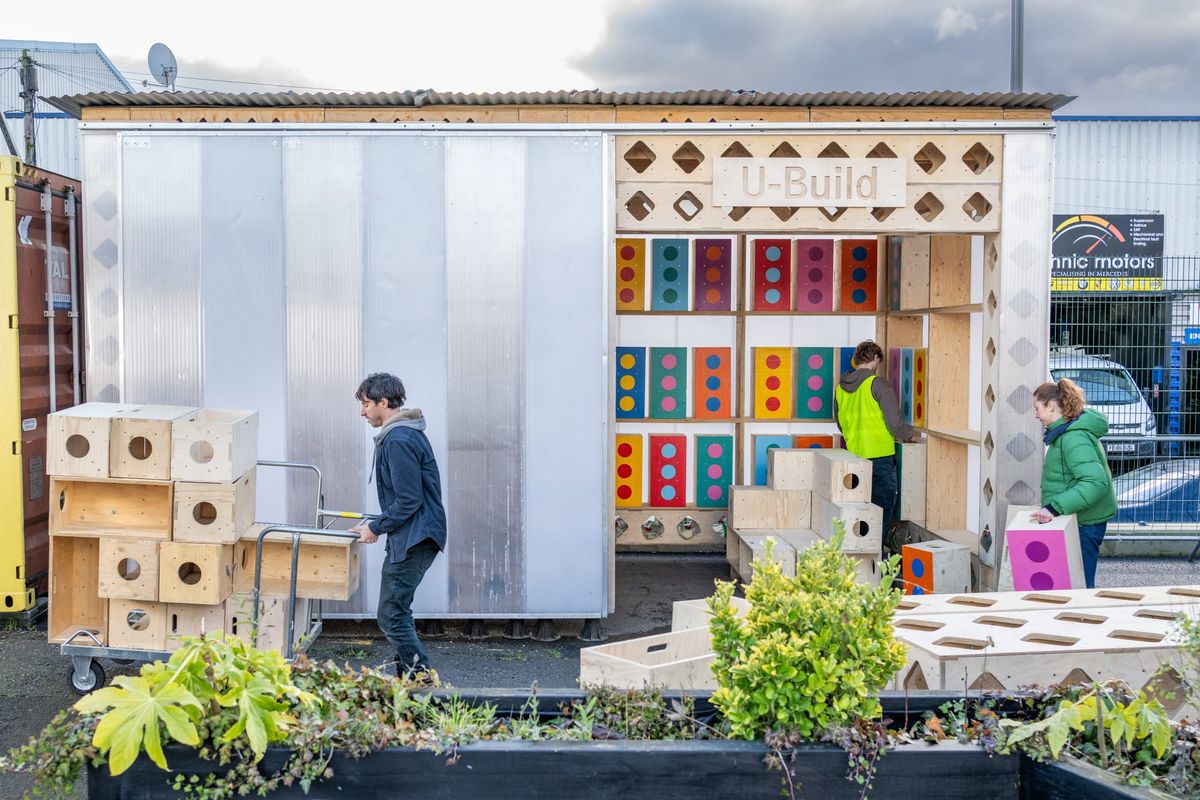
A unit was designed for a self-builder looking at children's building blocks as inspiration and saying, couldn't we use this with some modern methods of construction? One of our founders knew someone who ran a CNC workshop, and we looked at what we'd been doing traditionally and said, couldn't we just do this in a more automated way? And through doing it in a repeatable manner, make it very simple for someone to put together without needing to use a saw. Obviously, there was a period of prototyping with the structural engineer, Structure Workshop, who we still work with, and they put a lot of work in. And U-Build was launched at that point.
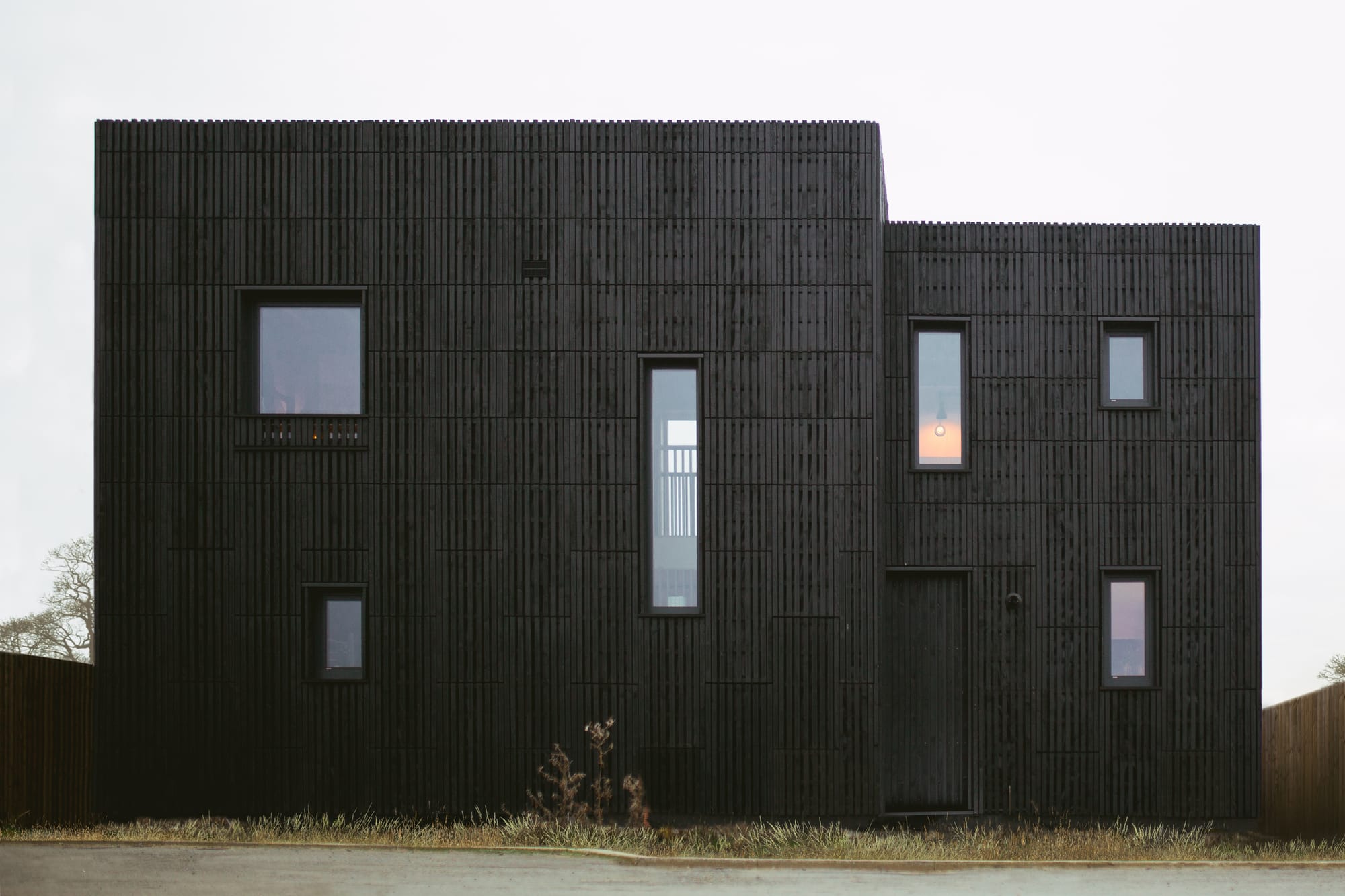
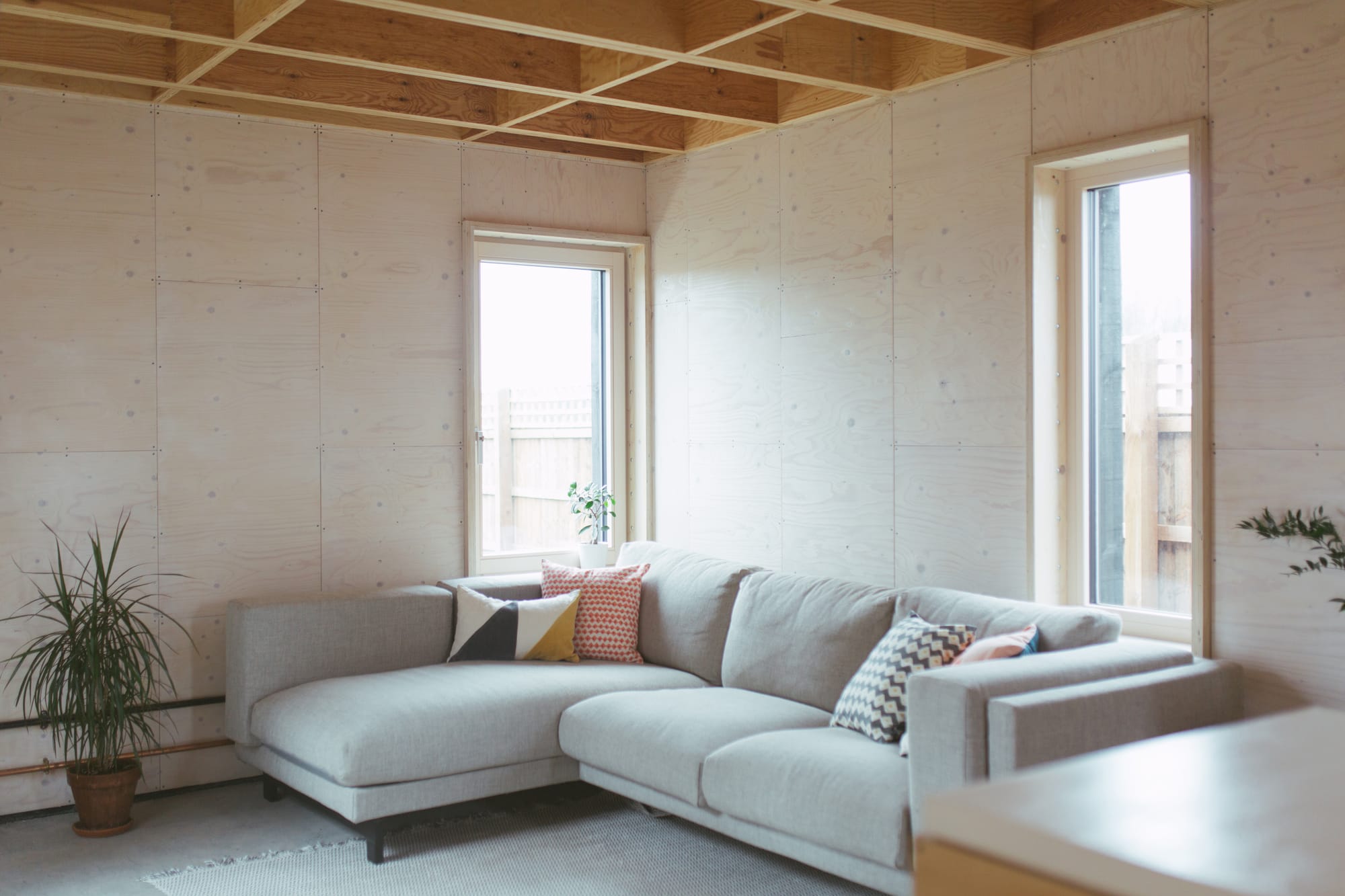
U-Build Box House, images credits: Lenny Codd
Vanessa: When you were doing the prototyping, were there other examples you looked at, like Walter Segal? You talk about a kit, but also children's playing blocks. What other precedents did you look at when you were prototyping?
Nick: Yeah, sure. For a start, there's the fact that there's this newish technology, the Fab Labs and CNC machines and digital manufacturing. When I was growing up, I wasn't really aware of it. The nearest that we had in architecture school was using laser cutters. We were all familiar with the idea of drawing something out and sending it to print. Suddenly you cut out a whole section of the process and architecture can go directly from design to fabrication, which is a huge leap.
We were inspired by people like Walter Segal and his build methods. Again, we wanted to bring that into the 21st century. What would Walter Segal do if he was around now? Maybe something completely different, but we very much focused on the self-build aspect and trying to make it simple and accessible for people.
We were also aware of the idea of distributed digital manufacturing. WikiHouse was around already at the time, and we thought what they were doing was cool. But the early WikiHouses were very much like creating skeletal portal frames and then fitting sheets against them. We thought, wouldn't it be interesting to apply distributed manufacturing approach to building blocks. No doubt we’ve also been inspired by traditional timber framing as well as childhood toys like Lego and Meccano. We were bringing all these things together and thinking that maybe there isn't something that's quite like this.
Vanessa: That's really interesting. Did you play with that stuff as a kid?
Nick: Absolutely. My Lego is one of the most sacred childhood objects that I still own. It's also very interesting how they've pivoted into the digital space; they've almost gone the other way, where you've now got all these online Lego platforms, Lego Minecraft, and so on. They're very much bridging this technical divide in a similar manner to the construction industry.
Vanessa: Sustainability and the need to do things differently are embedded in your practice, can you say a little more about your collaboration with Extinction Rebellion?
Nick: In 2019, a lot of climate protests were happening, and Extinction Rebellion came onto the scene. Having cared a lot about sustainability, we were very interested in their approach. We'd been running for six years by then, trying to make incremental, responsible changes to improve our environmental performance. Yet we were being told by bodies such as the IPCC we only had 9 or 10 years to turn things around as a society before facing a huge emergency. We saw a big disconnect between our slow, steady progress as a practice and the abrupt change society needed to make in a short space of time. We were inspired by this design-led, colourful new organisation that was proposing radical improvements to how we operate, saying, "let's just fix it."
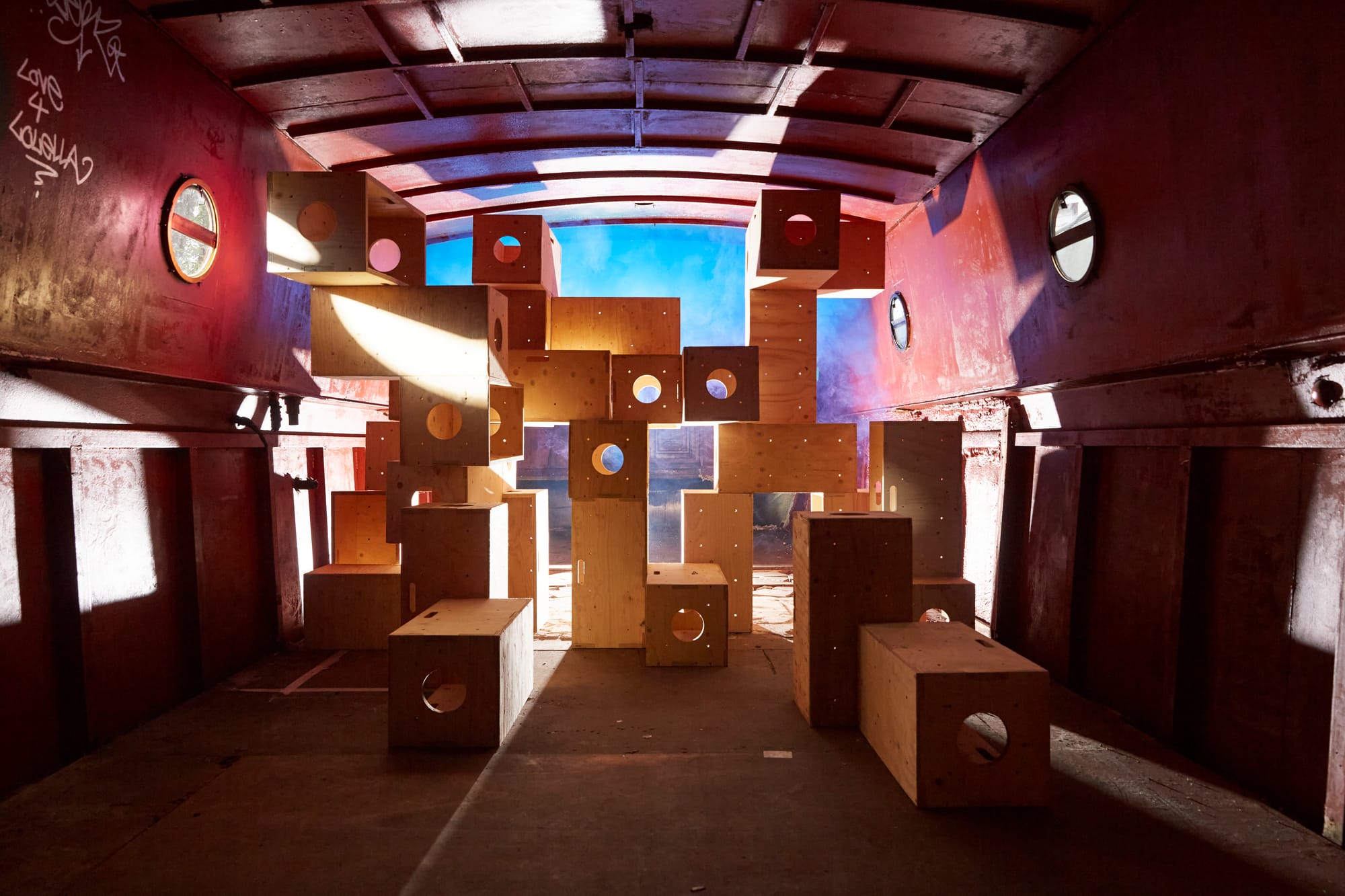
They were occupying landscapes of protest, and we saw a potential place for U-Build in that. After making contact with people there, a plan for a crowdfunded modular structure was put together. 600 boxes were crowdfunded, built by volunteers, and assembled for their October 2019 rebellion. Witnessing what could be achieved at a community scale made us realise this is what U-Build should be, so we decided to launch it as a not-for-profit to support this way of working.
Vanessa: When I look at your website and Instagram, people are clearly an important part of everything U-Build does. There are really joyful pictures of community and school groups.
Nick: I think we saw an opportunity for people to take ownership of space using modular build systems - encouraging them to build as they did as children but are usually restricted from doing in the real world. If you want to build something normally, you either don't have the skills, the permission, or the resources. We're saying, "here's some big wooden building blocks, go and build something in the street." That playful interaction with space is what we were seeking, and it's a theme we've tried to carry forward.
We didn't know where it was going to go initially. We did a ‘teach out’ at the University of East London during a teacher strike, where students used donated boxes to build a small outdoor lecture theatre for guest speakers. There were also street protests for Black Lives Matter where stages were built as DJ platforms, and separate events with community and school groups using the boxes to teach children basic drill skills.
We formally set U-Build up in December 2019, but all the projects we had anticipated got swept away by the start of COVID. The flipside was that people started working from home; some had some disposable income and time, and many needed a workspace that wasn't their kitchen table. We ended up doing a lot of kits for garden rooms.
Vanessa: What I really like about Studio Bark and U-Build is that it's about democracy, community, and letting people get hands-on.
Nick: Well, I guess it kind of had roots in civic action, community spirit, and community power. But another strand of it is that we’re really big believers in letting other people work with your ideas. We've got our specialisms and we understand how to make the boxes work, but we don't have all the ideas. What's really lovely is when someone else comes to us, sees an idea, and says, "I think I could use that for this." It allows us to become less of an overseer and more of a facilitator or an enabler.
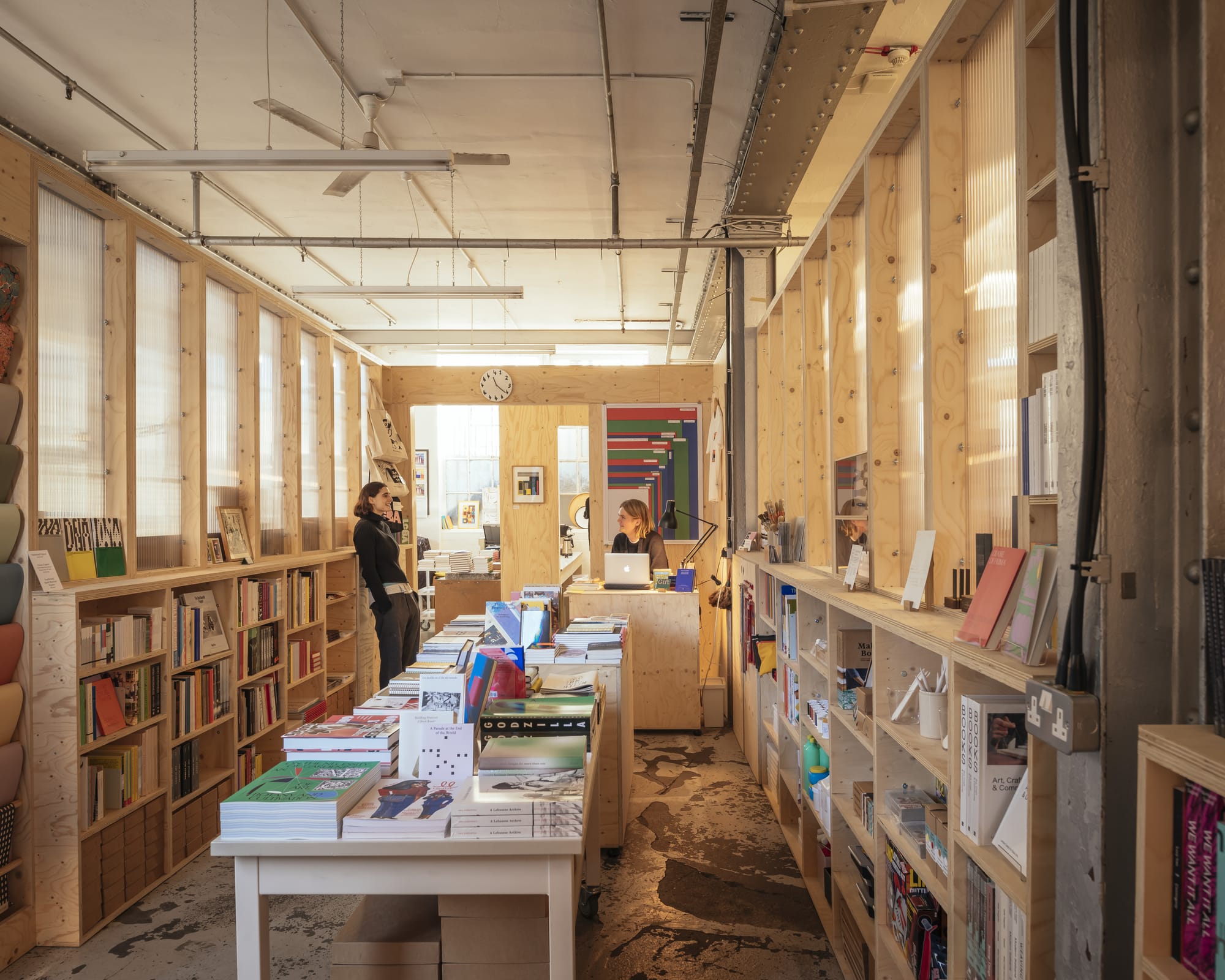
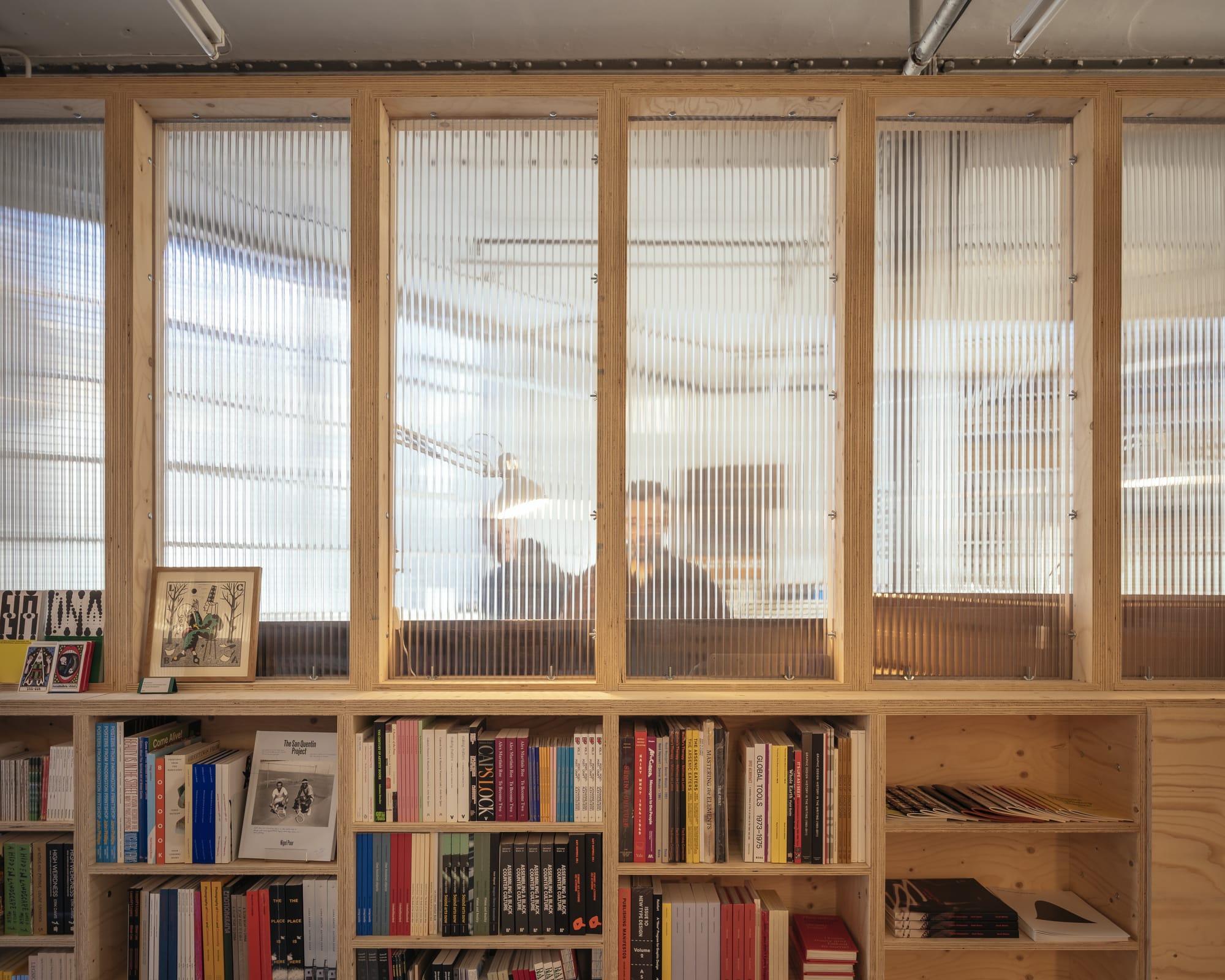
London Centre for Book Arts, images credits: Jim Stephenson
Vanessa: And is that quite exciting? The result is ideas that you probably wouldn't have thought of.
Nick: Absolutely, the results can be brilliant. For example, someone said, "I want to do a circular window," and we thought, "Oh, but you know, we make square things - for efficiency." So obviously we had to find a way of doing it that worked with our CNC manufacturing. It's slightly less efficient for that one panel, but only a very minor inefficiency for such a beautiful transformation, so we said, "Okay, that works." I joke about how with Lego parts, if you're being a purist, you only have your 2x4 blocks. But eventually, the designers decide, "we probably need a windscreen part to make a model car," and so you start getting this much looser modular system. So, in a similar way, we try to keep everything on standard grids for reusability's sake, and then we have a few flourishes.
Vanessa: Brilliant. Talking about your reusability then, you've got a block library.
Nick: Yeah. What we realised is that these boxes are being used by community groups, sometimes only for a day, sometimes for a week or a couple of months for an exhibition. The flip side of the creativity of all these lovely exhibitions we see around us is that they are built with very good intentions, but they are often not easily recycled. You don't always have a physical plan for exactly where the material is going to go. Having more recent recovery facilities open up like Tipping Point East is brilliant because now there is a holding place, so these items don’t just go straight to the trash.
But we were saying, "Let's take ownership of the whole structure." We’ll make your exhibition out of our standard components, and we guarantee that they're going to be used again. We wanted to formalise that into a library model so people can have easy access to it, rather than them being limited by the potential costs. If you're an organisation that can afford to pay for an installation, you pay what you can and that helps make it free at the point of use for community groups who can't afford it.
For now, we've got about 500 or 600 boxes stored in a former U-Build building, funnily enough, on site at our workshop facility in North London. Bloqs rent out factory space by the day or by the hour, enabling small businesses like ours to have direct access to the latest machines, CNC cutting, forklifts, and material processing. We have storage space there, we use their CNC machines, and they've also let us occupy an area of ground for the box library.
Vanessa: Are there any projects that you think epitomise the U-Build ethos.
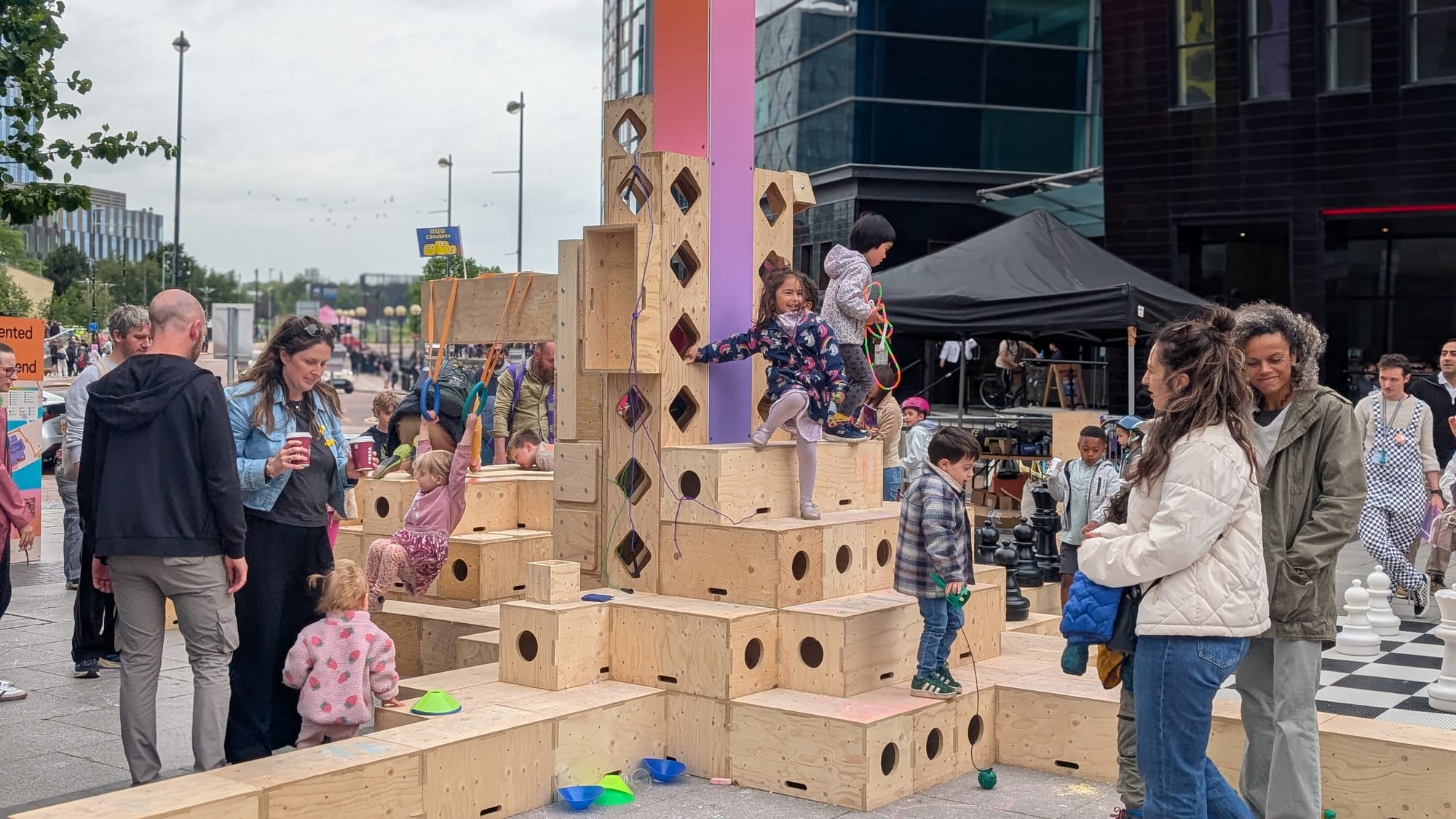
Nick: Recently, I think our collaboration with Hemingway Design has been a really wonderful version of this. They work at a scale where they do a lot of place-making events, working with local authorities and community groups that we might not necessarily have inroads to on our own. They were working with the cities of Manchester and Salford for a festival called ‘We Invented the Weekend’, recognising how factory culture and industrialisation had formalised the weekend. We took the boxes there and we built a giant play street. We had a skate zone and a play tower; they worked with Play England, and BBC Education came. There were skipping ropes and people doing hopscotch, and ours was the climbing frame in the middle of it. For me, that's the nearest that we've got to those free-flow, protest-style structures in the street where the community was engaging in curated chaos.
We worked with architecture students from the University of Salford to come up with what the general structure should be. Given that some of the people engaging in the workshop were going to be three years old, we wanted to have some kind of prebuilt element to it. On the day, the other half of the boxes were loose and could be moved around and built into whatever it was that the public fancied, with us facilitating.
Vanessa: That's so brilliant.
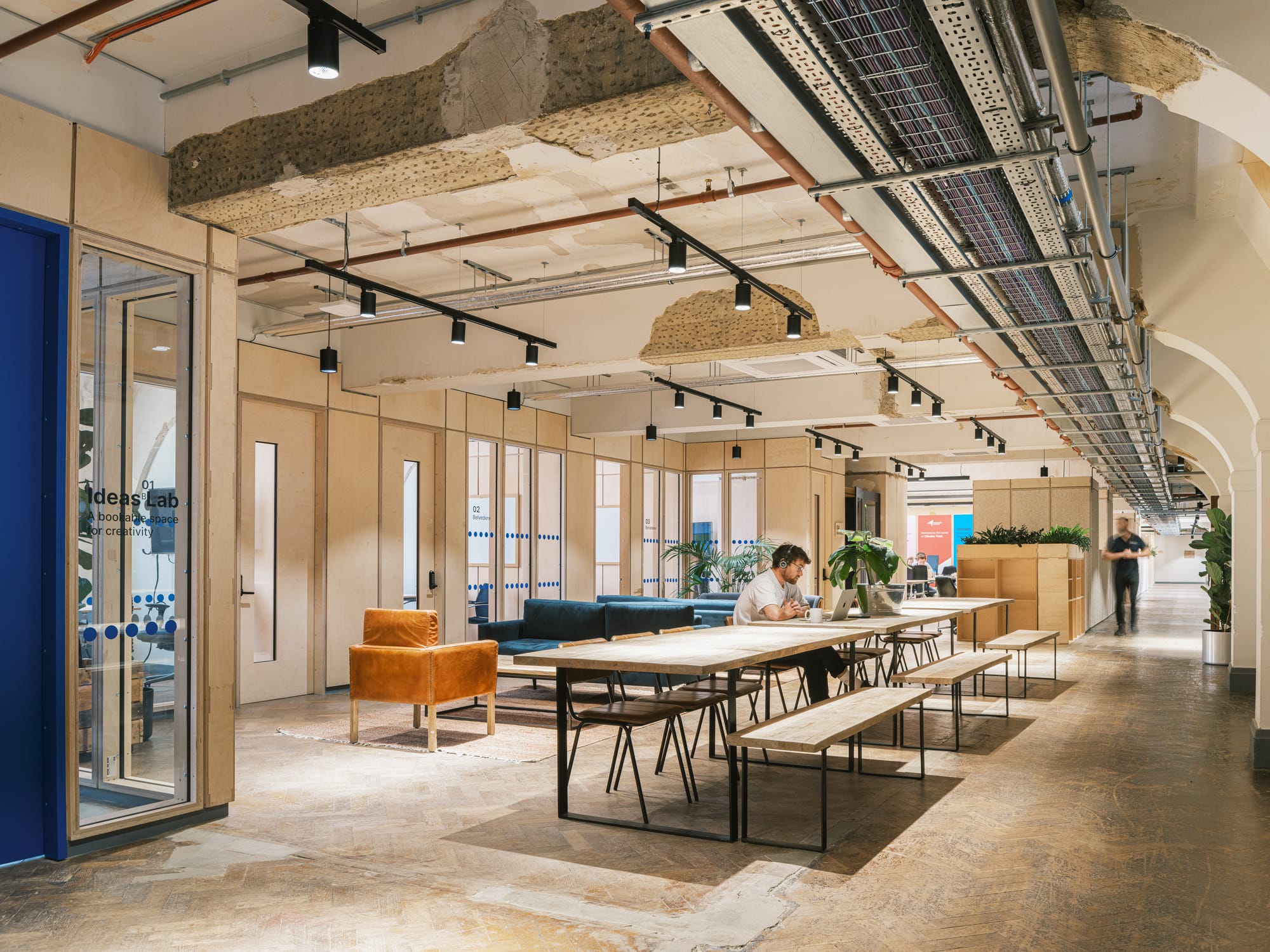
Nick: So yes, that's an example of one end of it. The other end, which I think is interesting and relevant, is spaces like the one we're in at the moment: commercial retrofit. We have a huge turnover of old buildings being repurposed for new meeting spaces, or people not wanting big open floor plans and splitting them down into small studios for business purposes, like for our retrofit for workplace provider Sustainable Ventures. These sort of fitouts are typically done with plasterboard, metal, and silicon; single-use materials that are hugely wasteful and high embodied energy, with the waste built into the cost as an externality.
We think we can do better than that. So, what we have been developing is a system, again in a circular manner, where people think of their building elements as they think of furniture pieces, knowing there is a second-hand market for it. Now, we are that market, taking pieces back and finding new homes for them. We've also worked with companies like Sustainable Ventures on their own phasing strategies for buildings. They'll be occupying one building, taking those same components down, and moving them onto another floor - thinking about them like material passports and stores of material value. We're trying to action that. There’s the community on one end and businesses on the other, but it's the exact same process.
Vanessa: Talking of materials, on the website you're very clear about the other materials you use, like insulation. Do you have a trusted network of material suppliers that you use, applying the same sustainability criteria to those?
Nick: For the structural elements that we make ourselves, we need something that's been graded, tested, and can perform in shear strength and deflection. Plywood has been our go-to. We use Wisa-Spruce from UPM for much of our core structure. They seem to be the right mix of lightweight, good aesthetics, and sustainability credentials. Off the back of that, we now have an EPD (Environmental Product Declaration), so we know how much embodied carbon is involved in the manufacture of our components. That's the heart of it.
Beyond that, the material choice is open to flexibility. We’ve used a hemp-based board, which relies on a crop cycle rather than a tree. We're always trying to look for the next thing. So, in some ways we're material-agnostic or supplier-agnostic, provided it meets the performance requirements and we can machine it. For example, for the insulation, we use sheep's wool or hemp fibre, but we've experimented with others like recycled clothing and different kinds of waste. There are people that we come back to again and again, but everything is ultimately designed around the efficiencies of the standardised plywood panel.
Vanessa: Are there other applications you'd like to see for the U-Build method?
Nick: Post covid we noticed a push towards the tiny house movement, and we have built some tiny houses and some cabins. There was a big “let's go out into the countryside, be free, and build on trailers" trend. I love all of that, and I feel like maybe in the UK that hasn't been explored enough; mobile architecture that can be assembled and disassembled more quickly is very interesting.
I also see potential if the same approach was increased in scale - like pop-up factories and timber-based equivalents of big steel beams, essentially demountable timber. We have actually made a prototype CNC workshop, which is in the Hackney Bath House now. It's a pop-up factory in the car park with a CNC machine in it that can make more parts. The idea is that one of these could be deployed, whether it's for disaster relief or for a new self-build community, to form the hub of that community and enable people to build and maintain their own structures.
Vanessa: Your approach to retrofitting and reusing elements where you can take the building with you is really interesting.
Nick: I’m sure most of us know the statistic that by 2050, 80% of all buildings that will exist are already here now. Being able to reuse the spaces that we already have more cleverly - whether through temporary occupation, phased usage, or reutilising materials more sustainably - that's very much where we sit.
We ultimately end up operating on the fringes of traditional architecture. Whilst we can do new builds, we're mainly constructing extensions, garden rooms, cabins, fit-outs, furniture, community pop-ups, and events. What we are trying to do is provide people with another language and another way of thinking about their space - even if it's just to prototype something that might then be built out in another way. Using U-Build is like sketching in three dimensions, and we hope our approach can help to change how people interact with the built environment.