New ways of working: WorkStack by dRMM
There are very few architects that have such a long-lasting and productive relationship with one material. Alex de Rijke and his practice dRMM have extolled the virtues of working with wood since their formation in 1995. The relationship is one that benefits us all, and the practice’s work articulated in this humble material has put timber at the centre of the discussion around building both sustainably and beautifully. WorkStack, completed in 2024 and already winning awards, is an admirable example of how dRMM push the boundaries of what is possible with timber construction.
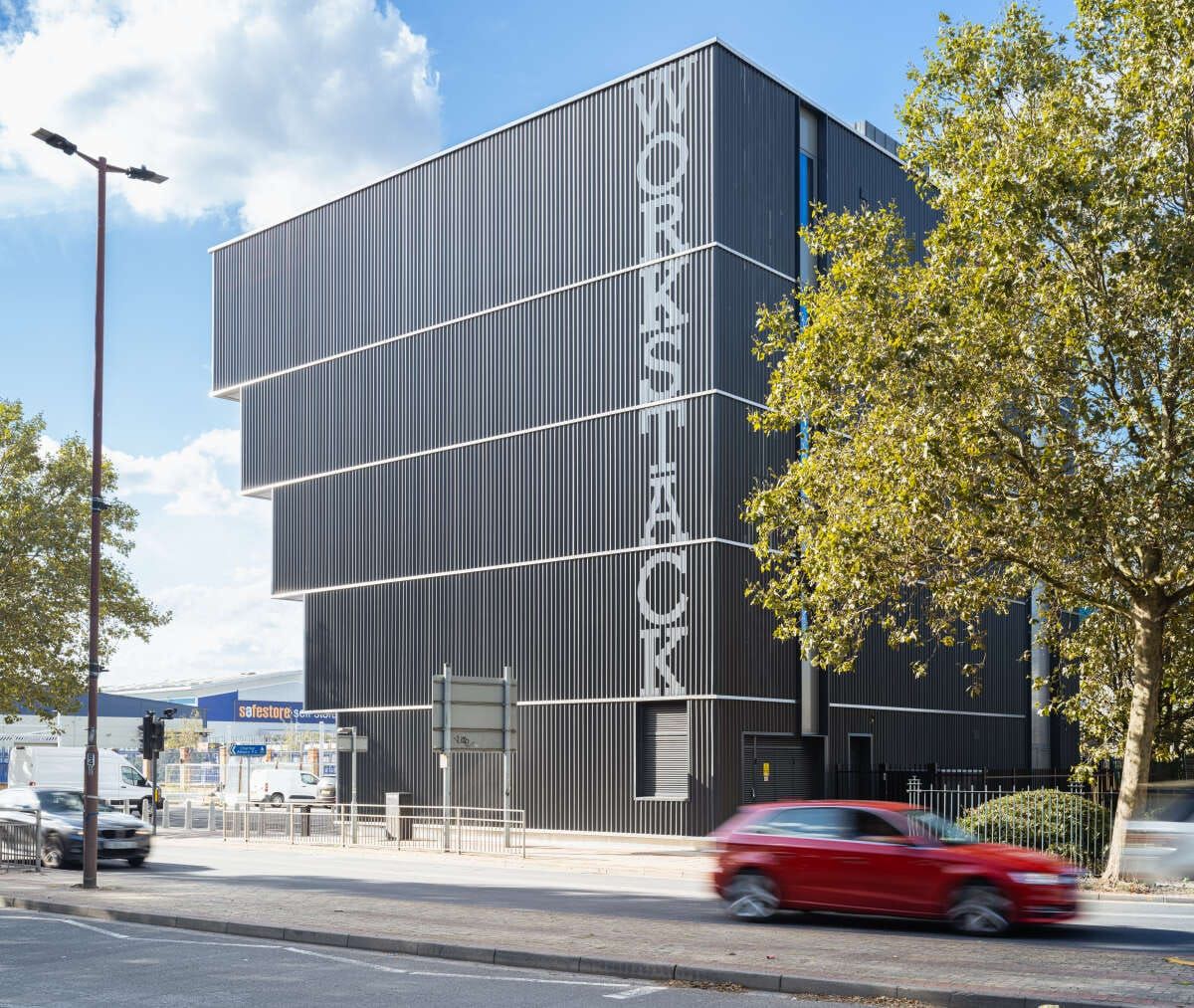
The practice was invited to design a building to house a mixture of light industrial, creative and office space for the Greenwich Enterprise Board (GEB), a not-for-profit organisation who offer places for small businesses to grow. It was a challenging brief for a compact site with complex tenant and management requirements. The 14 units that make up WorkStack are used by an eclectic mix of makers including furniture designers, workwear manufacturers, kimchi makers and a bicycle and motorcycle workshop.
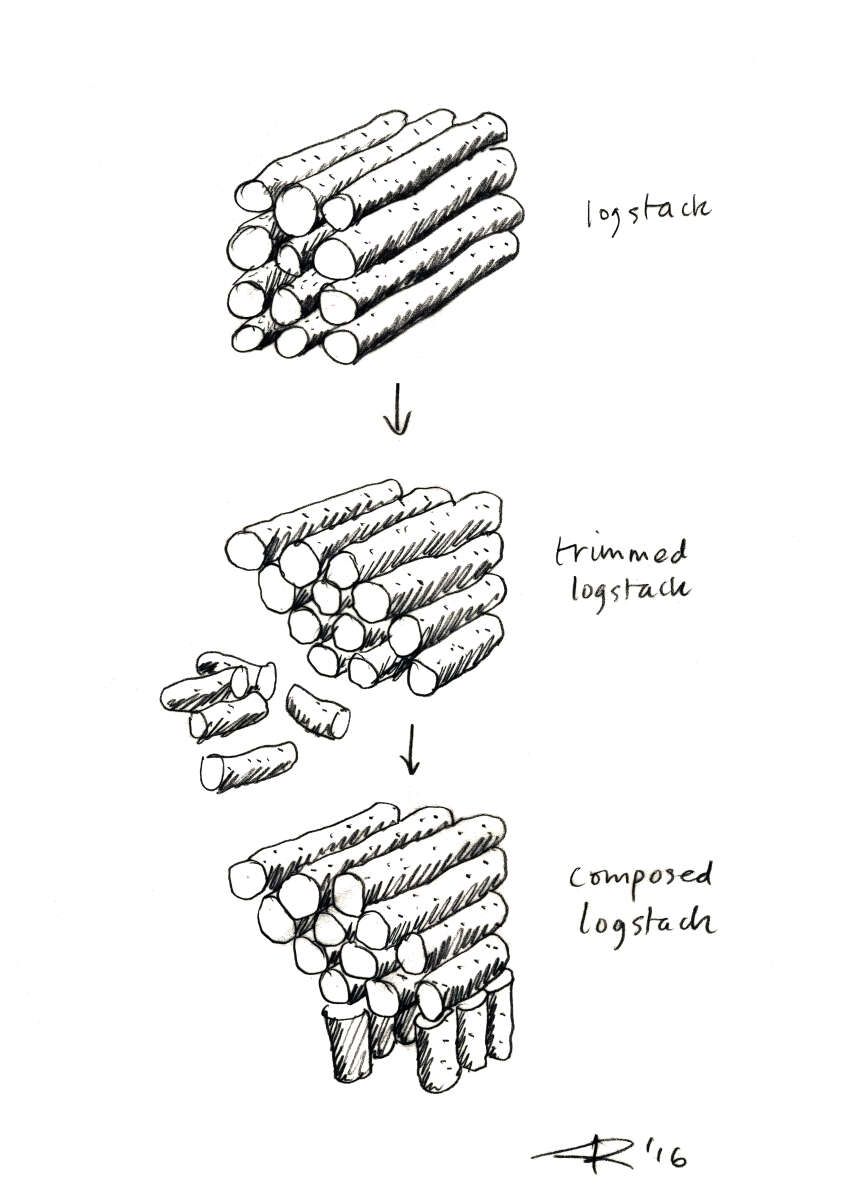
The design response to the compact site was to create a distinctive cantilevered ‘logstack’ form that appears as an inverted staircase, an echo of the practice’s sculptural Endless Stair project that gave spectacular form to a new sustainable timber product; cross-laminated hardwood.
The five-storey WorkStack uses CLT as its primary structural material, significantly reducing the carbon cost. Steel, polycarbonate, glass and rubber are sparingly used only when required by function or regulation. The resulting structure has 44% less upfront embodied carbon than RIBA’s 2030 Built Target for whole life carbon. Load-bearing timber walls and ceilings are exposed throughout eliminating the need for additional internal finishes and creating a warm, healthy and tactile interior. An added benefit of working with CLT saw the panellised construction reduce time on site.
The practice worked closely with engineers Webb Yates, with dynamic thermal modelling used to inform design development and material selection. Passive measures within the design include the striking overhangs formed by the structure to provide solar shading and carefully sized and sited openings to ensure crossflow ventilation. Energy efficient systems include a heat pump as well as perimeter heating via low-level finned tubes located along the frontage windows to ensure a high comfort level for the building’s occupants. Structural engineers Arup alongside consultants changebuilding integrated the architectural design with the structural and fire strategy and dRMM turned to long term collaborators Parkinson to act as contractor on the project.
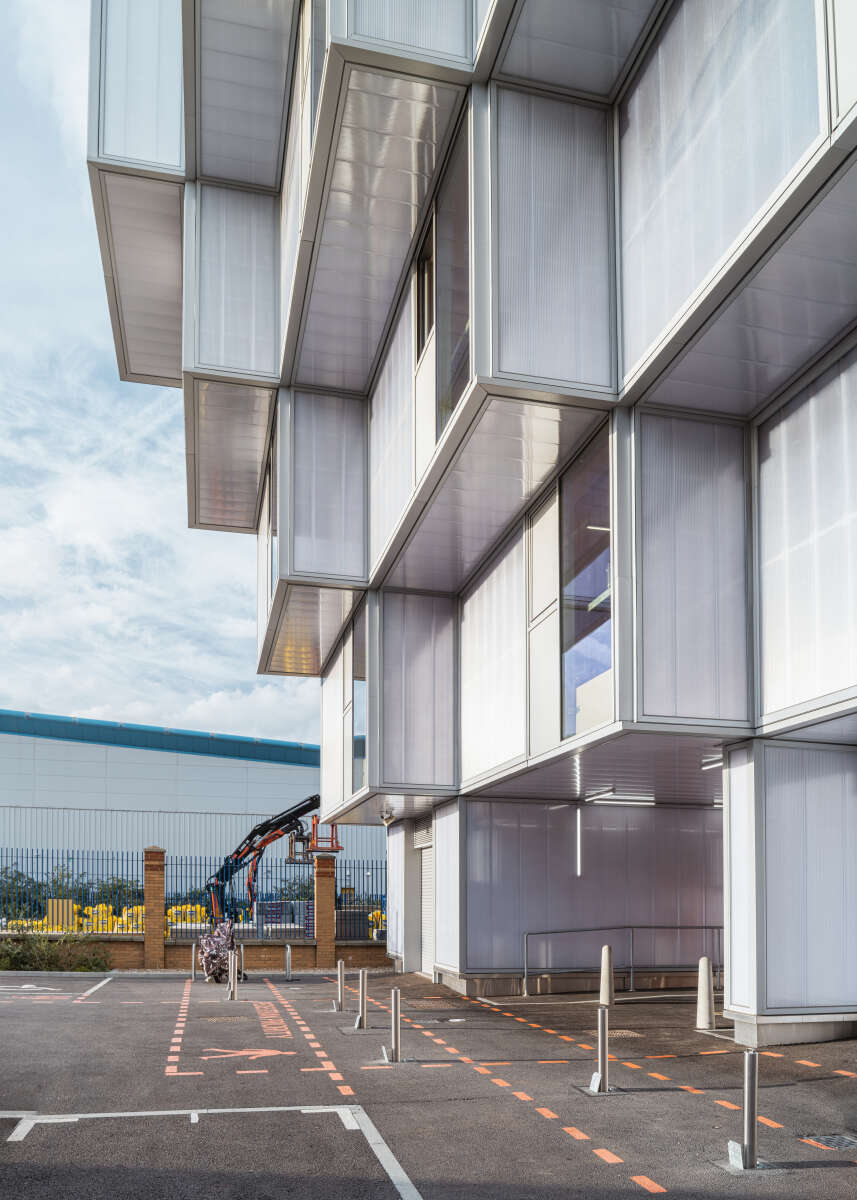
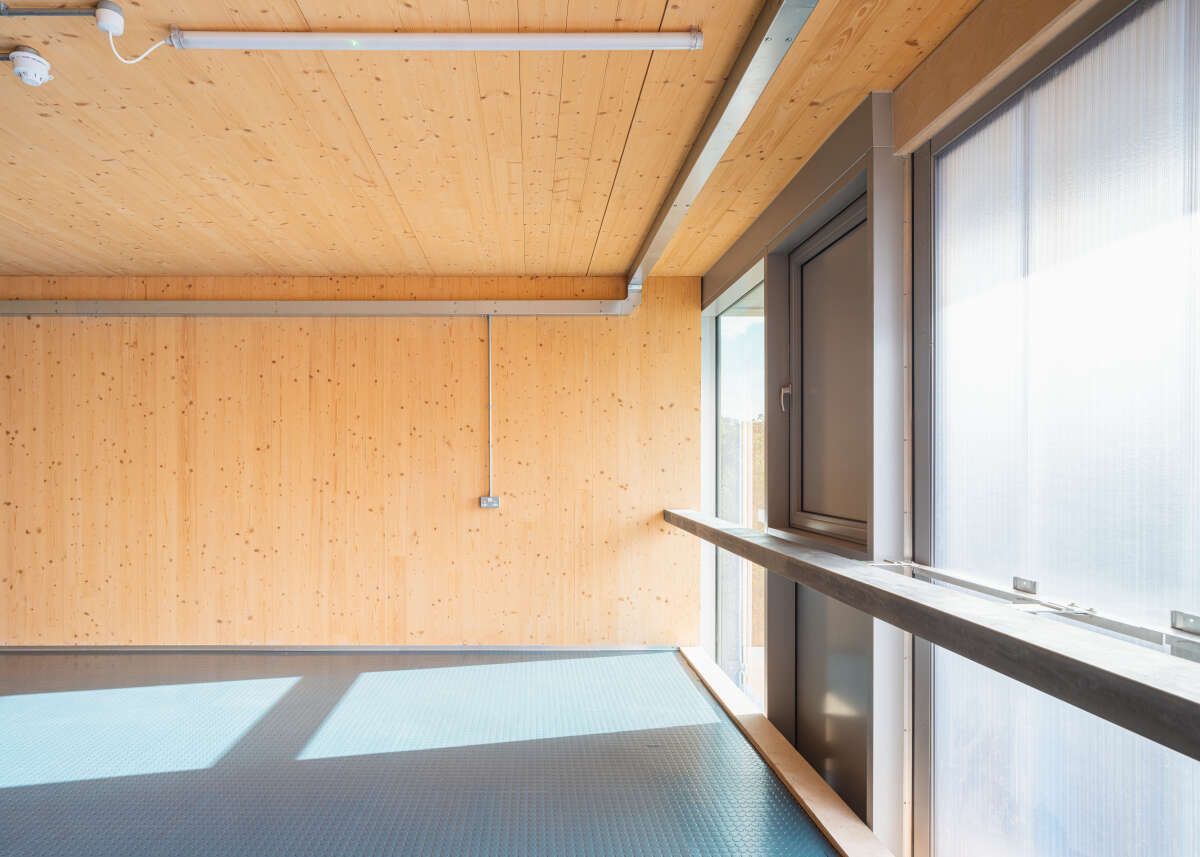
WorkStack details and interior - Images Credit, dRMM Studio - Fred Howarth
WorkStack is a world away from the typical metal shed workspaces that freeze their occupants in the winter and overheat in the summer months. The practice hope that WorkStack will counter the idea that workspace be pushed to the peripheries of our towns and cities, instead championing the benefits of a new and vibrant mixed-use urban development.