School Life: St. Raphael’s Health & Wellbeing Centre at Mayfield School, by Adam Richards Architects
Recognised for their sensitive approach to materiality, Adam Richards Architects have combined form with considered materials use to create a collection of award-winning projects from the black zinc and tile clad cross-laminated timber Ditchling Museum of Art + Craft to Nithurst Farm, the home designed for the architect’s family.
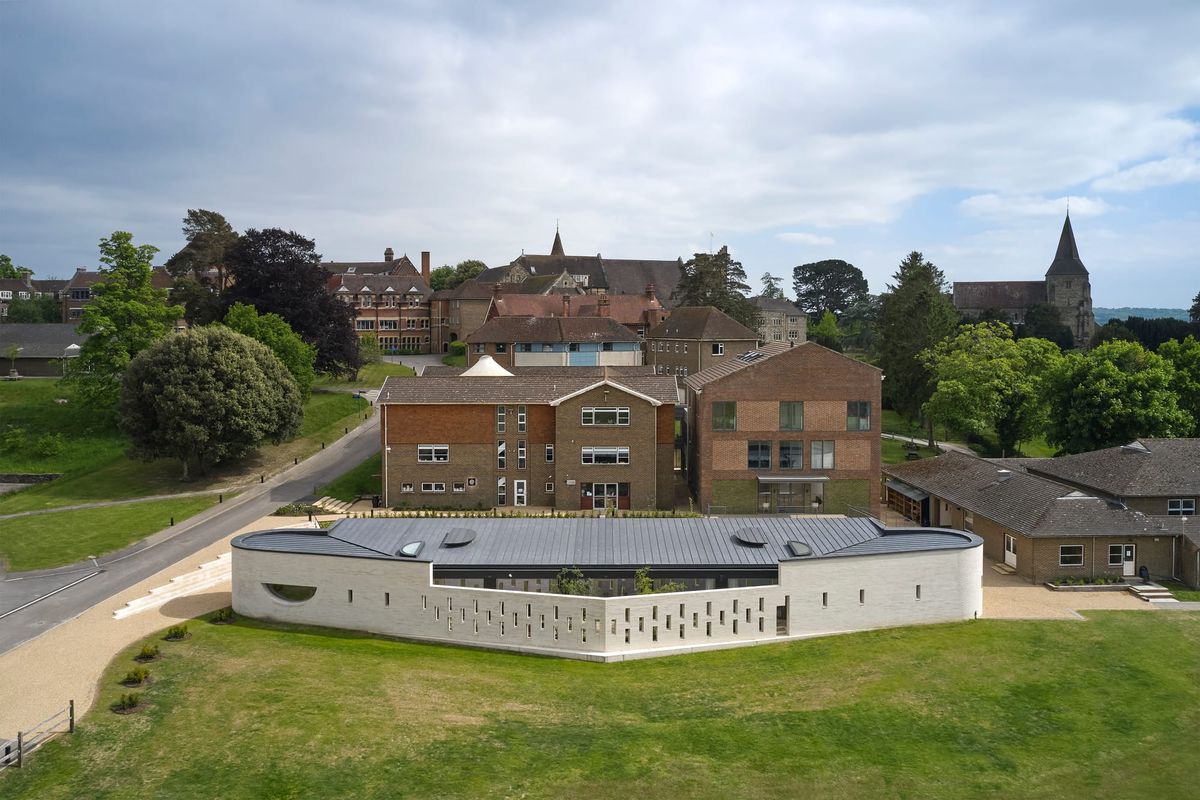
Commissioned in 2020 by Mayfield School in East Sussex, St. Raphael’s Health & Wellbeing Centre embodies the practice’s bold use of materials, presenting a world first combination of cross-laminated timber structure and natural limestone brick masonry outer wall. Fully operational since the autumn of 2024, the Centre provides a dedicated centre to support both mental and physical wellbeing for the school’s 350 girls, offering counselling rooms, a treatment room, an isolation room, a four-bed dormitory, alongside a spacious reception area.
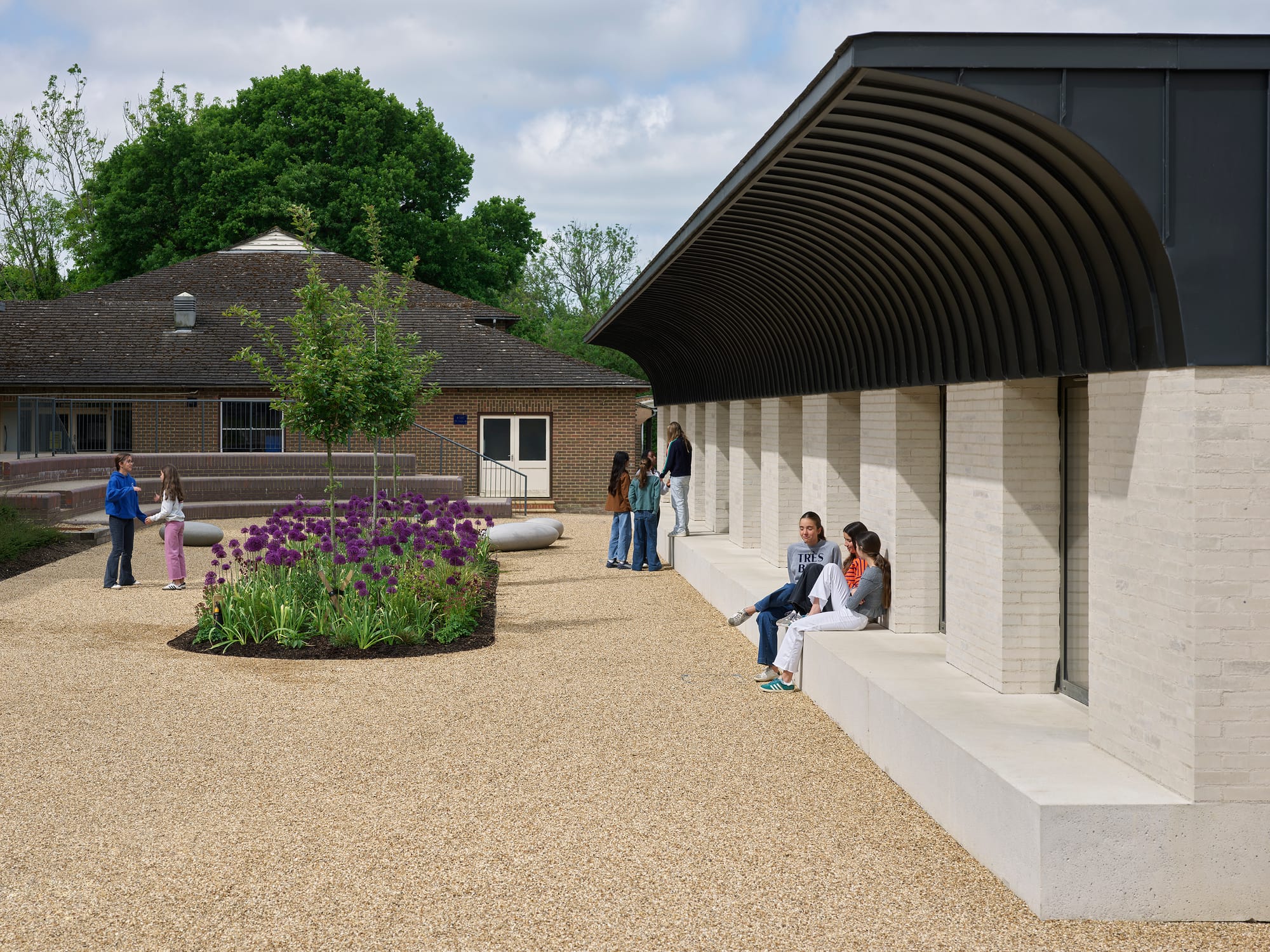
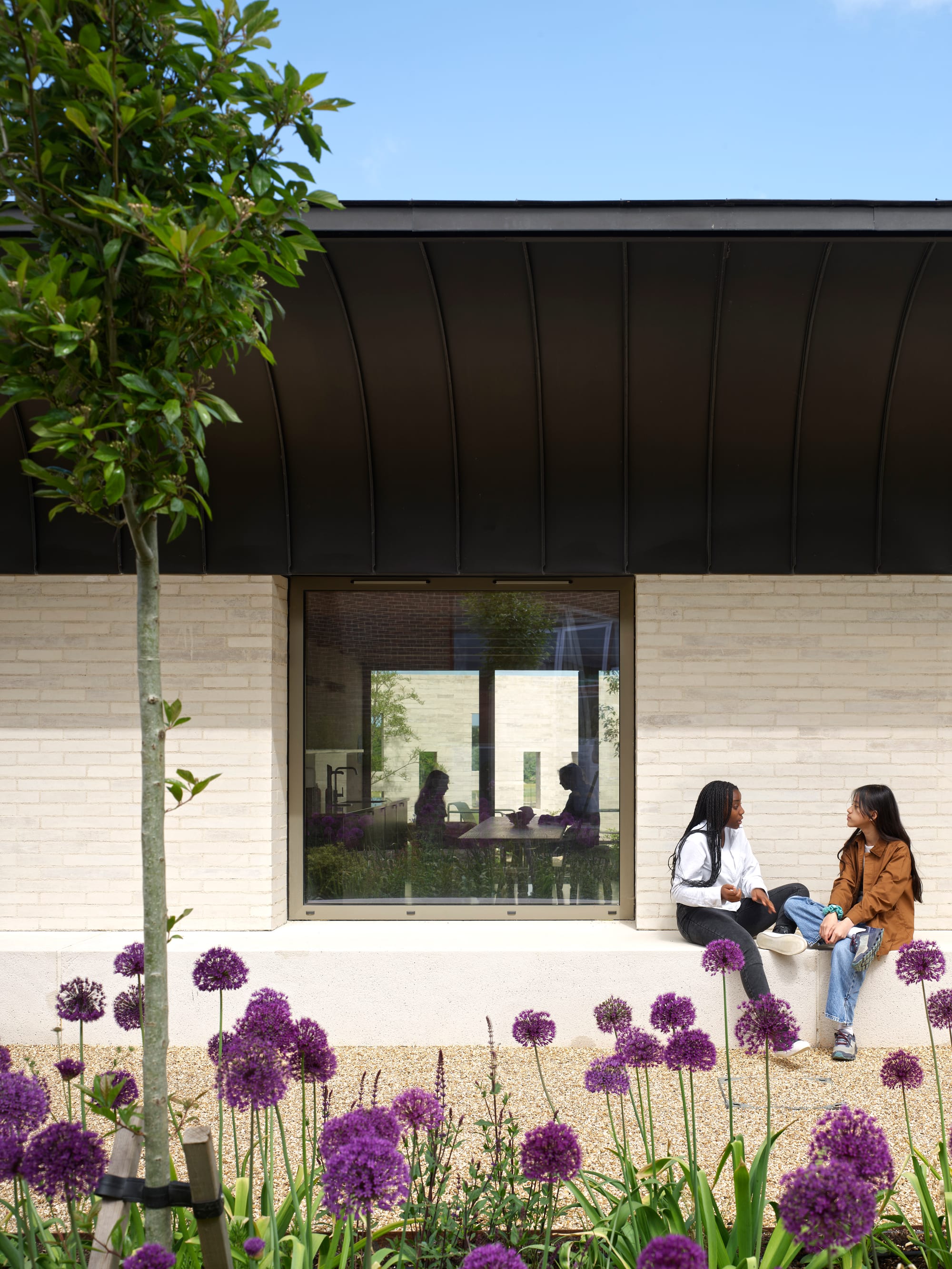
Pupils in the centre's courtyard | Photo credit: Brotherton Lock
Established in 1872, the school’s buildings are an eclectic mix of architectural styles from a 13th century chapel to 20th century additions. Adam Richards was tasked with rationalising the school’s layout alongside the commission for the new health and wellbeing centre to replace an existing facility. The practice has worked with the school since 2019, initially developing a feasibility study and campus masterplan, with the Wellbeing Centre setting a precedent for further development. From the outset there were high ambitions for the project, representing a return to architectural excellence on the site.
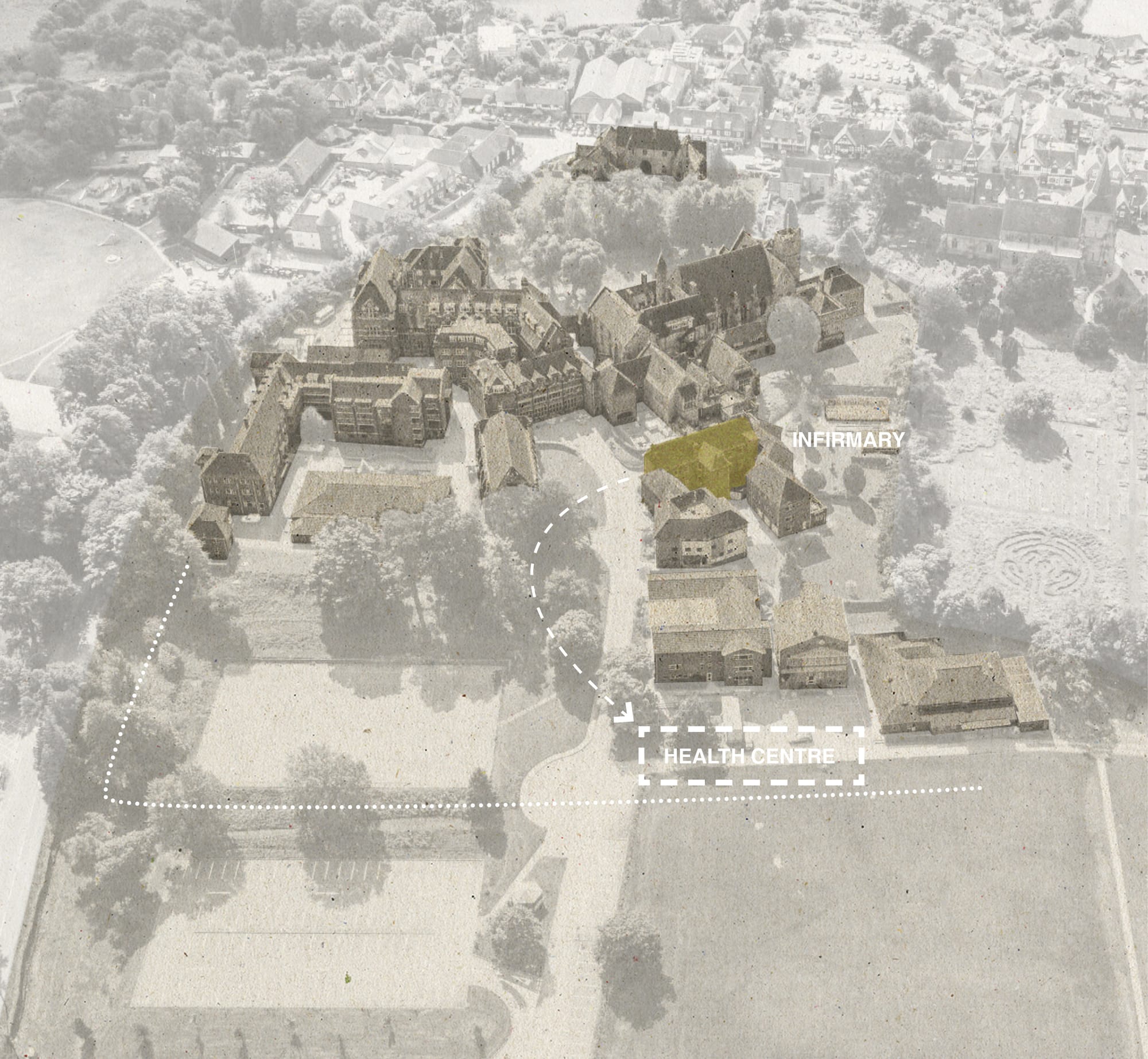
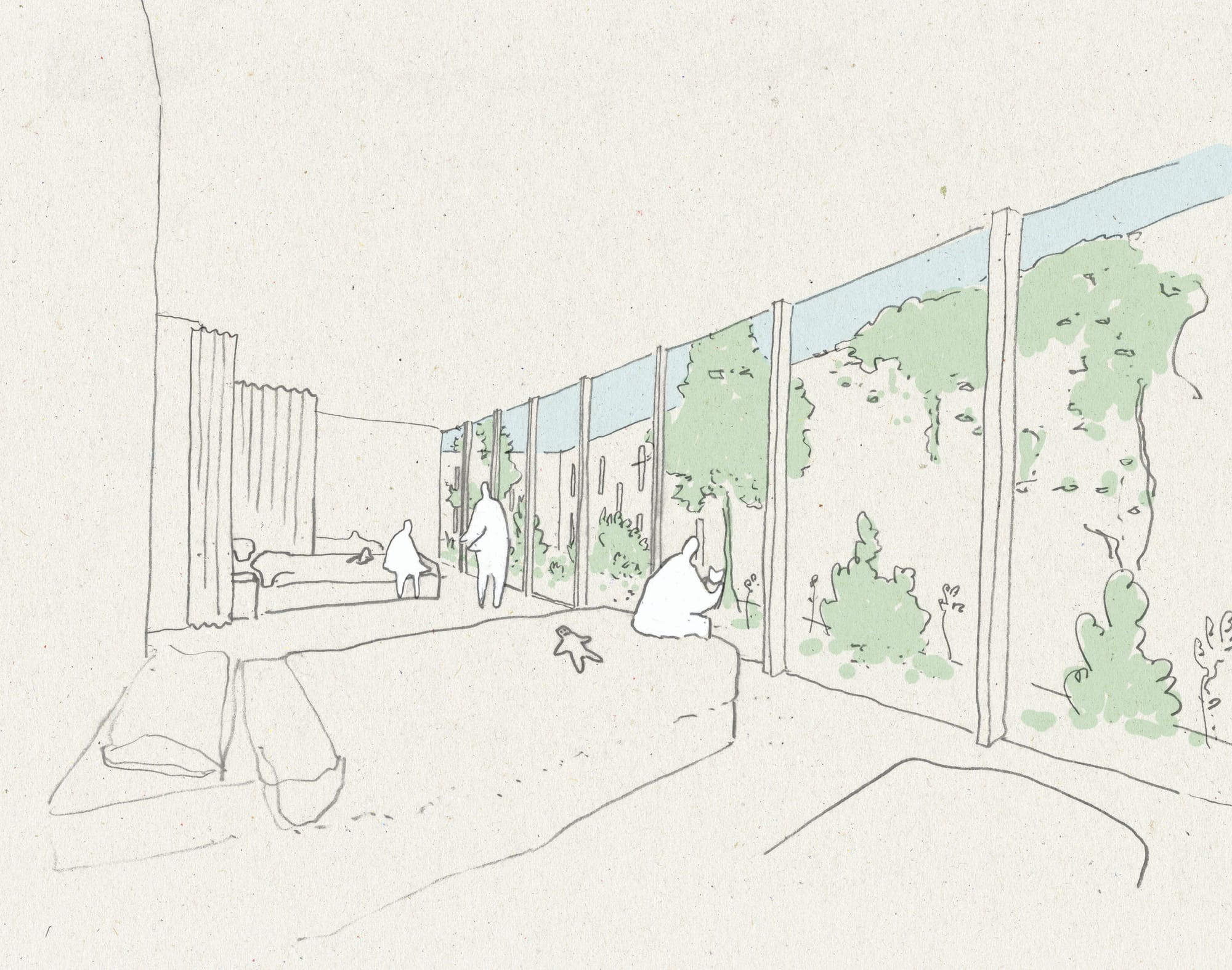
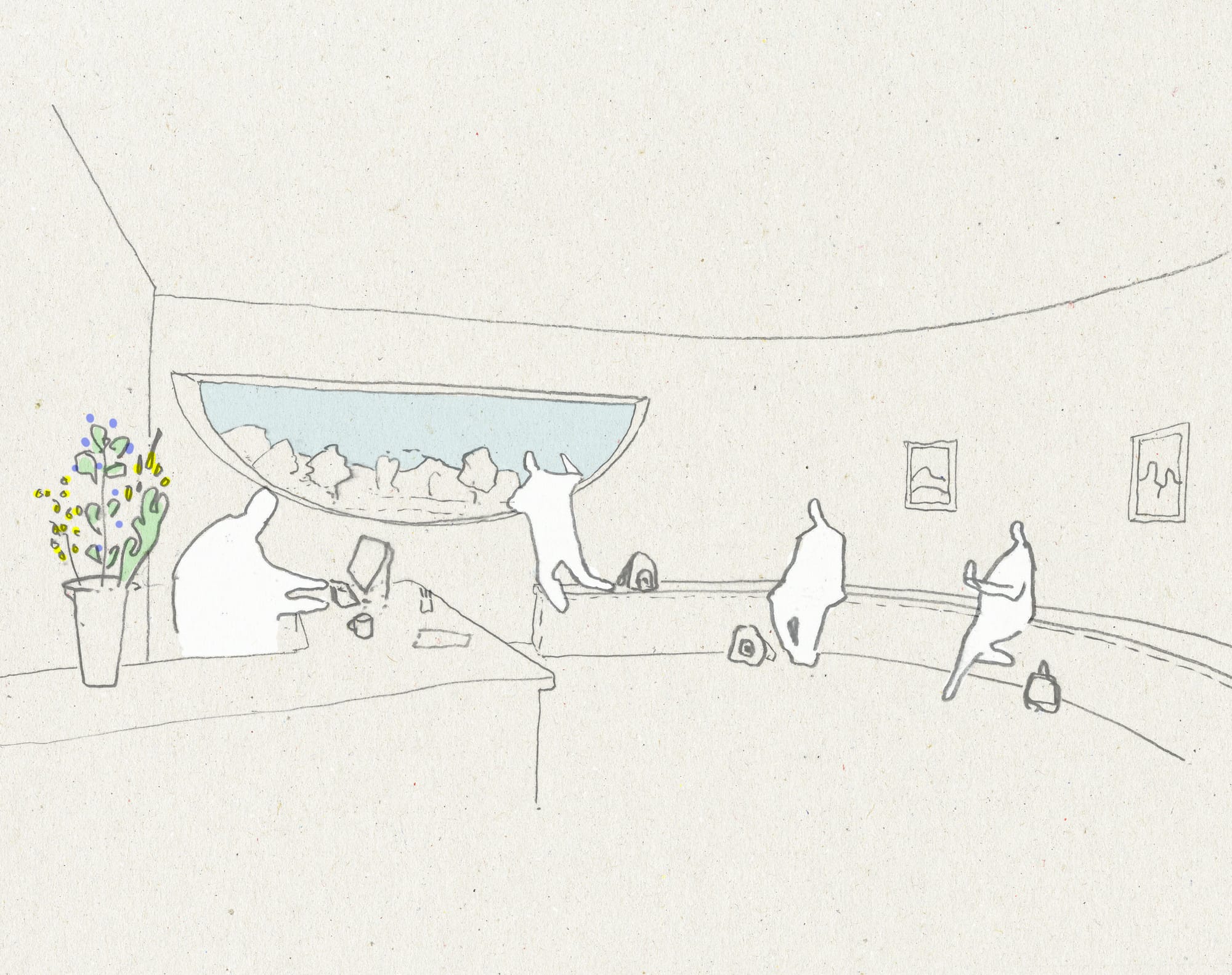
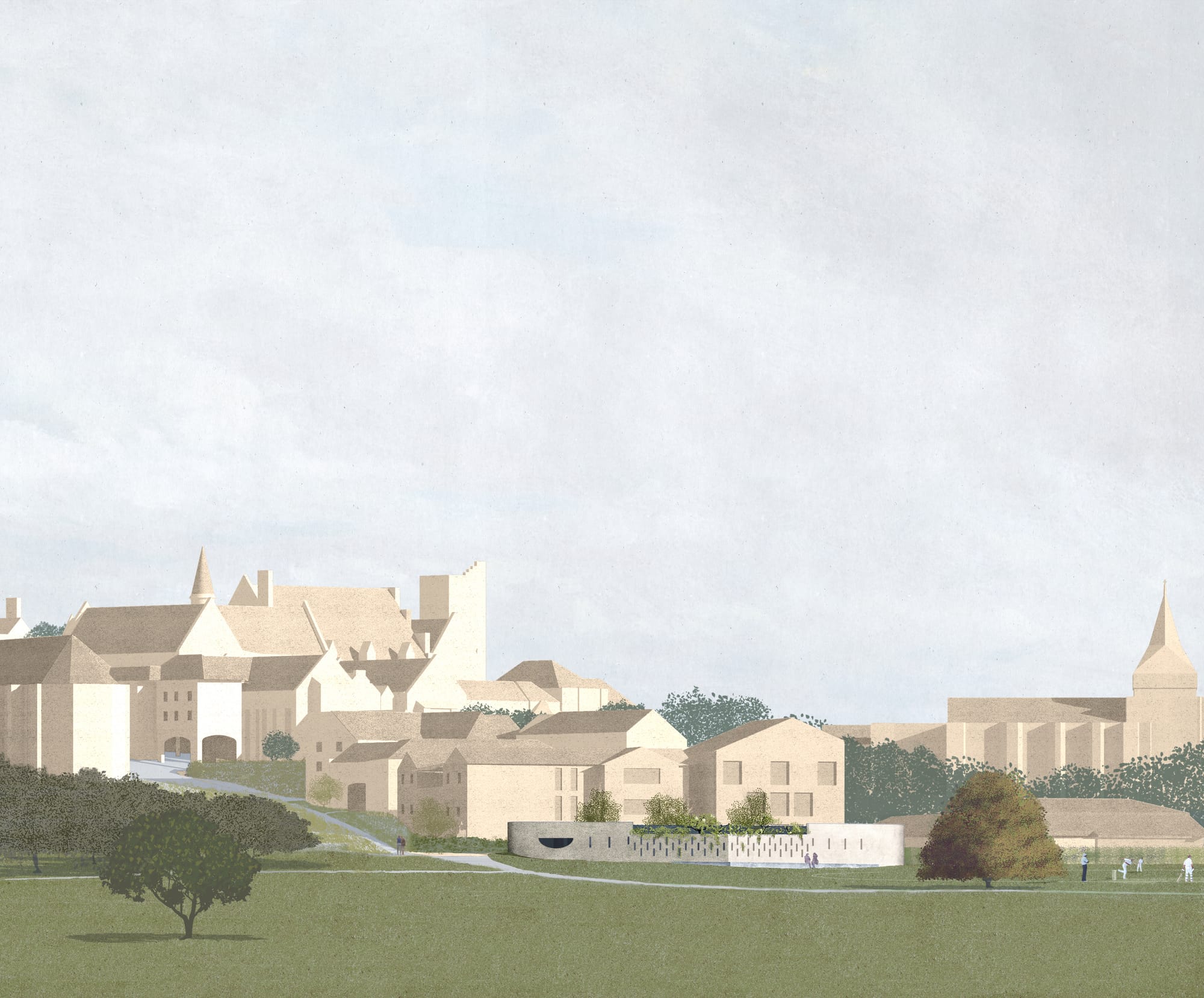
Visuals by Adam Richards Architects
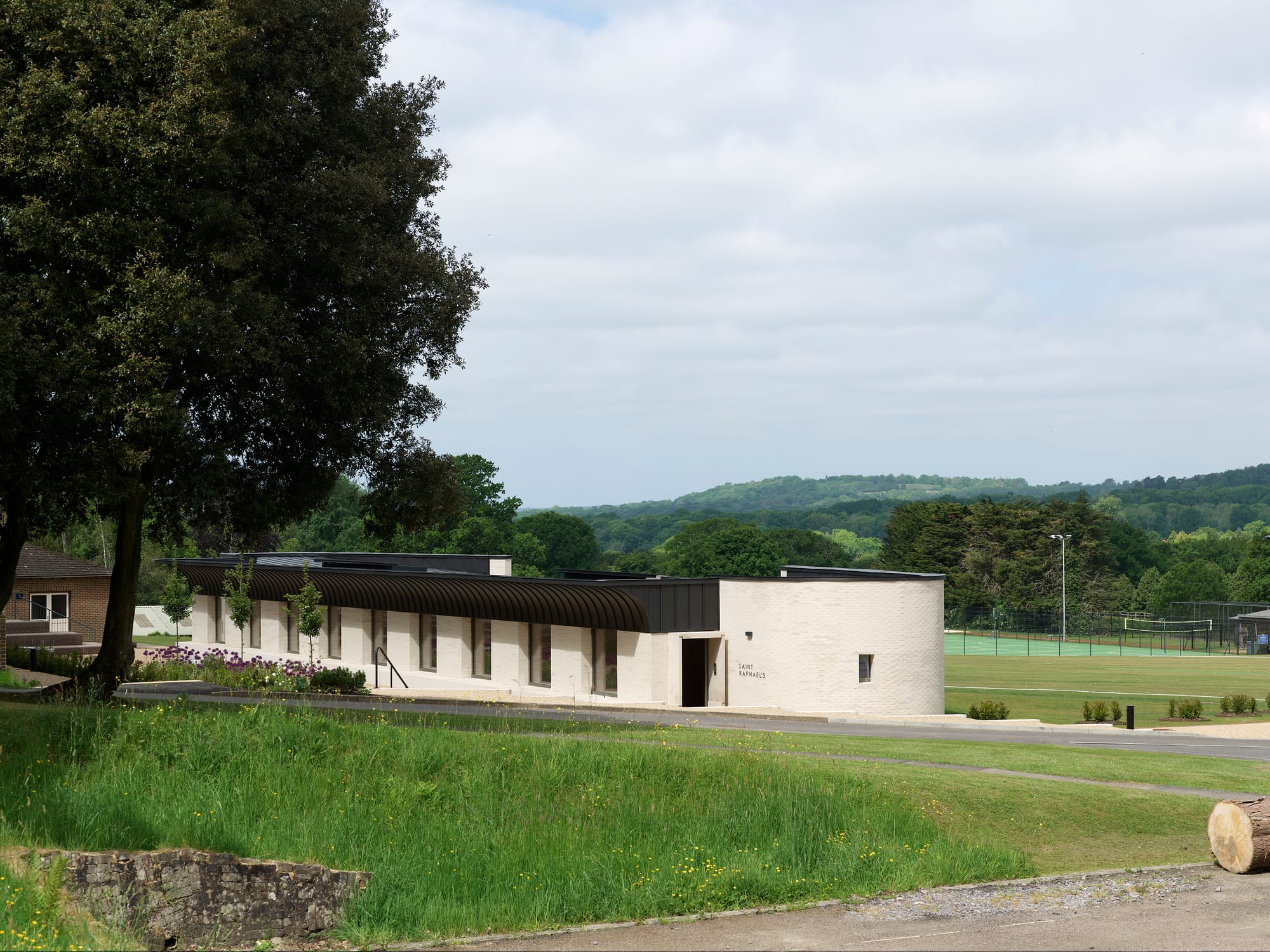
The school provided a challenging context with both stone and brick buildings as well as a beautiful 13th century Chapel. Adam was keen that the new building spoke to all of those parts of the school to ensure it felt like an addition to the family. In response, St. Raphael’s Health & Wellbeing Centre employs a palette of natural materials - stone and timber - in a way that is both recognisably sustainable and industry pioneering to create a building that sits comfortably in its site.
The completed building is a striking addition to the landscape of the school, with both architectural heft and a sense of playfulness. The practice’s use of brickwork and traditional stone walling reference both the older and contemporary elements of the school. The use of stone bricks cut from pale cream coloured French Massangis limestone ensures that the building glows on the dullest of days.
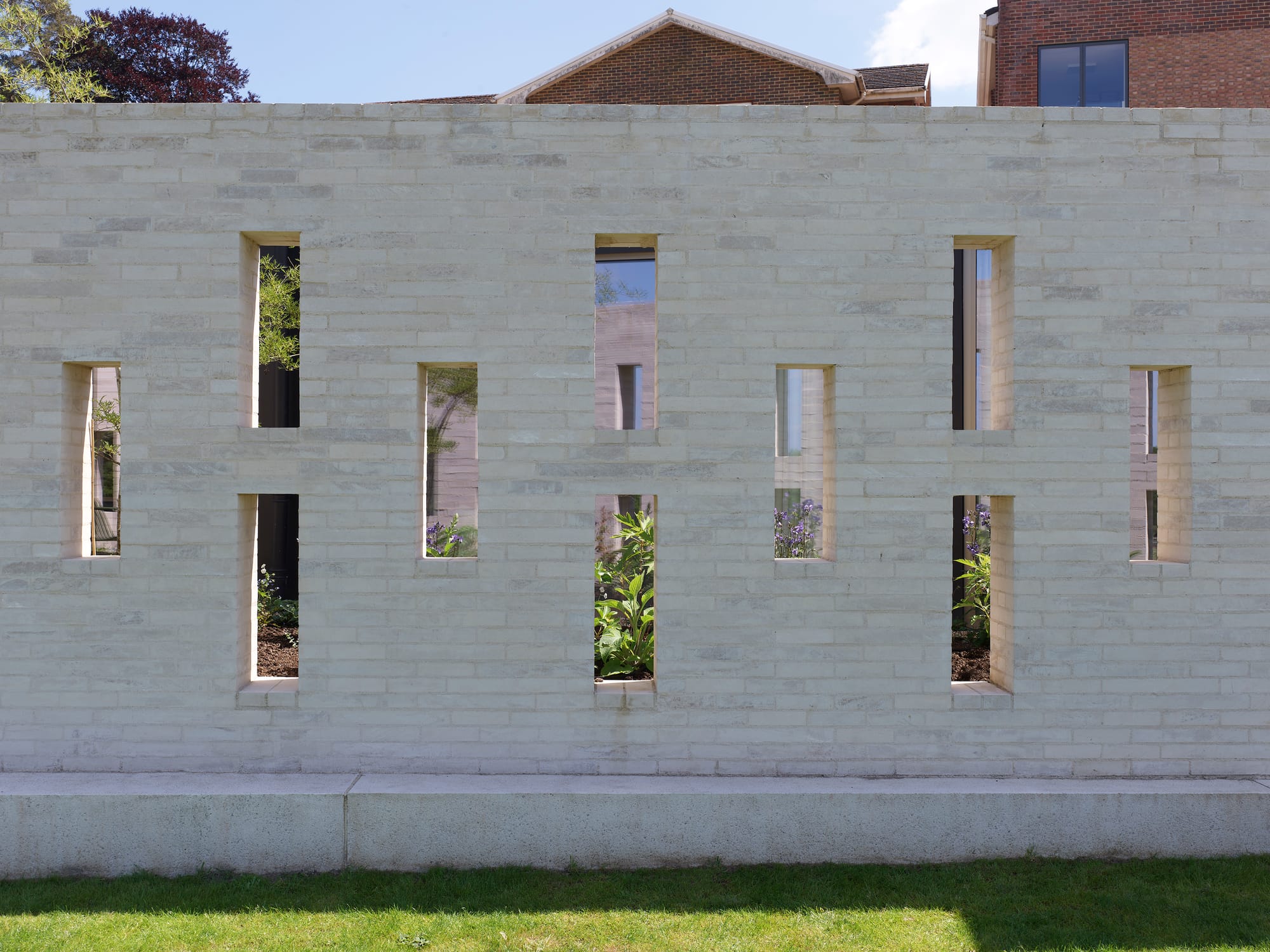
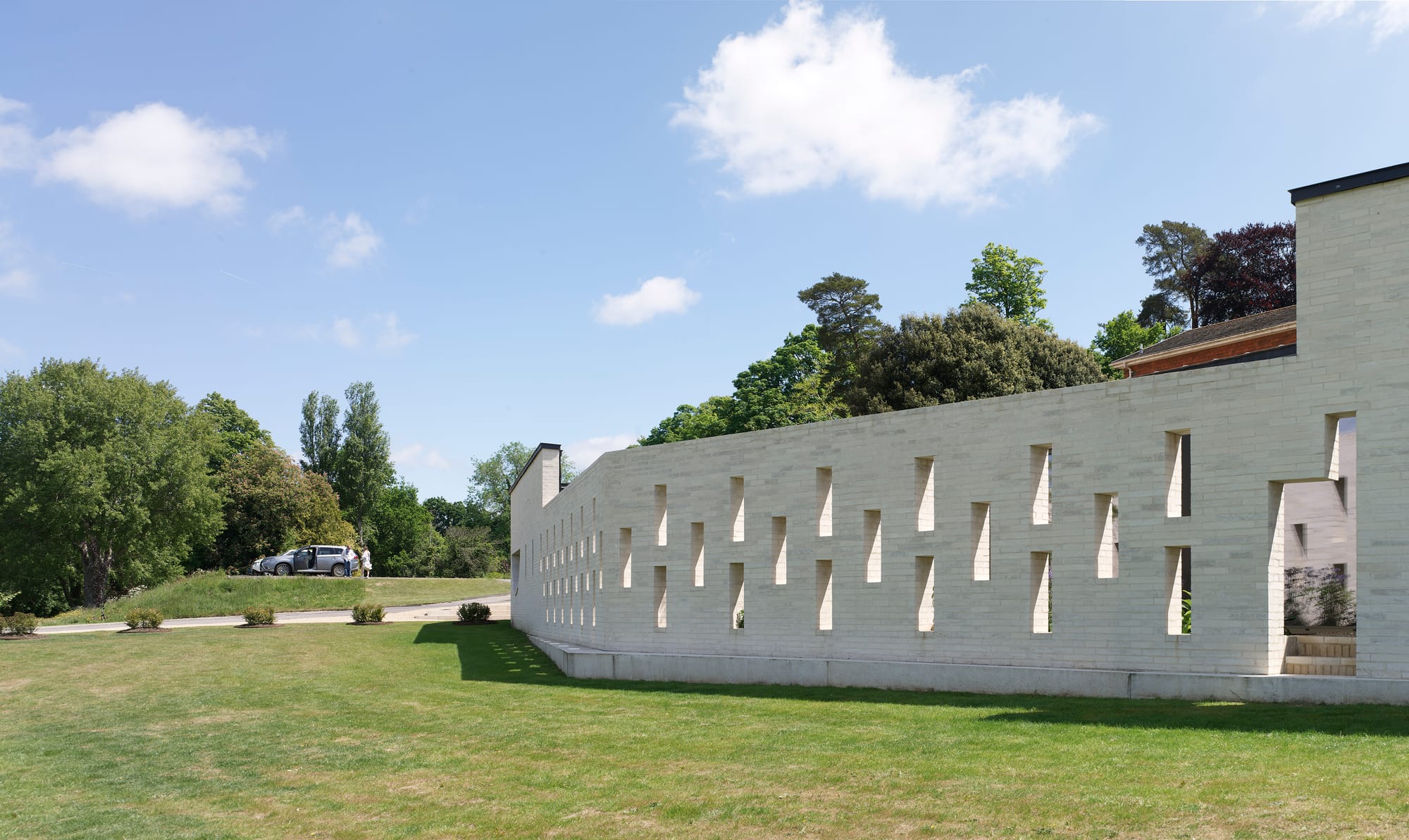
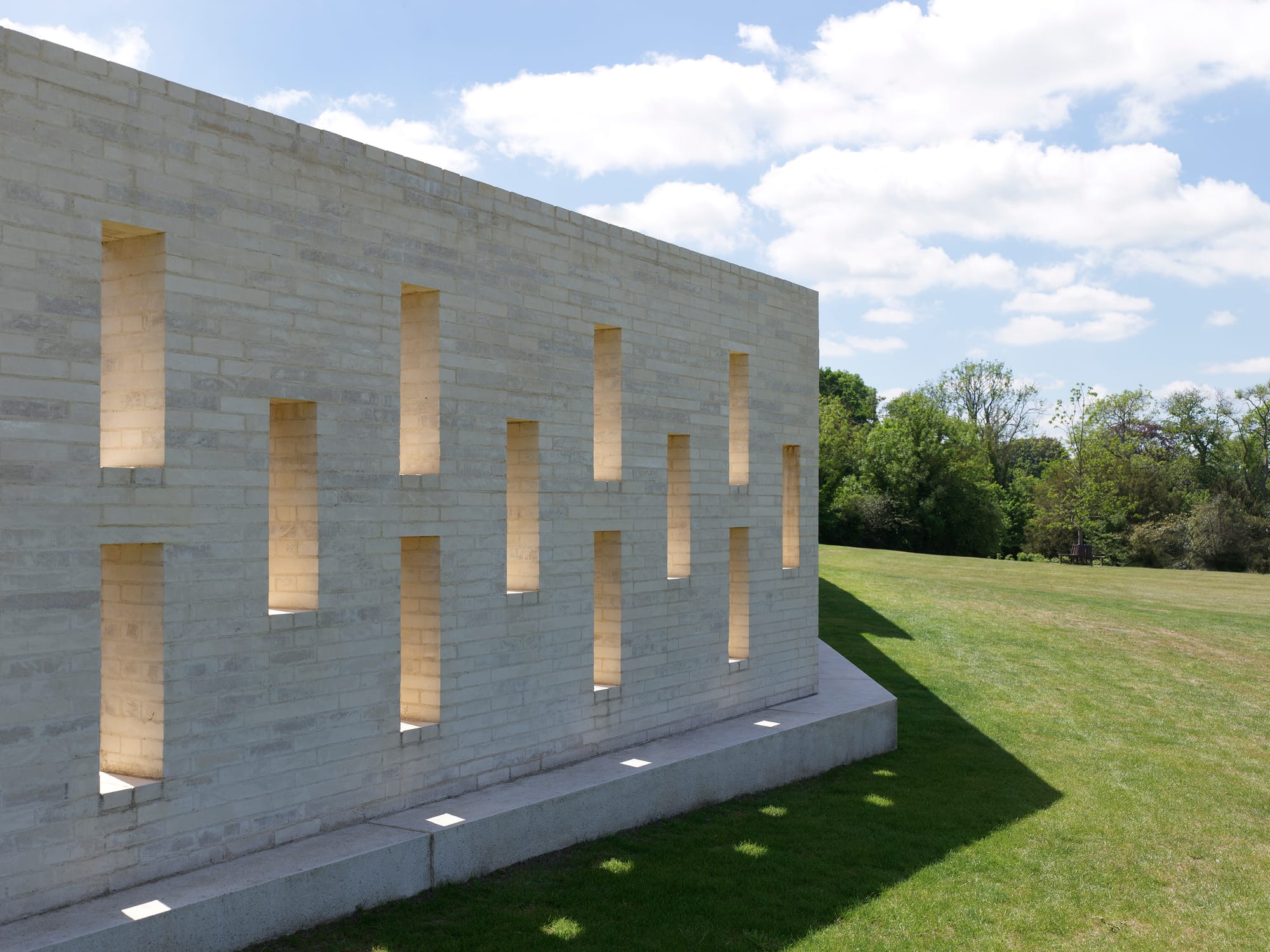
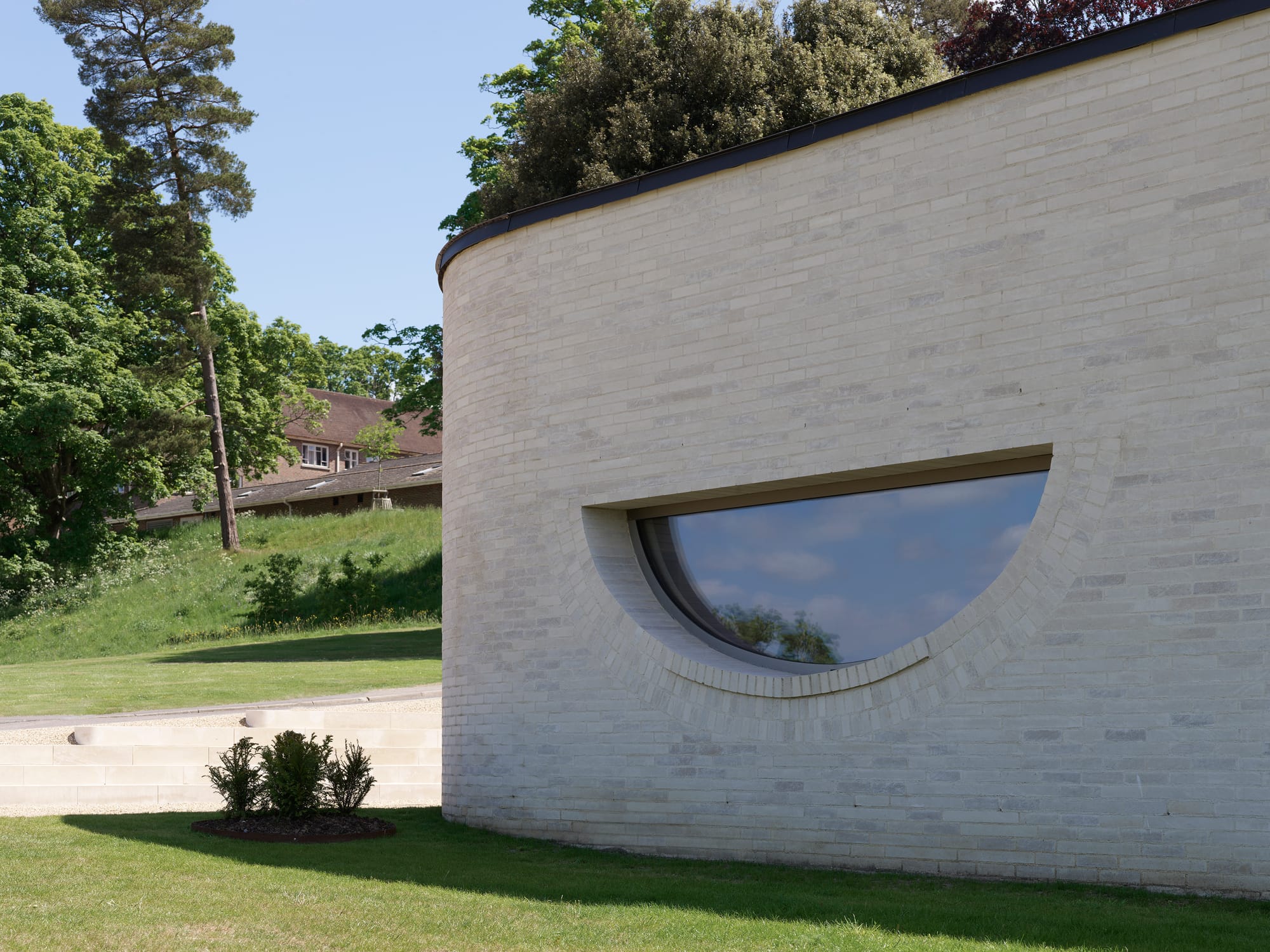
Stone brick facade | Photos credit: Brotherton Lock
Design options for the stone bricks included mixed bonds used in a more traditional stone wall and a standard stretcher bond which they felt was too ‘bricky’. They settled on a mix of singles and doubles to create a texture more reminiscent of a stone wall, an idea born from the practice’s conversation with Polycor, the stone brick suppliers. Lime mortar was specified with a limestone aggregate to match the colour of the bricks and will allow for future disassembly and reuse.
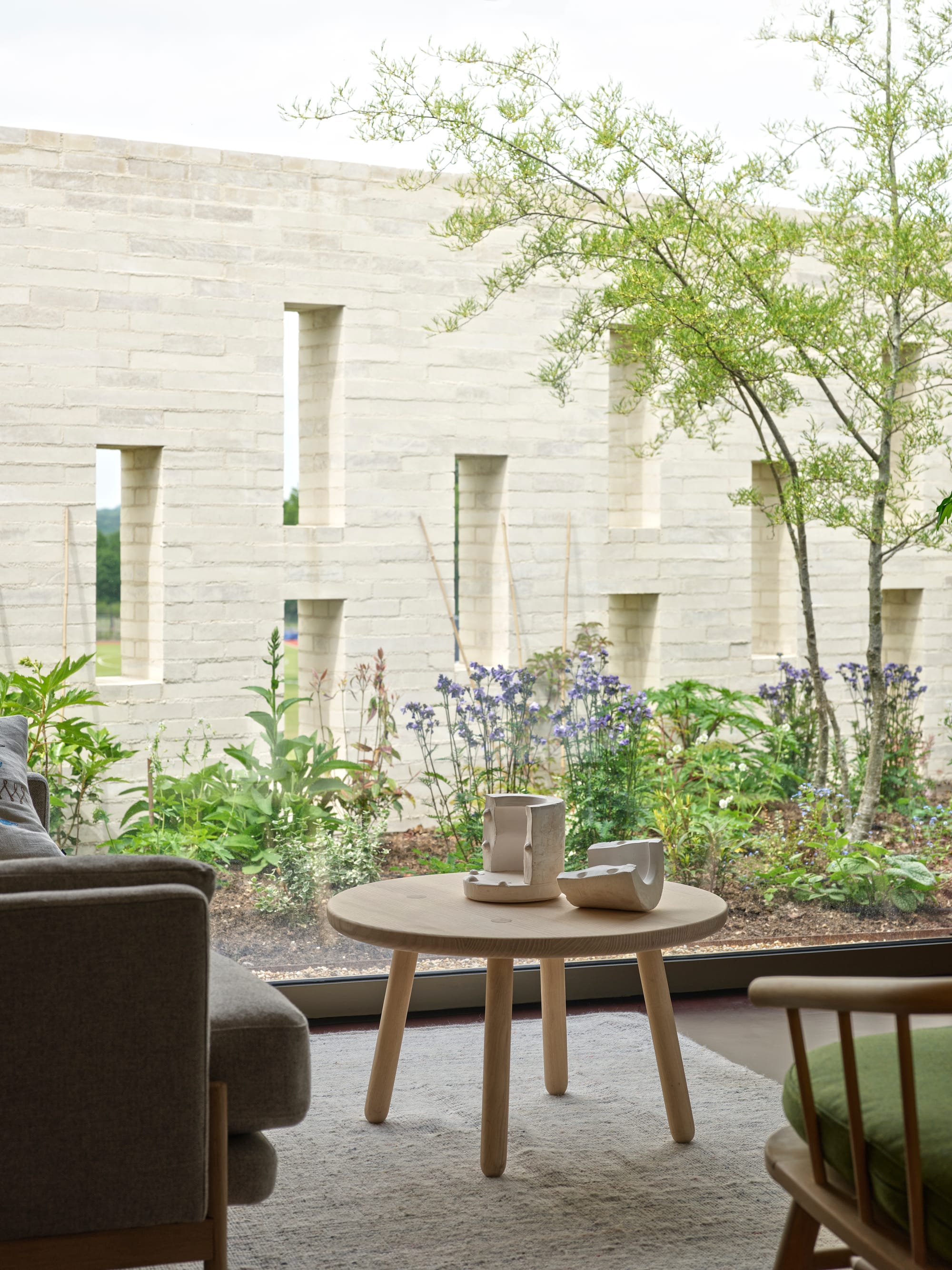
The exceptional geometry of the building features curves, corners and perforated boundary walls. The references cited as architectural inspiration by Adam are wide ranging. Nithurst Farm was influenced by Renaissance drawings and by Palladio’s plan for the Villa Barbaro alongside the cinematography of Soviet filmmaker Andrei Tarkovsky. Adam describes how St Raphael’s “outside wall is based on Renaissance fortifications with the idea to evoke a city wall in a medieval painting. Part of that was to try and reinforce a sense of a boundary. When you see it from the playing fields it ‘gathers up’ the miscellaneous buildings and makes them feel like they are part of a city.”
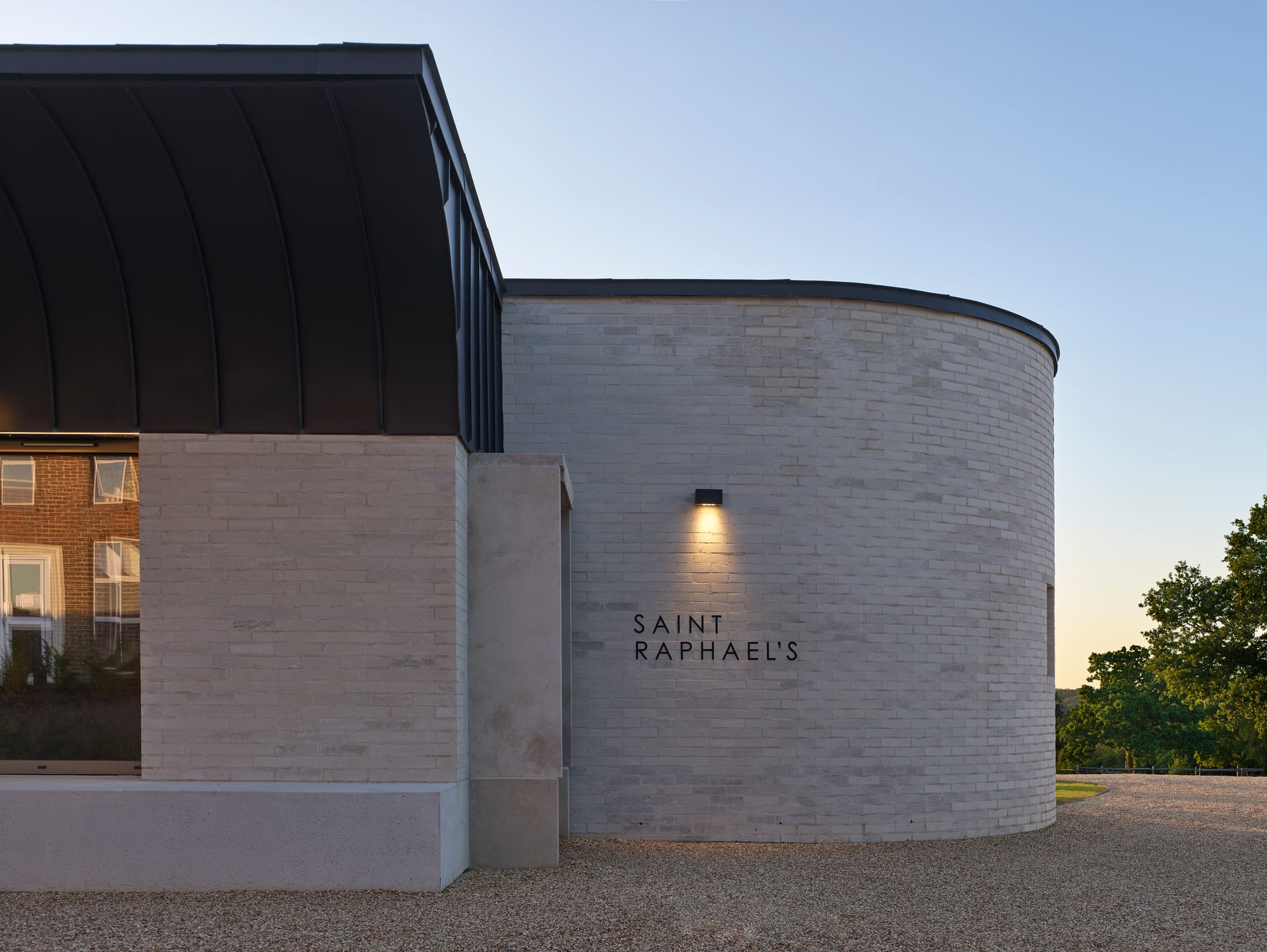
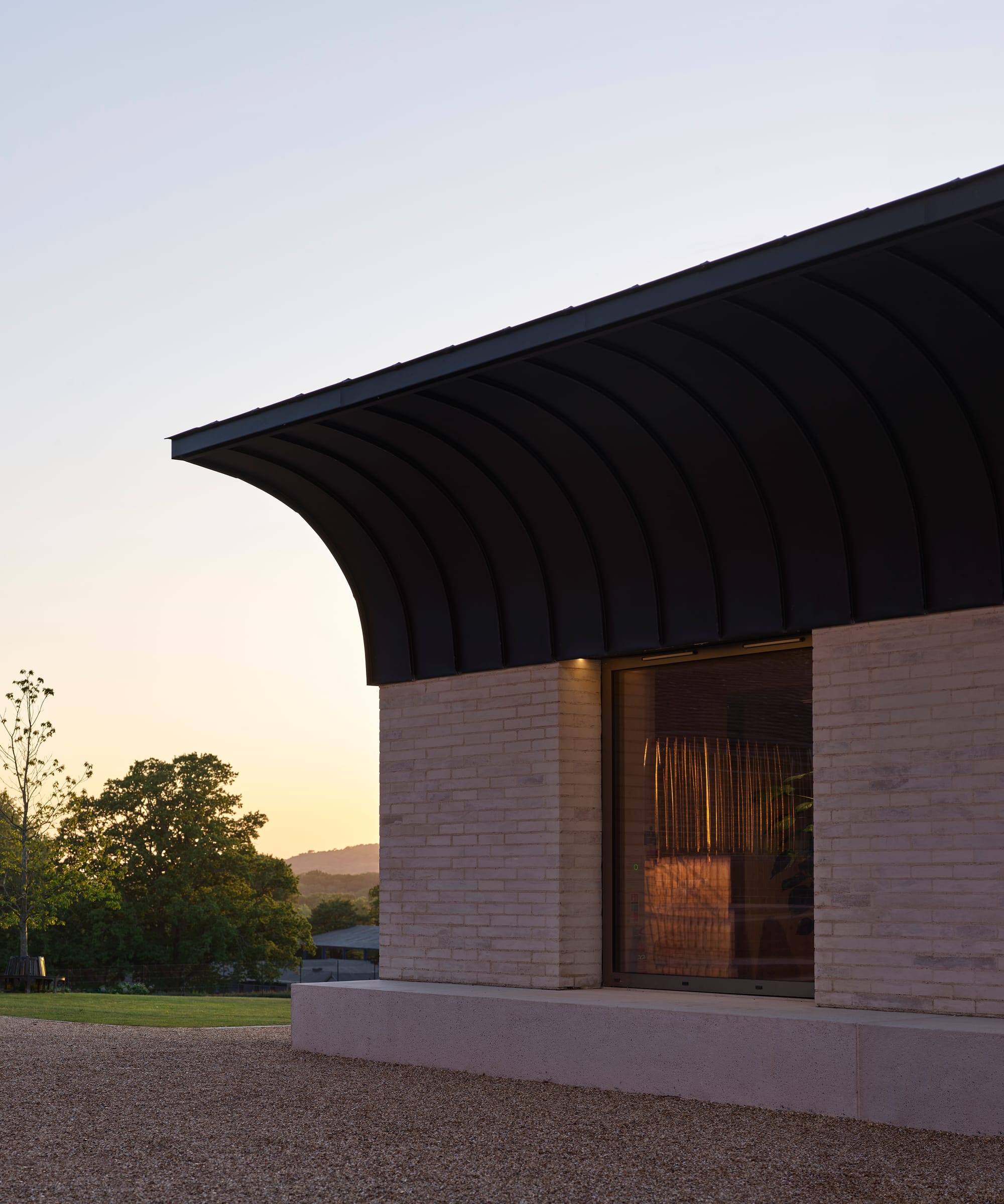
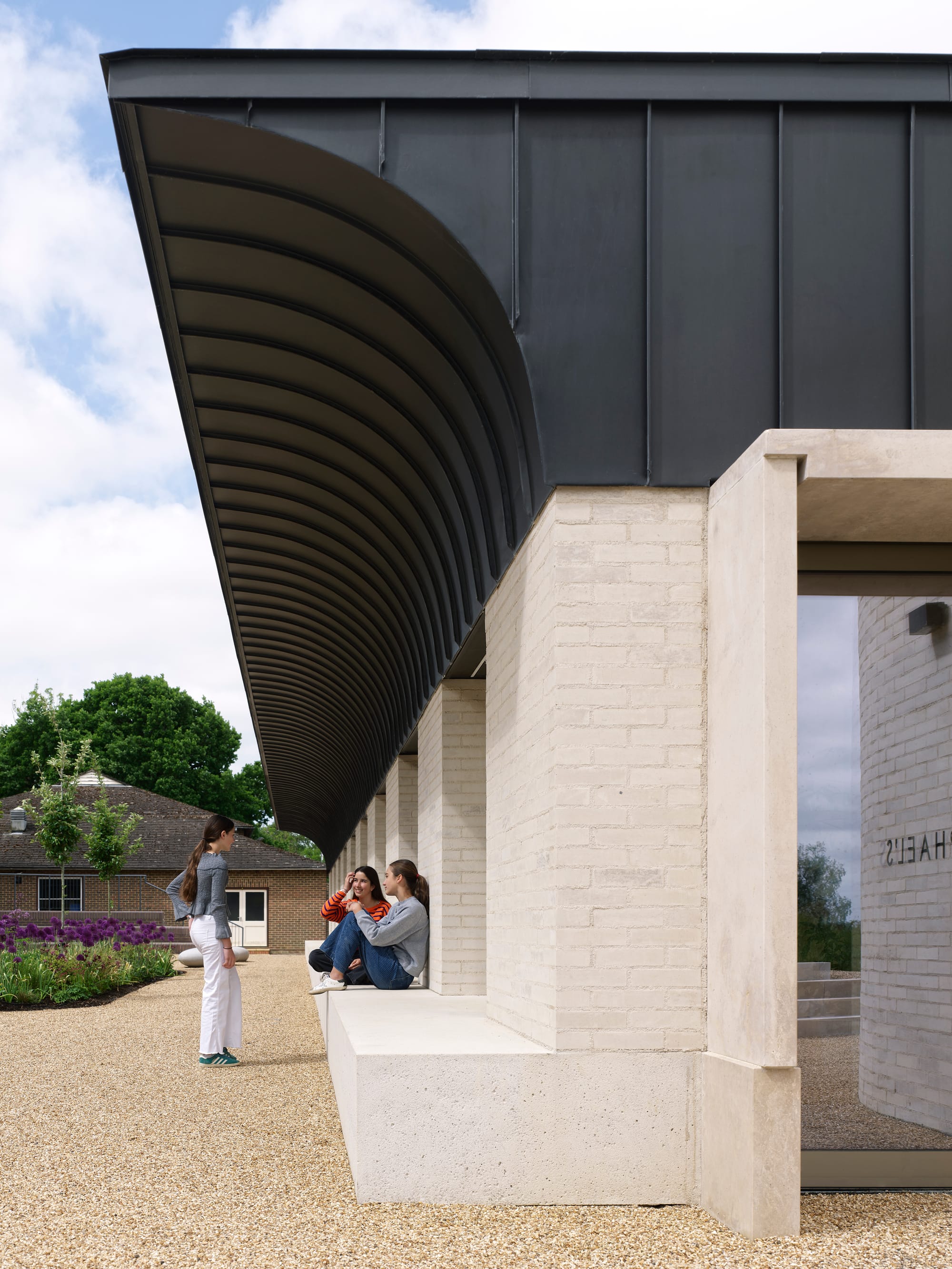
Outside wall and roof details | Photos credit: Brotherton Lock
The striking symmetrical curves of the roof visible from the school’s art block was inspired by the 17th Century French military engineer Vauban. Adam notes that the forts were “completely symmetrical plans like a lotus flower. They could resist attack but at the same time had an incredible beauty.” Architectural motifs are visible in the shape of half-moon ventilation ‘pavilion’ chimneys that grace the roof, a shape echoed in the large upturned crescent window of the facade.
Views from the inside out have been given equal consideration and are moderated according to the need for either connection or privacy. A lushly planted internal courtyard forms a ‘secret garden’ visible from all the treatment and counselling rooms, providing light, air and calm while maintaining privacy.
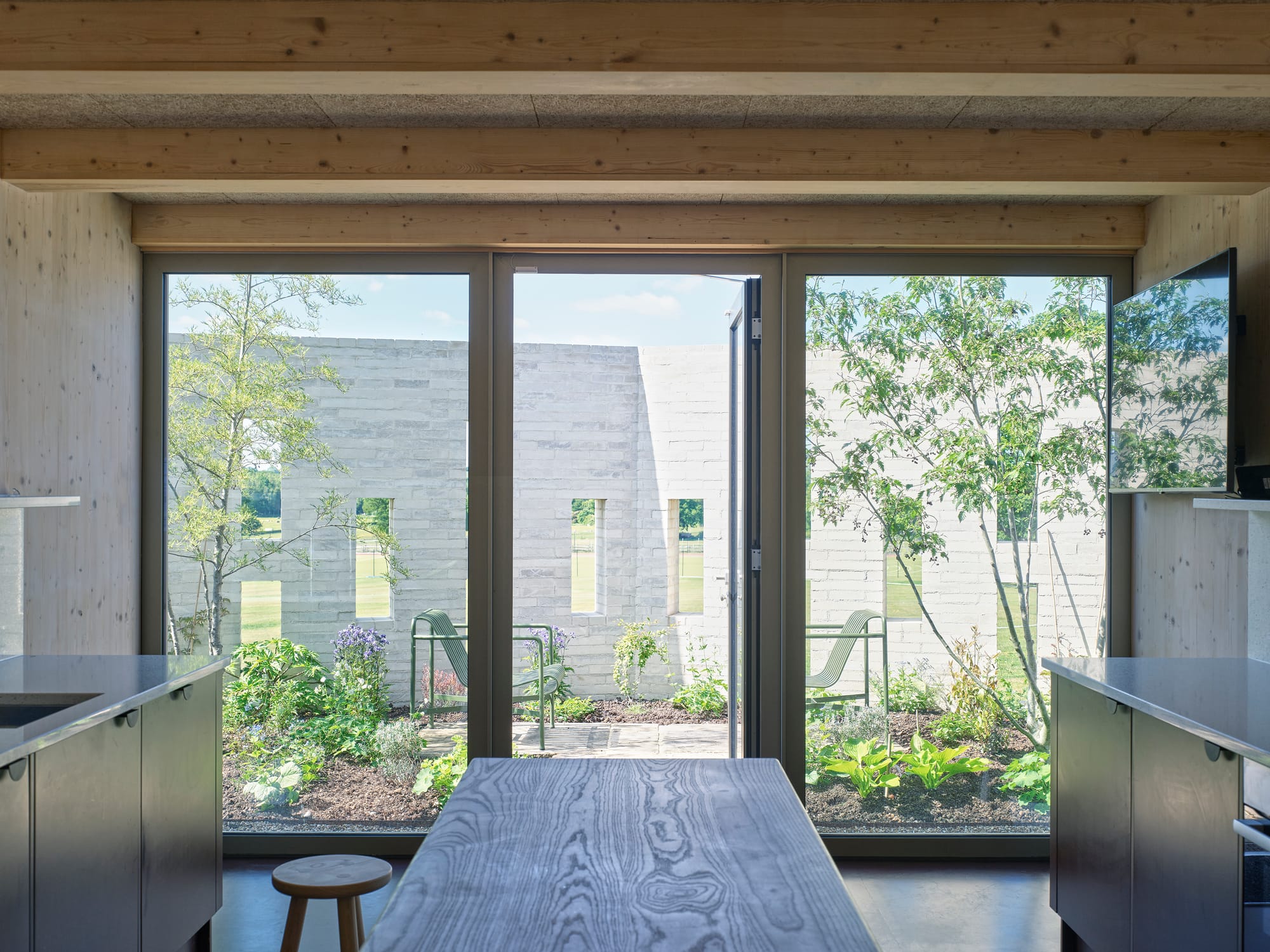
There is a domestic warmth to the interiors that respond to an early idea that imagined a pupil having a cup of tea and centering herself, something that became a key moment in the design journey. This sense of safe haven is evident at the centre of the plan, where a communal kitchen forms the social heart of the building, a flexible space with a large custom-designed table designed by Adam and handmade by Sussex joinery workshop, Fisher Morrisson.
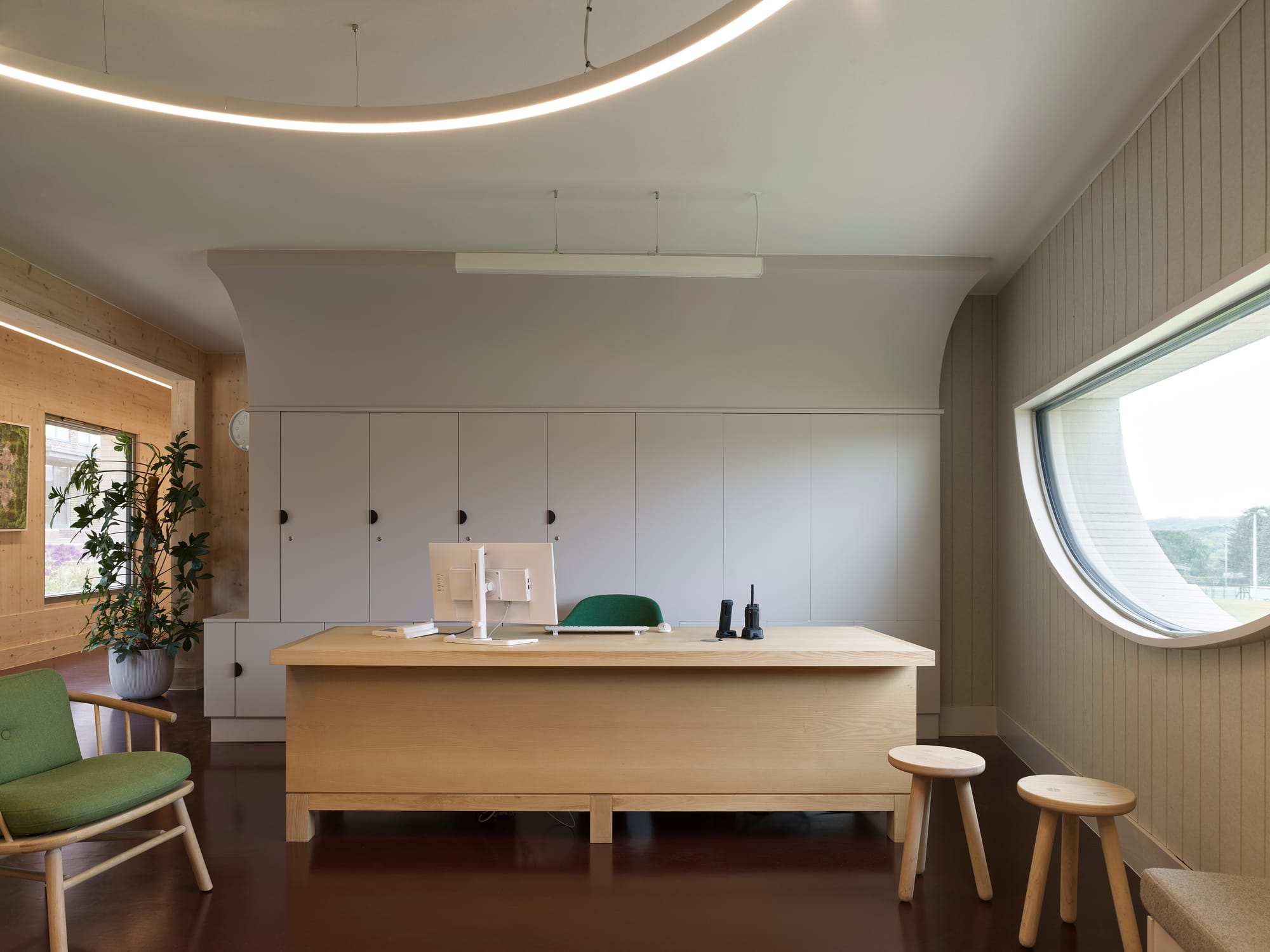
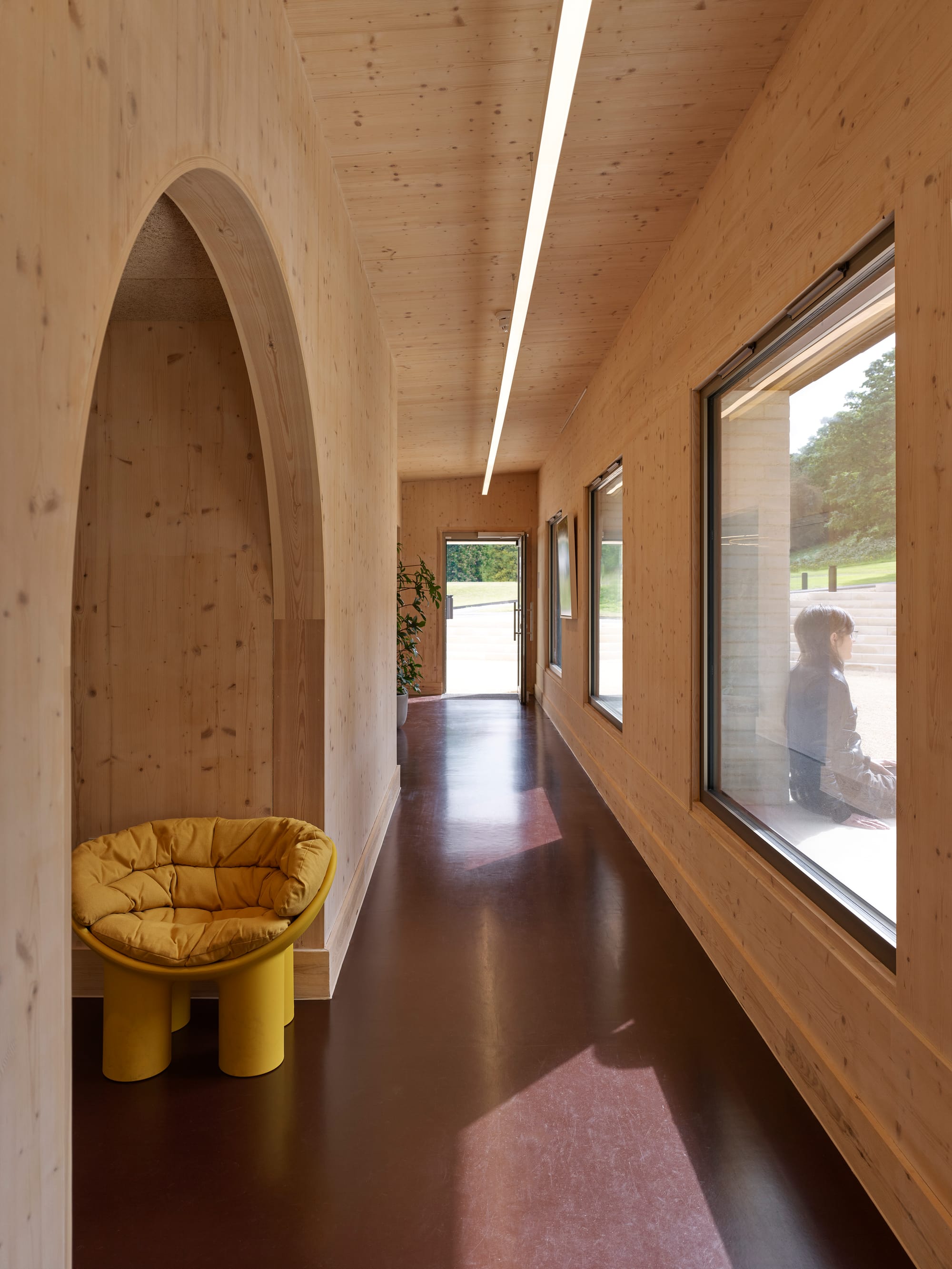
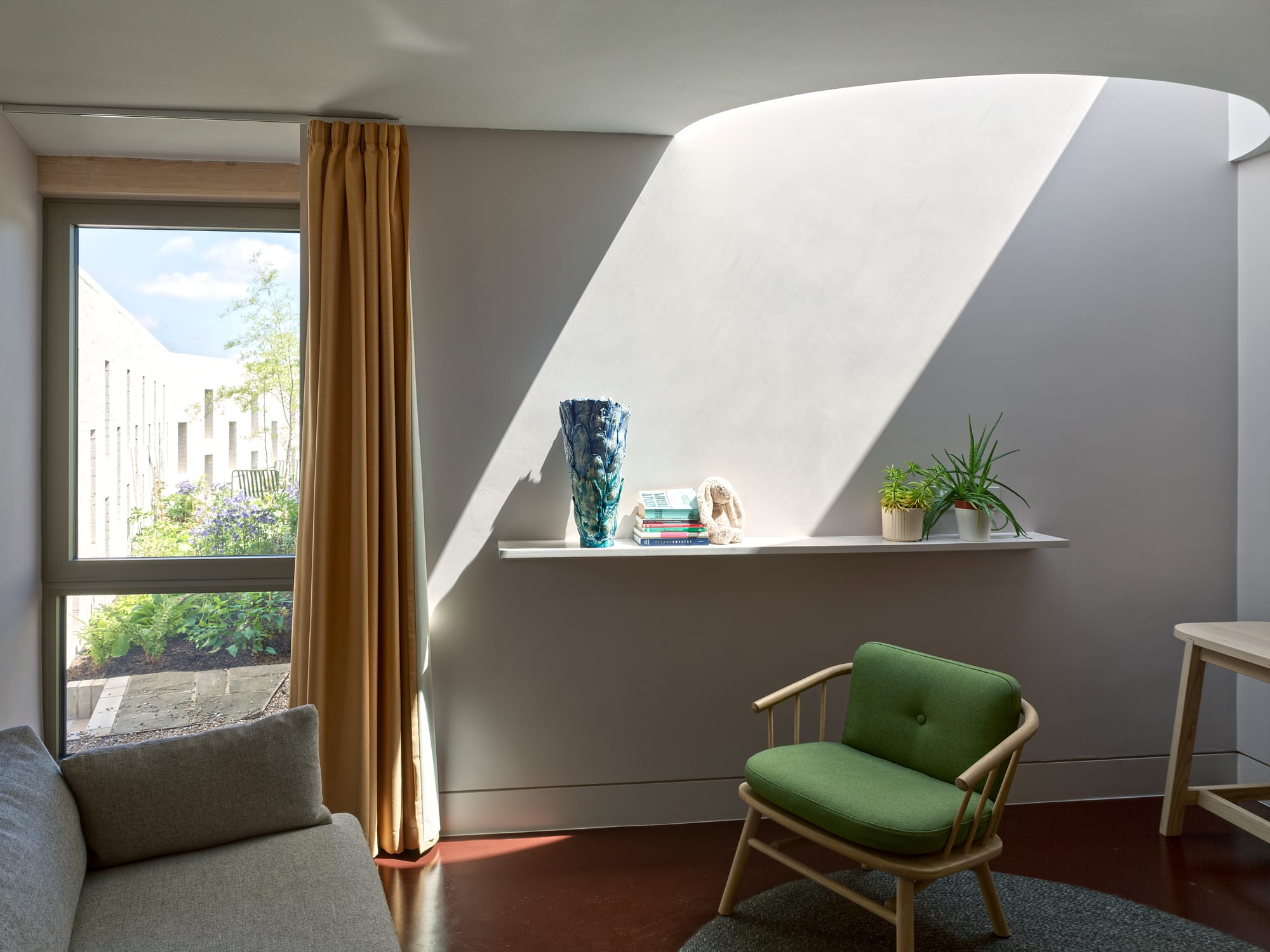
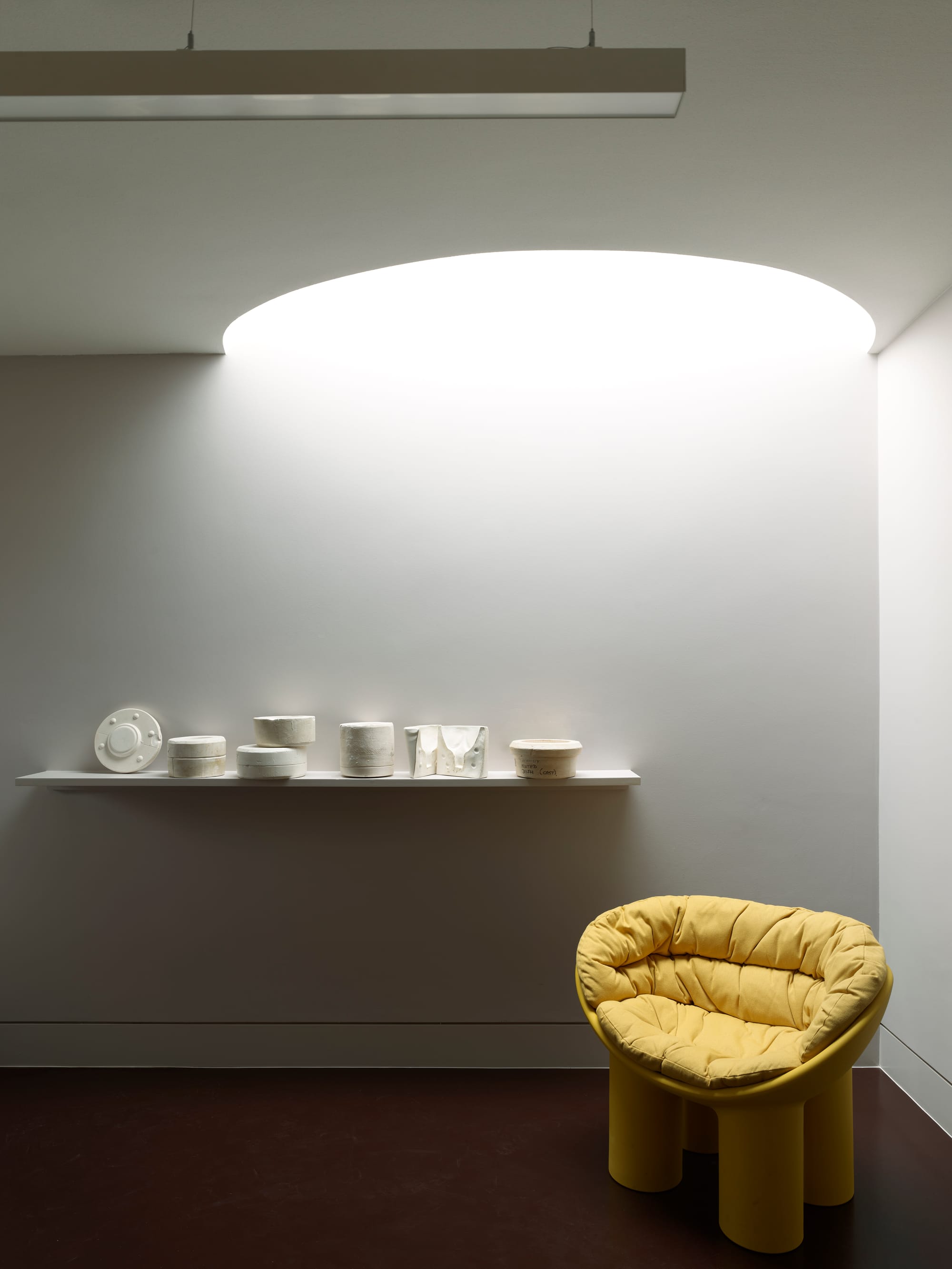
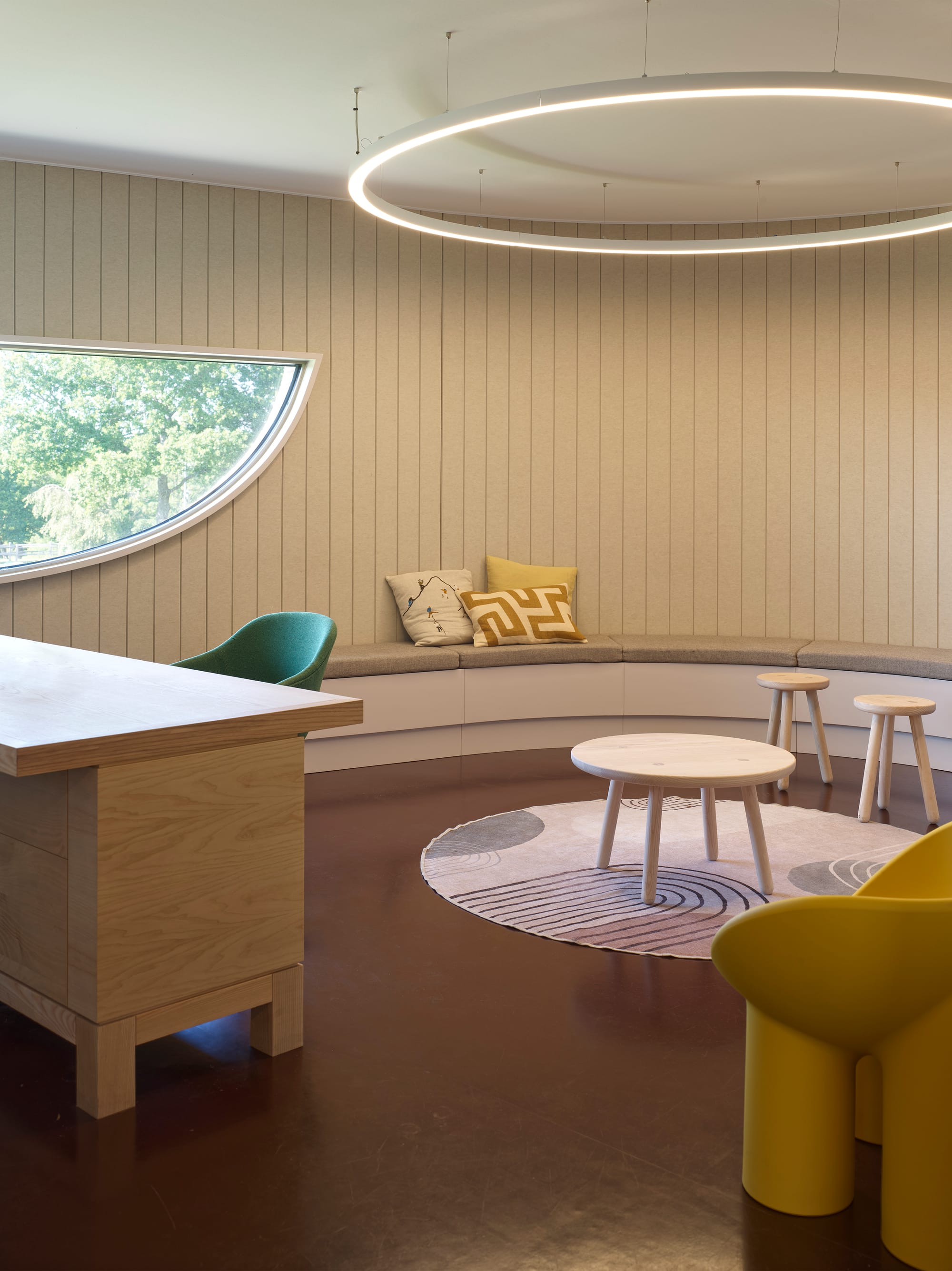
Interior elements | Photo credit: Brotherton Lock
The intention to use natural materials was driven by both client and architects. Material choice includes felt acoustic wall lining in the reception area and Troldtekt sustainable ceiling panels with an acoustic performance. Fisher Morrison fitted the curved wooden elements of the corridor, adding to the bespoke handmade quality that compliments the building. The practice specified sustainably made furniture by Another Country, further enhancing the sense of calm.
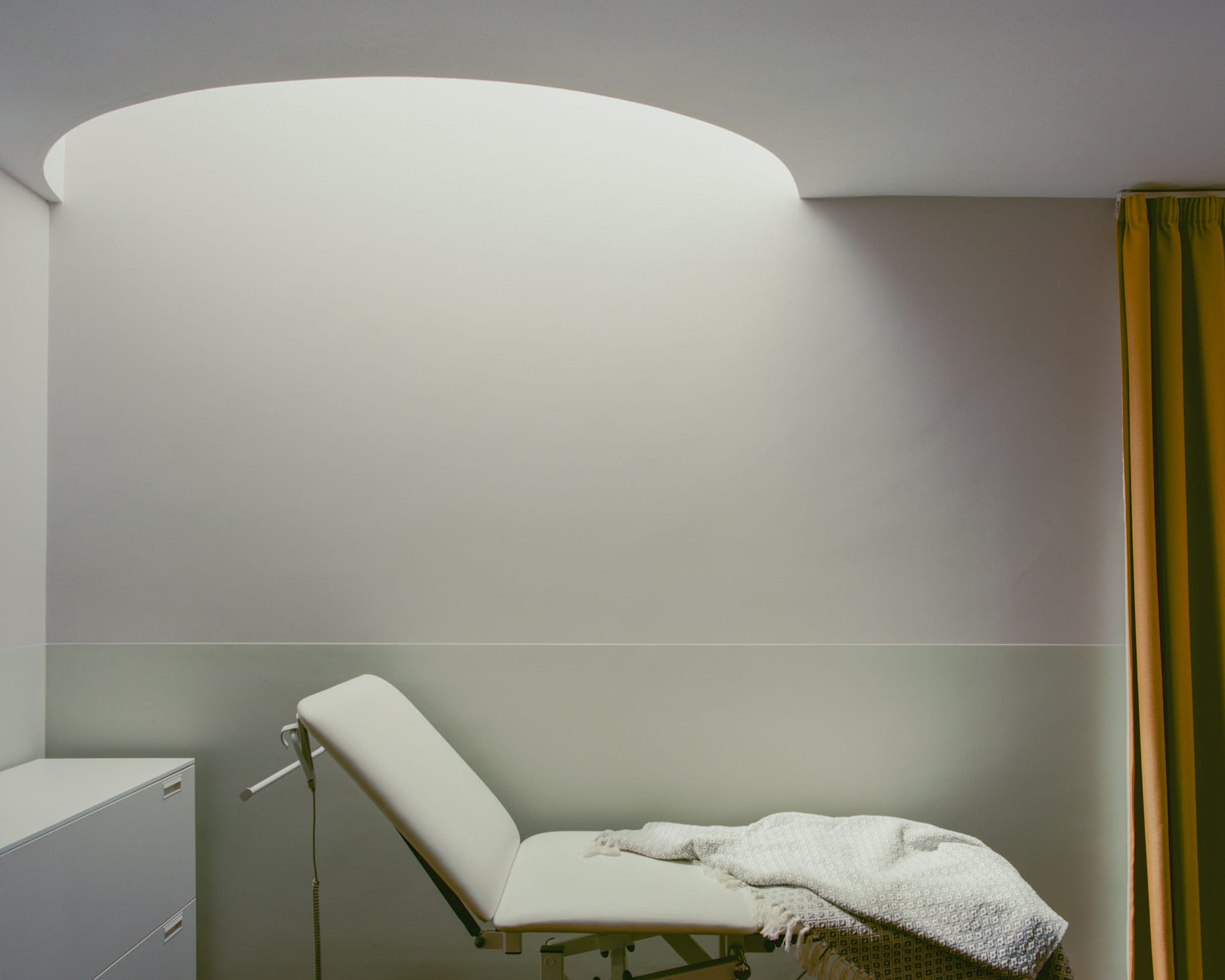
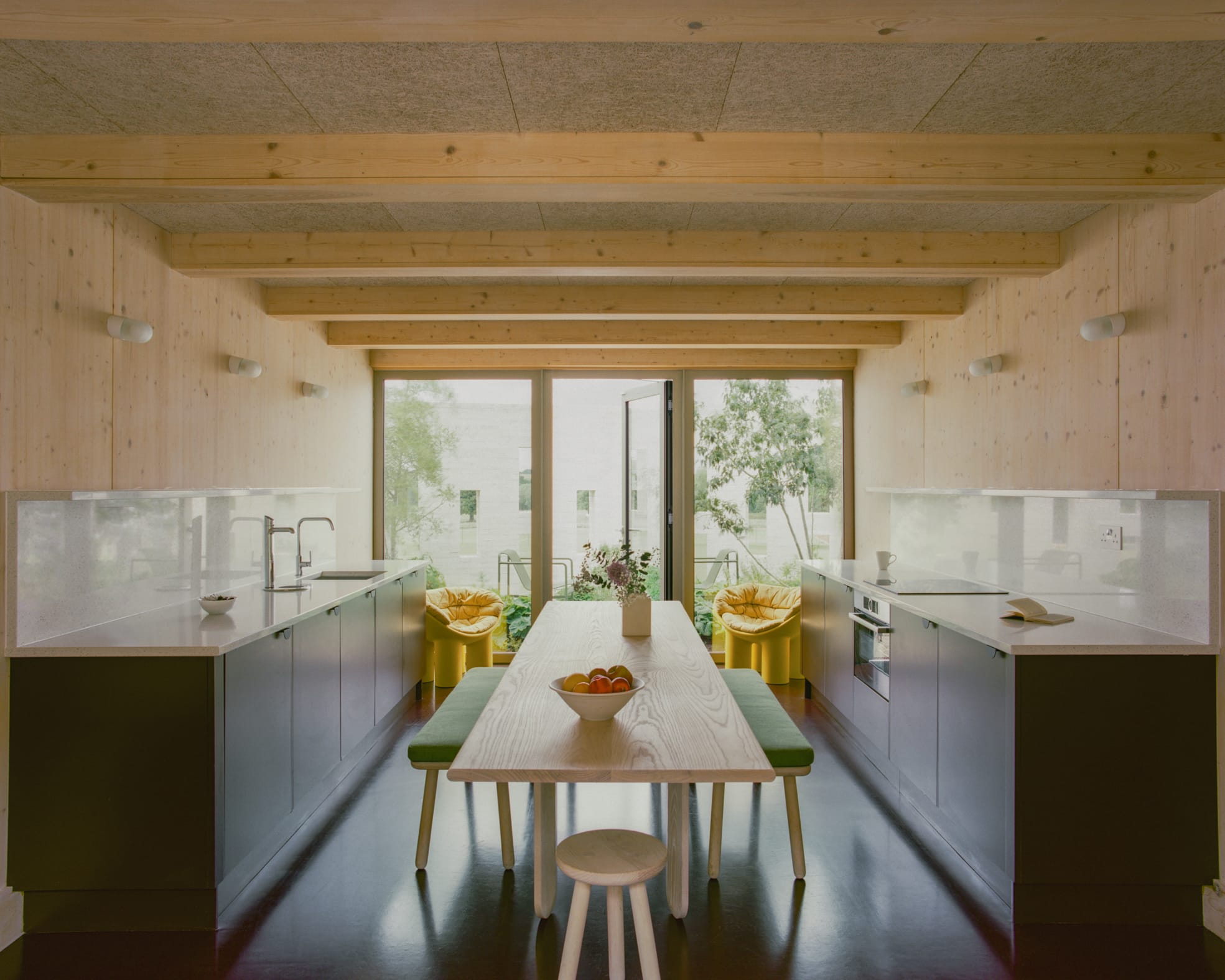
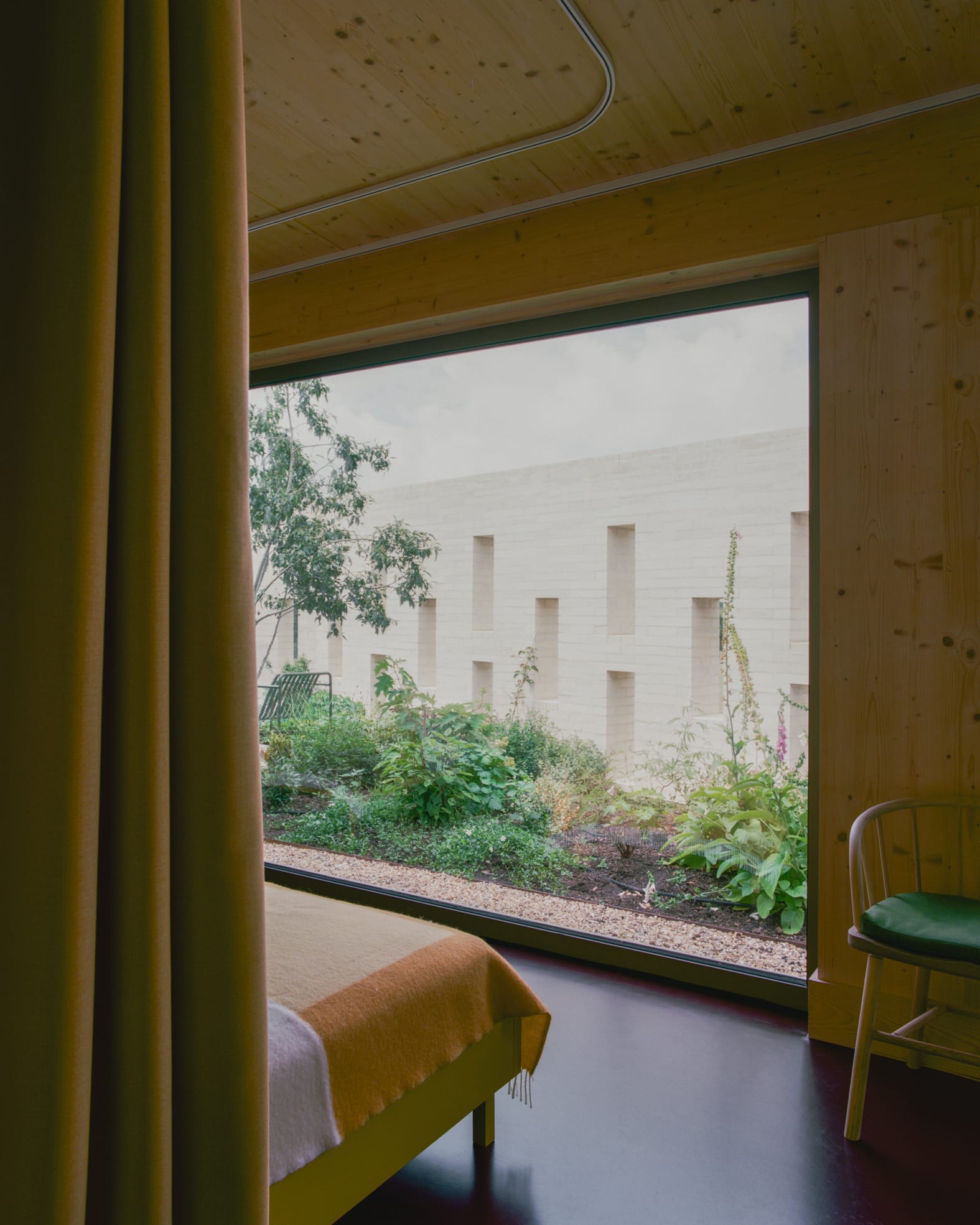
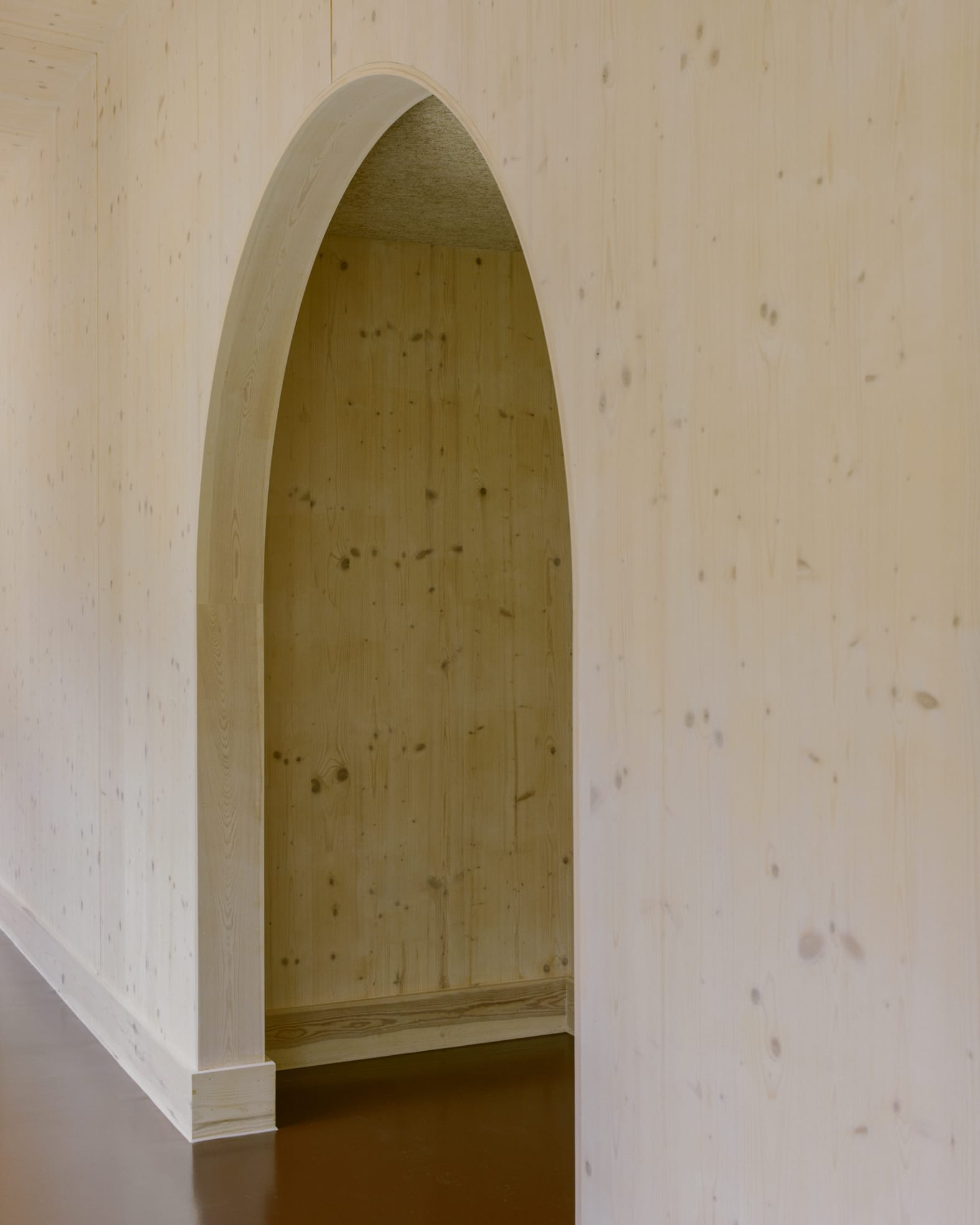
Interior elements | Photos credit: Lorenzo Zandri
Now firmly part of school life, the building has proved itself a success and is used daily by up to 10% of pupils. Headmistress Deborah Bligh notes, “this dedicated space has become an inclusive and welcoming environment where all our pupils can feel supported and valued.”
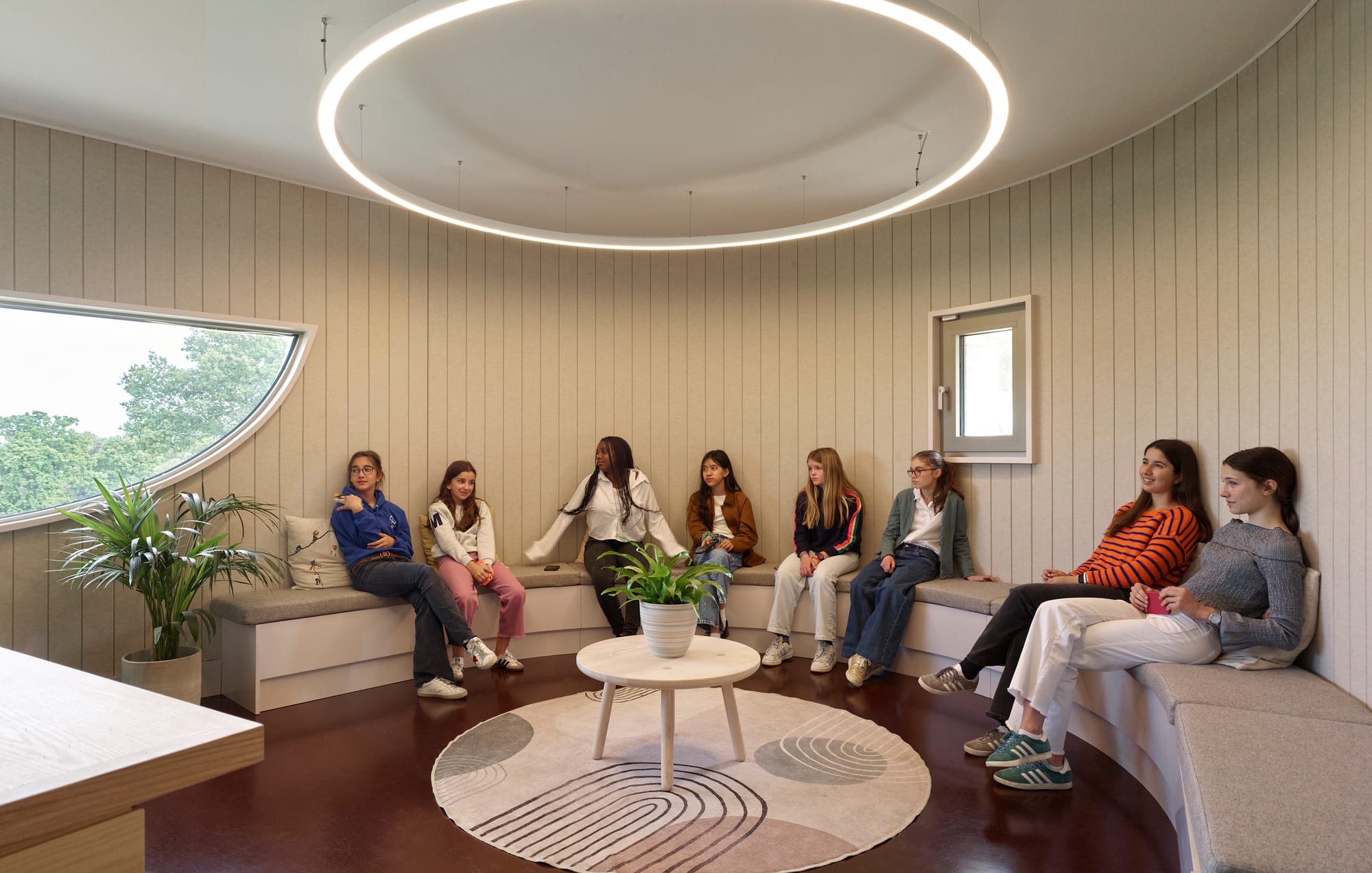
Adam Richards Architects created a space that serves as a safe haven, at the same time marrying sustainability with a building so beautifully designed that it will become a treasured part of the school’s life for many years to come.