Gourmega; food for thought with Mariam Issoufou Architects
Think of the work of Mariam Issoufou, founder and principle of Mariam Issoufou Architects, and images of warm earth red walls that rise from the soil beneath them to create bold and striking forms come to mind. The practice’s work in the architect's native Niger has given vernacular architecture new life and meaning. Projects including the Hikma Community Complex in Dandaji, Niger, realised in collaboration with Yasaman Esmaili of Studio Chahar, that preserved the village’s existing adobe mosque by converting it into a library and building a new mosque alongside it has seen Mariam Issoufou widely recognised as a leading force in African architecture and beyond. Awards for her work include the United Nations Environment Programme (UNEP) naming Issoufou a Champion of the Earth and the 2025 Roux-Dorlut Architecture Medal awarded by the French Académie d’Architecture and given in recognition of excellence in the relationship between architecture, site and landscape. Mariam is professor of Architecture Heritage and Sustainability at ETH, Zurich.
At the heart of the practice’s work is a commitment helping communities establish long term, sustainable practices to ensure a future adapted to changing climate and extreme heat. For the Hikma Community Complex the original masons were invited to join the project team and introduced to adobe-enhancing additives and erosion protection techniques that strengthened traditional construction. This fostering of material knowledge shared across generations respects the past but critically ensures an economic future for the skilled workers.
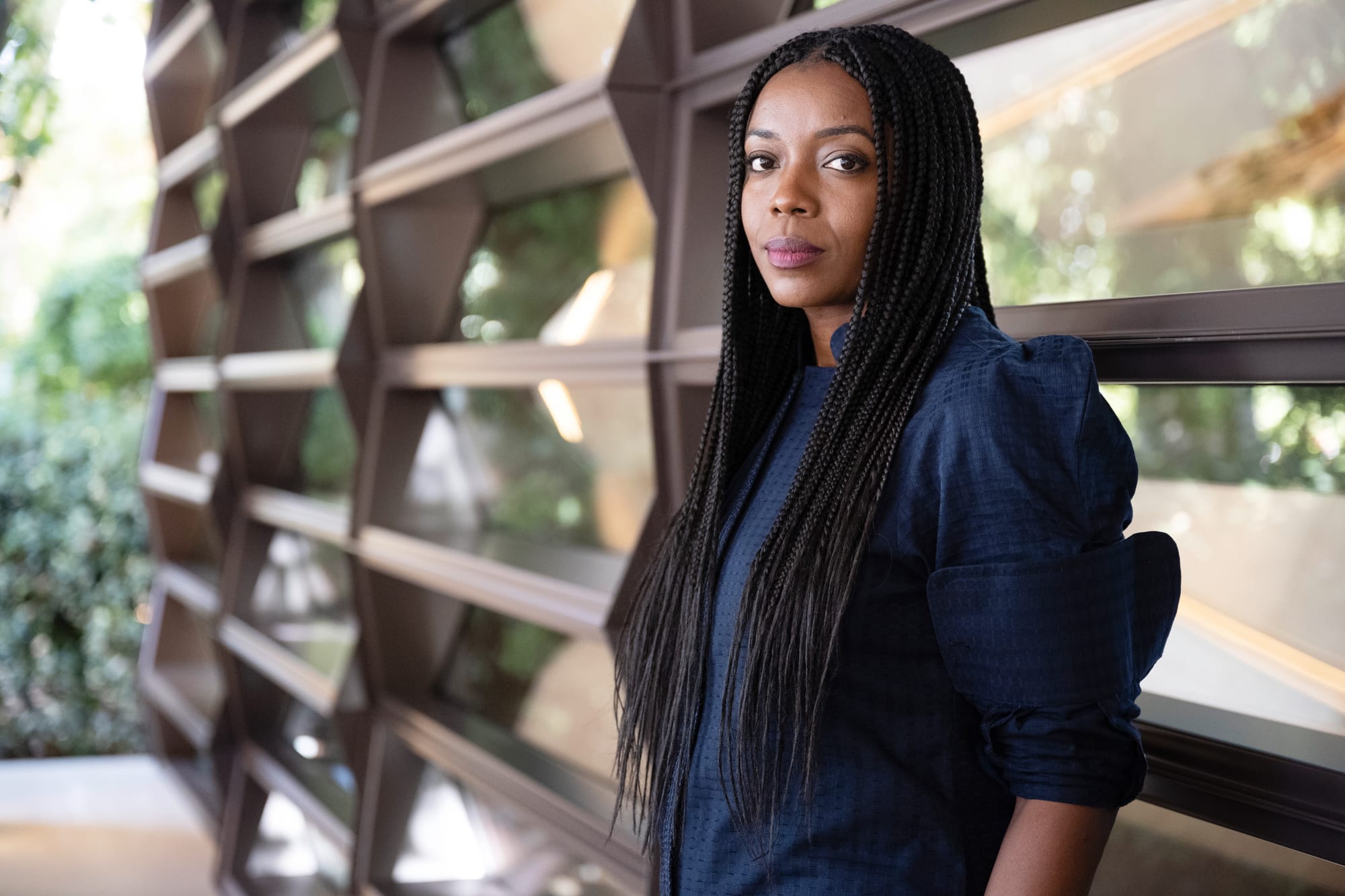
Mariam Issoufou was a relative late comer to architecture having spent the first part of her working life as a software developer in New York, believing it to be a more viable career than architecture. The pull of architecture proved too strong, leading to her enrolling in an architecture programme in her mid-30s. From the beginning of her new career, she was focused on creating work that had meaning, that responded to context and cared about the people whose lives would be directly touched by the practice’s work.
Now based in New York, Mariam’s first project in her adopted home town is Gourmega, a zero-waste restaurant with ambitions beyond its 670-square-foot footprint. The first-of-its-kind restaurant is run by the Bronx-born entrepreneur Jon Gray, founding member of Ghetto Gastro; a culinary collective dedicated to using food ‘to open borders and connect culture’. Gourmega supports a soup kitchen at the back of the restaurant, a partnership with Rethink Food, an organisation addressing food insecurity by collaborating with restaurants to feed local communities in need. It’s a partnership that engages diners with Rethink Food’s mandate to promote a more sustainable, equitable food system - providing a steady revenue stream to fund the soup kitchen.
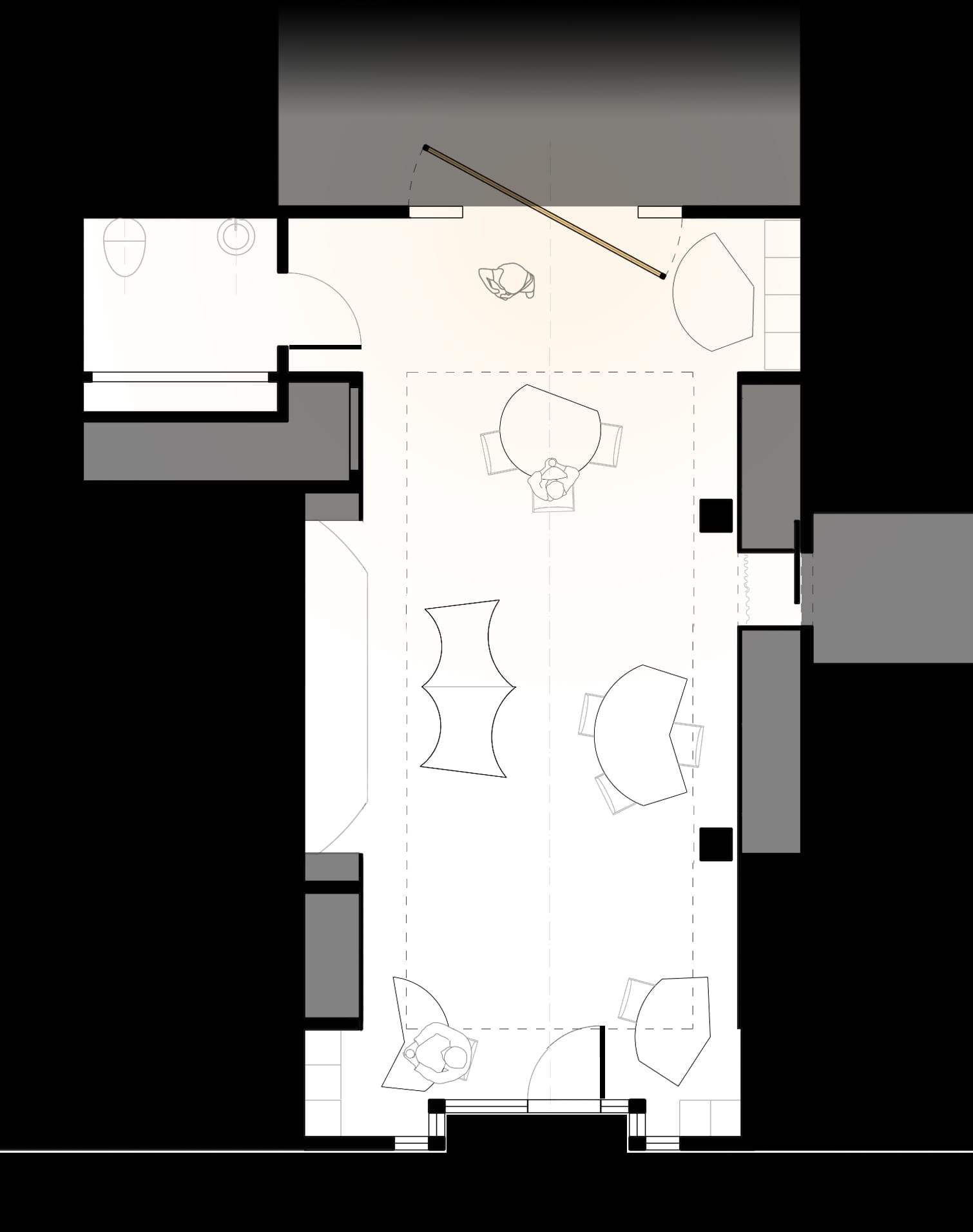
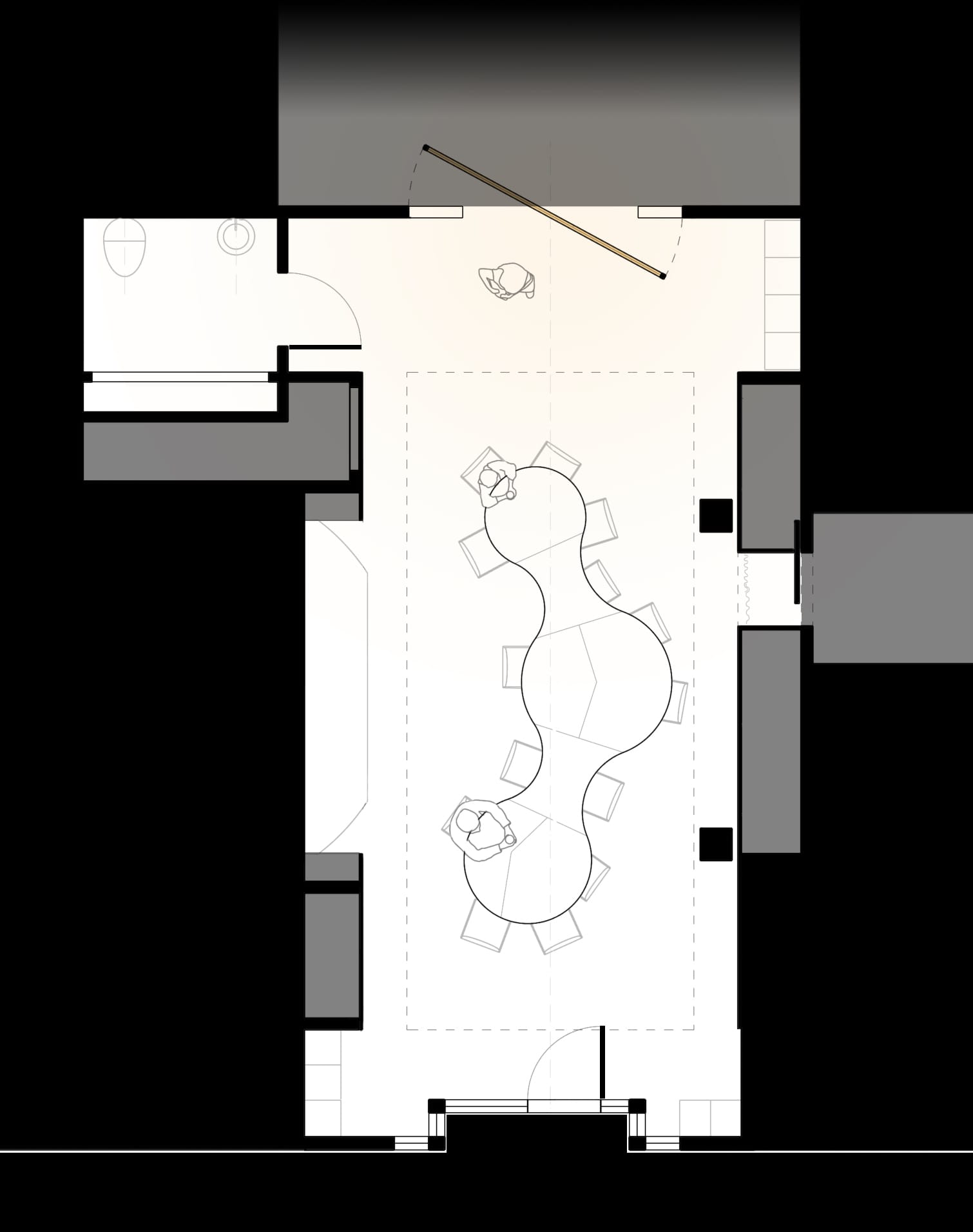
Left: coffee shop; Right: Supper club | Drawings by Mariam Issoufou Architects
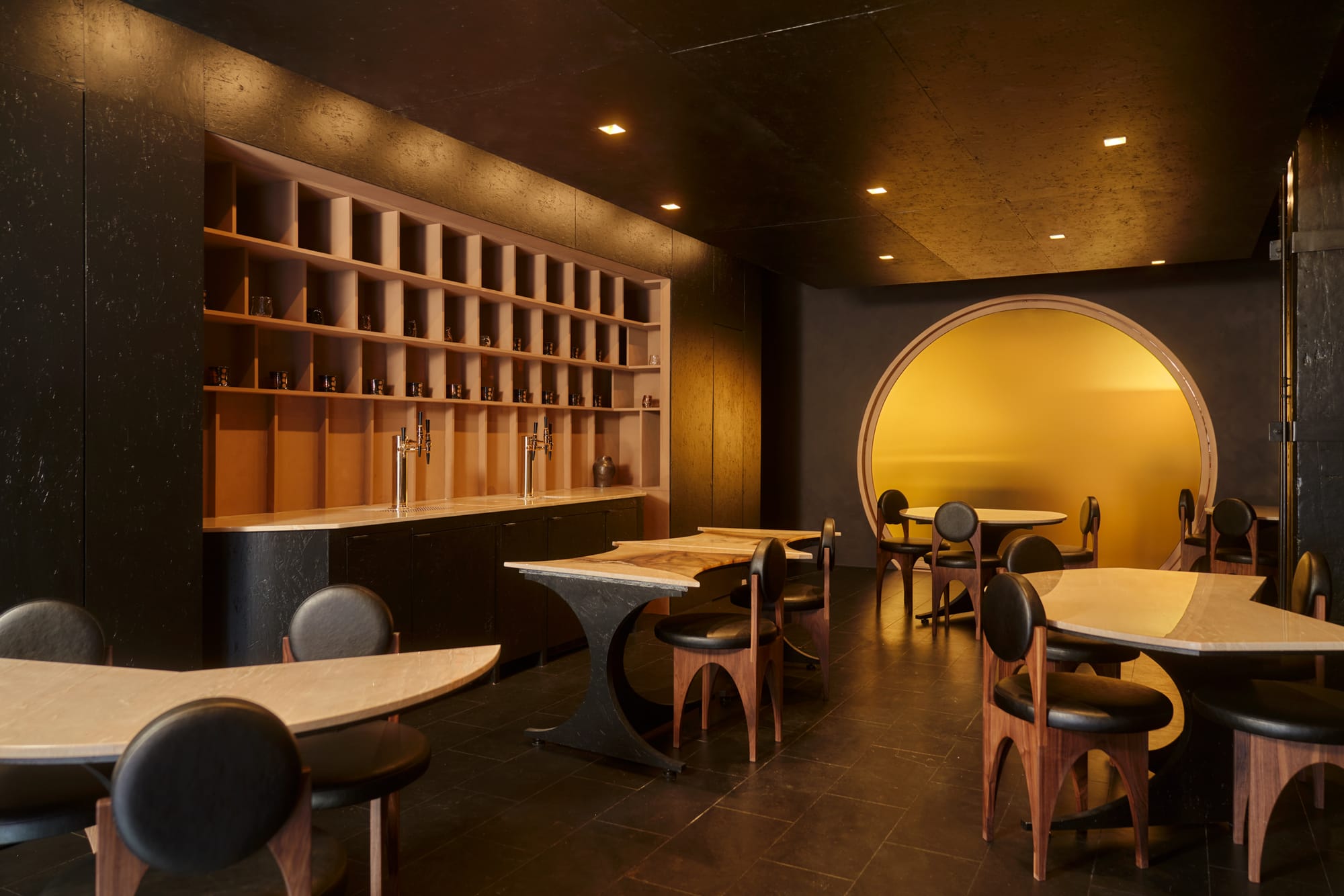
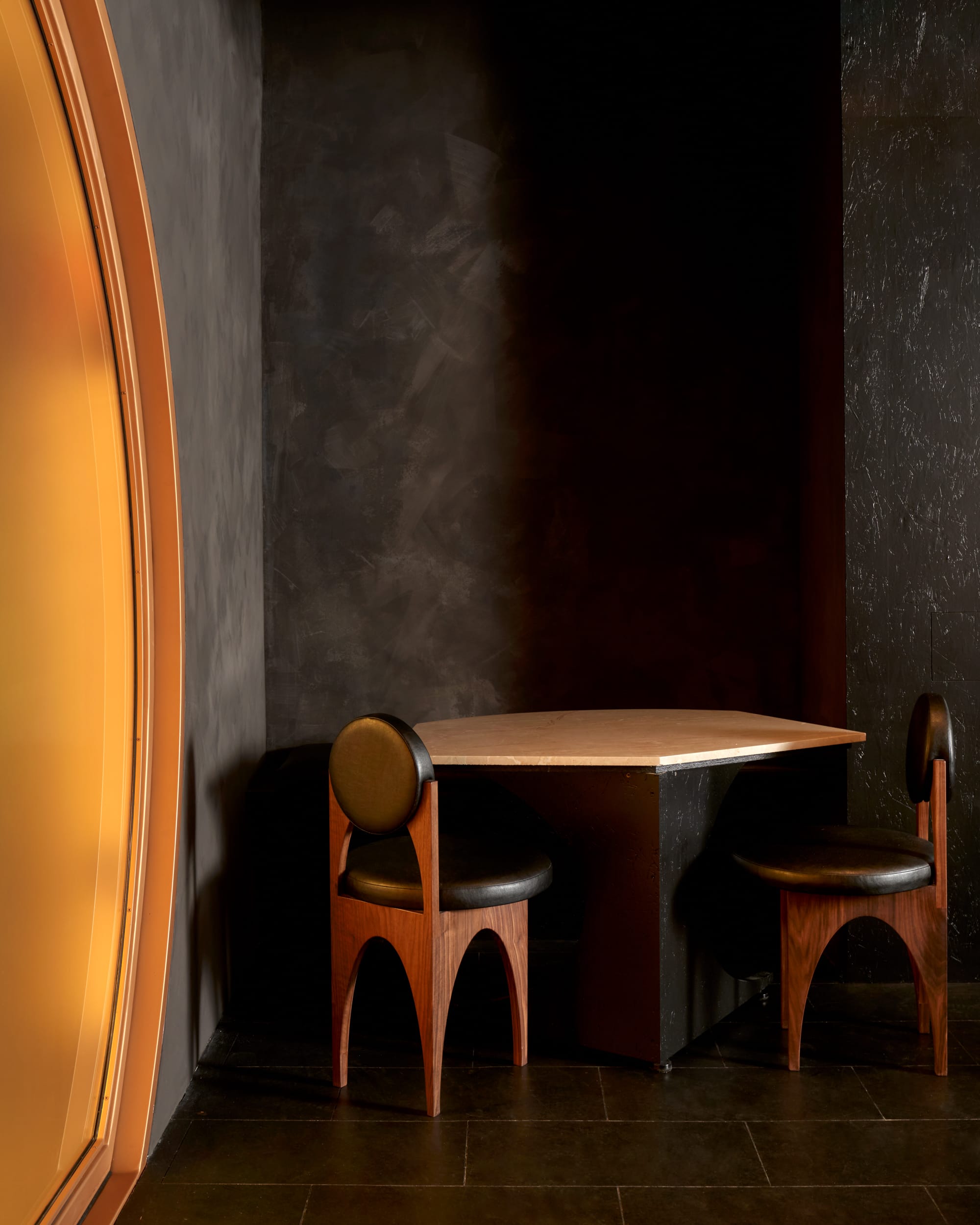
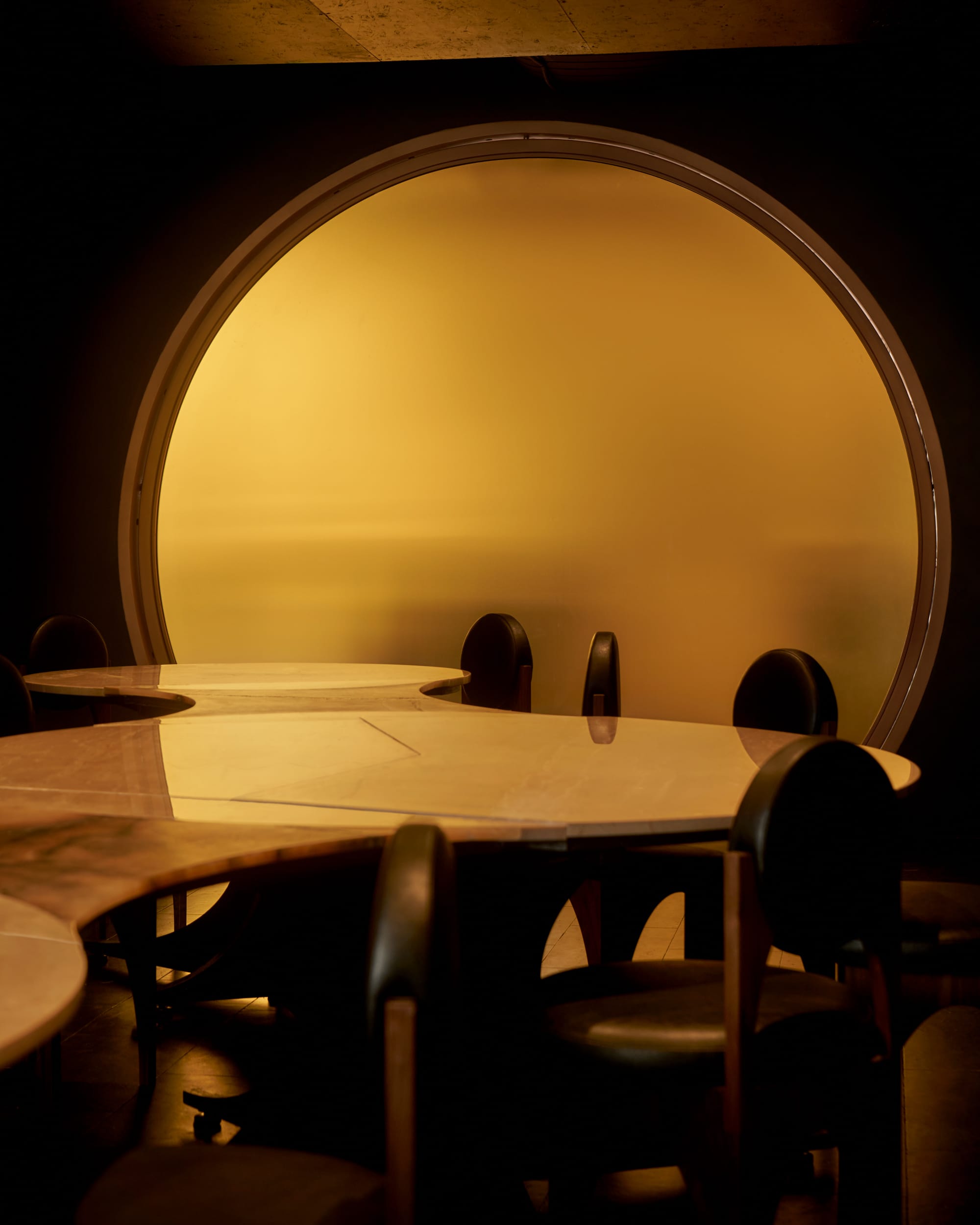
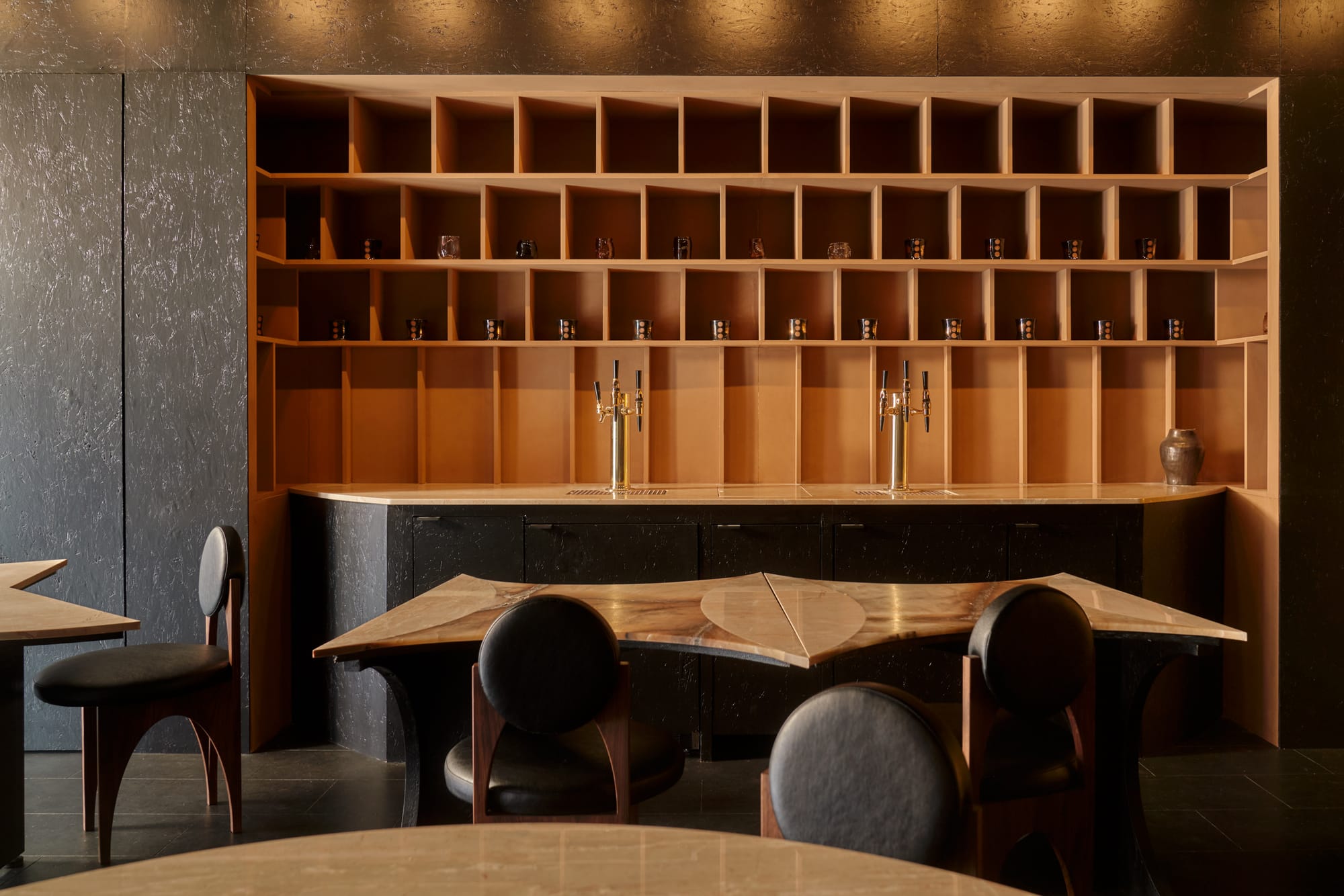
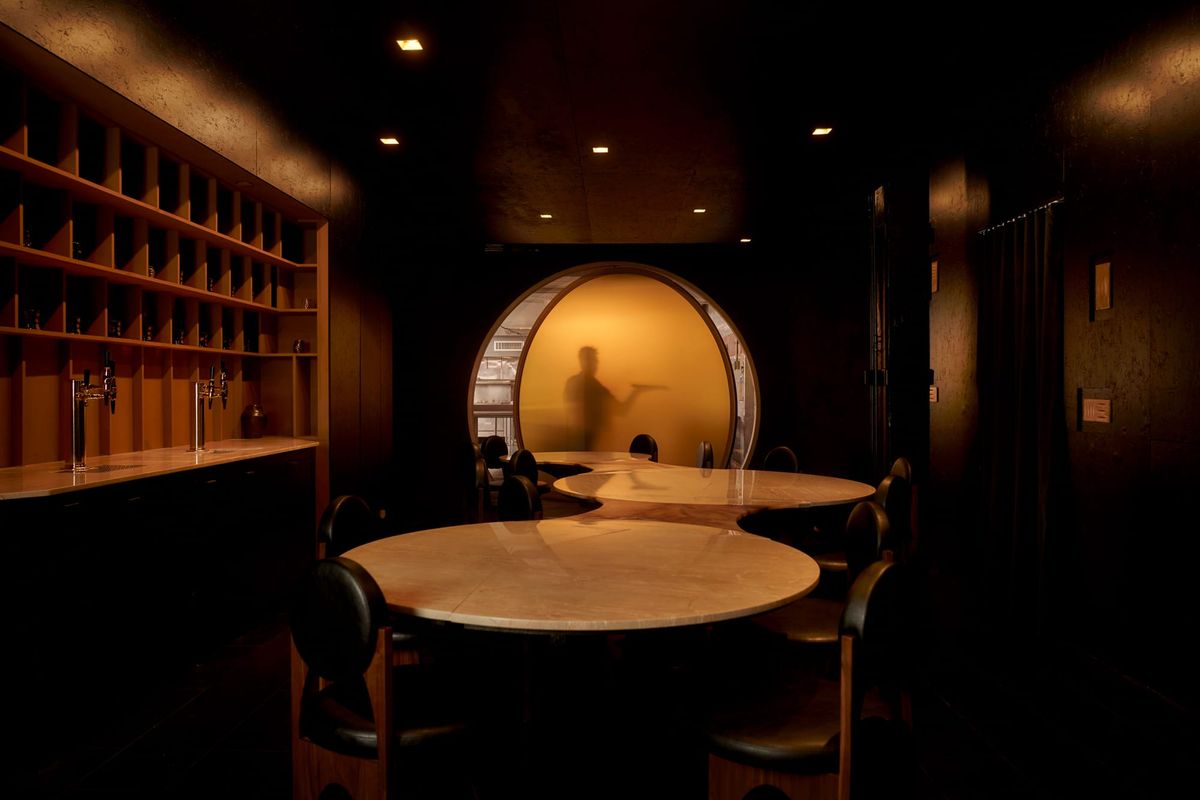
Gourmega | Images by Seth Caplan
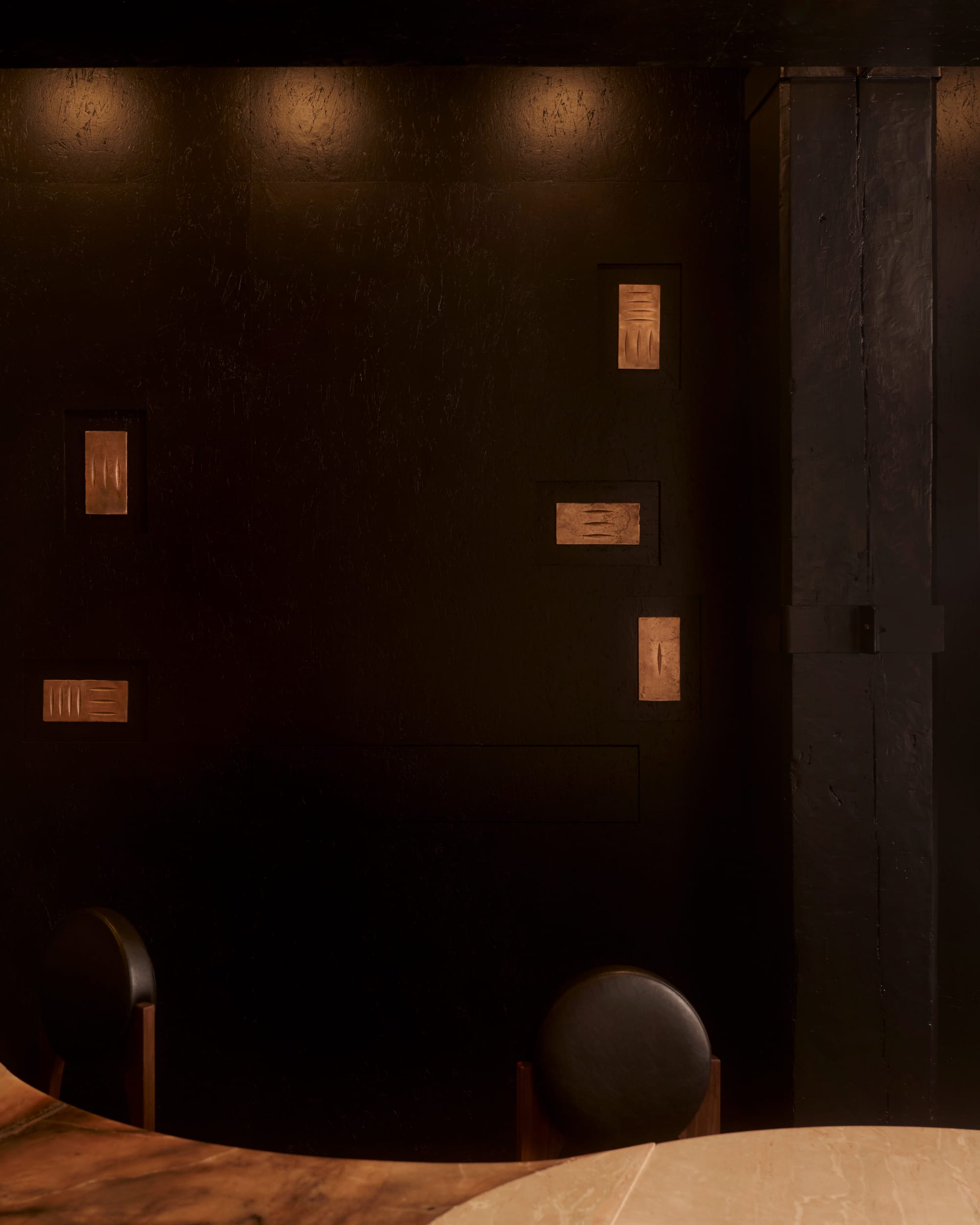
Gourmega, describes itself as ‘a new kind of cultural table rooted in the legacy of Black and immigrant New York while pushing toward the future of food.’ The restaurant sits on the ground floor of a landmark 1883 building in Manhattan’s South Village Historic District. The area provided a rich context for the practice to explore and give shape to their project. One of Manhattan’s first Black neighborhoods, the historic area was referred to as the Land of the Blacks in the 1700s, a place where newly freed slaves of African descent settled as land owners. This layered history informed the design of the restaurant's materiality to create a dark and immersive space with black limewashed walls and a black-stained cork floor. Set against this dark backdrop, warm walnut custom designed furniture glows and a circular glass door - a portal between kitchen and restaurant - becomes a setting sun.
The practice designed Gourmega for flexibility enabling the space to operate as a café by day and supper club by night, where the restaurant's intimate setting hosts guest chefs to cook especially curated menus. The hierarchical long table arrangement was swapped with a group of interlocking circles with groups of three to six seats encouraging meal sharing and conversation in reference to food traditions from around the world where people gather together in a circle to share food. The flexible design of the furniture allows it to be dismantled into smaller fragments for a café-like setup during the day.
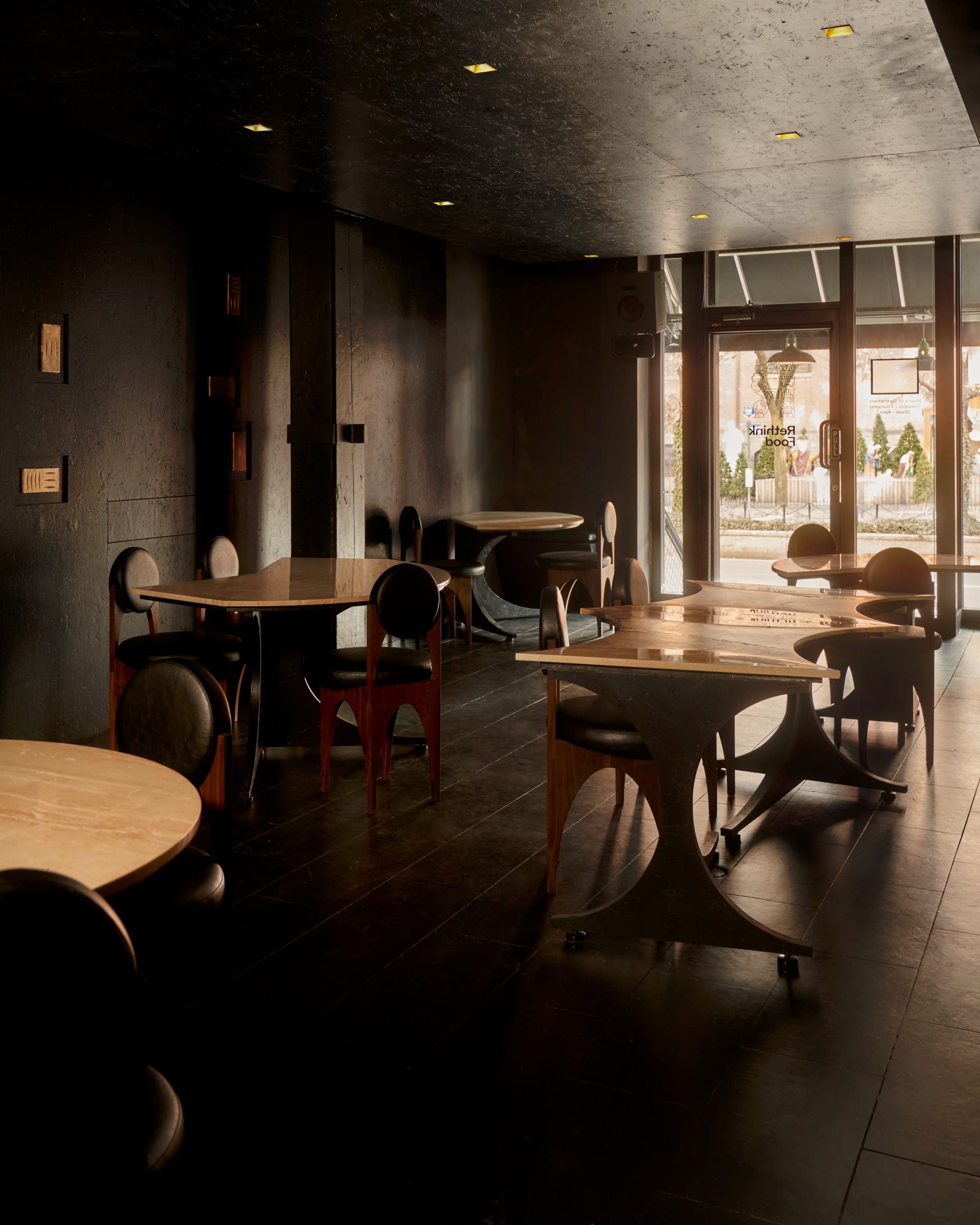
As with all of the practice’s projects, materials are allowed to shine. A sustainable materials palette of stone and timber include alabaster and travertine tabletops with black-painted legs, and custom-designed walnut chairs with vegan leather backs that drew inspiration from the High Bridge, one of the Bronx’s most iconic landmarks - a symbol of history and resilience. All furniture was produced by local design and build studio TW2M. Wooden shelving displays merchandise and in the spirit of ensuring that no materials were wasted, offcuts from the chair production were transformed into one-of-a-kind bowls and serving dishes. The result is a space with an exceptionally thought through tactility.
The fluidity of the space allows the two long walls to function as exhibition canvases, where a rotating display reflects the restaurant owner’s passion for championing local African American artists. Artwork is also on display in the restroom where a circular cutout behind the mirror frames an artwork with the inaugural piece a portrait by photographer Joshua Woods. Fourteen custom-fabricated bronze inserts evoking the traditional practice of facial scarification by Nigerian designer Nifemi Marcus-Bello grace the restaurant’s interior facade.
Gourmega is a project with collaboration at its heart. The restaurant’s considered design has resulted in a space of shared stories, with a generosity of spirit that will touch the hearts of all those who experience it; from the restaurant diners to the soup kitchen community.