Featured
Mapping positive change at Tipping Point East
Founded by RESOLVE Collective, Yes Make and Material Cultures, Tipping Point East is the UK's first Climate Futures Centre, marking a pivotal change in the construction industry’s relationship with materials. The new circular construction hub creates a space to store, process and redistribute reclaimed materials.
Our Editor-at-Large Vanessa Norwood travelled to Tipping Point East at its home in the Royal Docks, London to find out how this important and timely project harnesses material reuse, low-carbon construction, skills training, community collaboration and cultural activities to bring about real and meaningful change. She spoke to RESOLVE Collective co-founder Akil Scafe-Smith and Freya Bruce of Yes Make about the challenges and opportunities of this game changing project.
Vanessa: Can you tell us about the three founding organisations and how you came together to create Tipping Point East? You all have particular areas of interest and expertise but there’s a lot of overlap.
Akil: RESOLVE is an interdisciplinary design studio. We work in art, architecture engineering and technology and all of our work is around socially and community focused design. Material Cultures look at a radical view of bioregional design, asking what can we get from the soil beneath us and how we can flip that on its head when it comes to the material industries, with a heavy focus on learning as well as community. Yes Make are an amazing group; they fuse practical making, they make buildings and structures with a beautiful philosophy of using what's there in the fridge. They have, from their inception, used materials that have been surplus to other types of extractive processes and redirected those back towards community-building and learning.
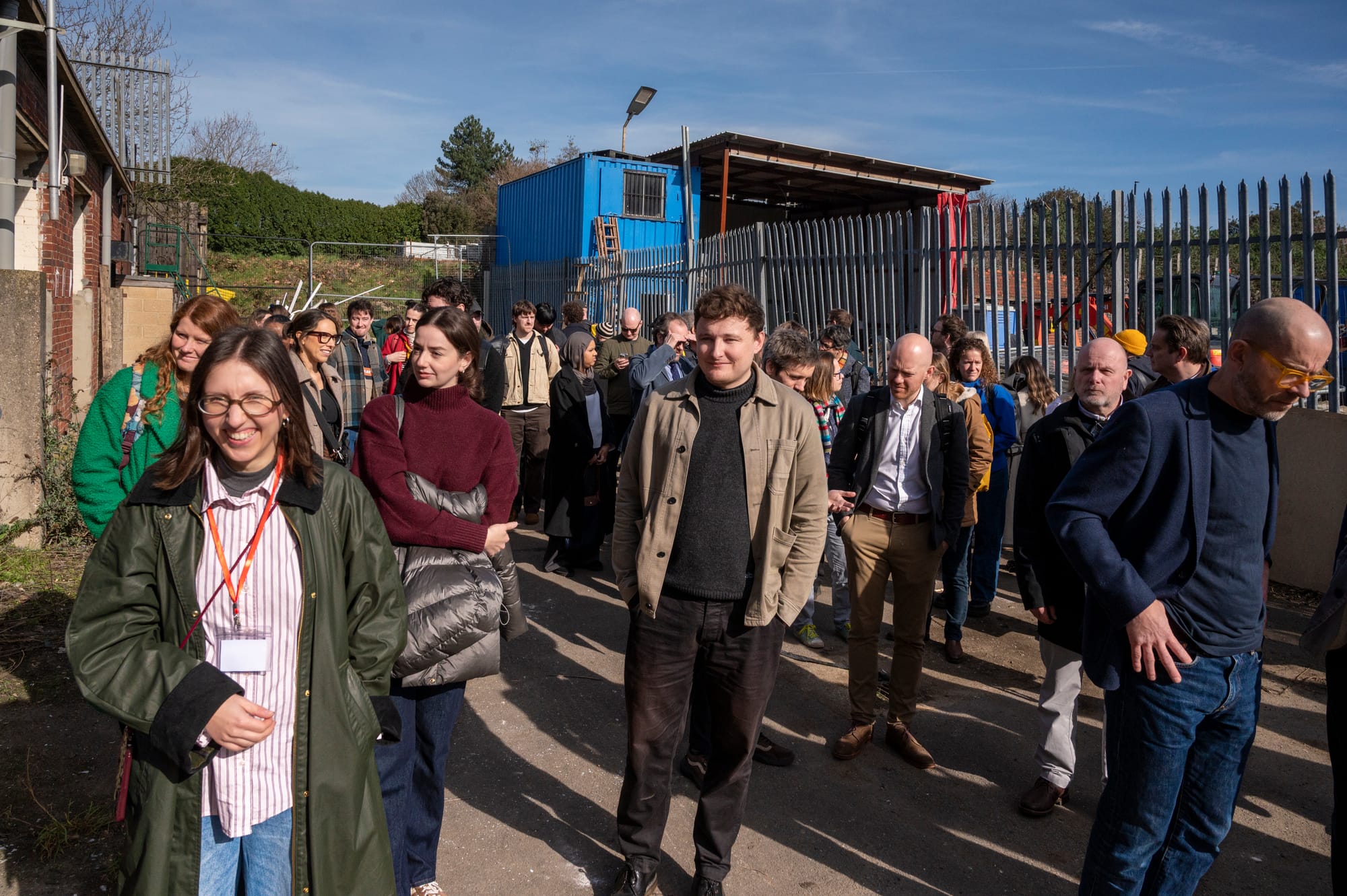
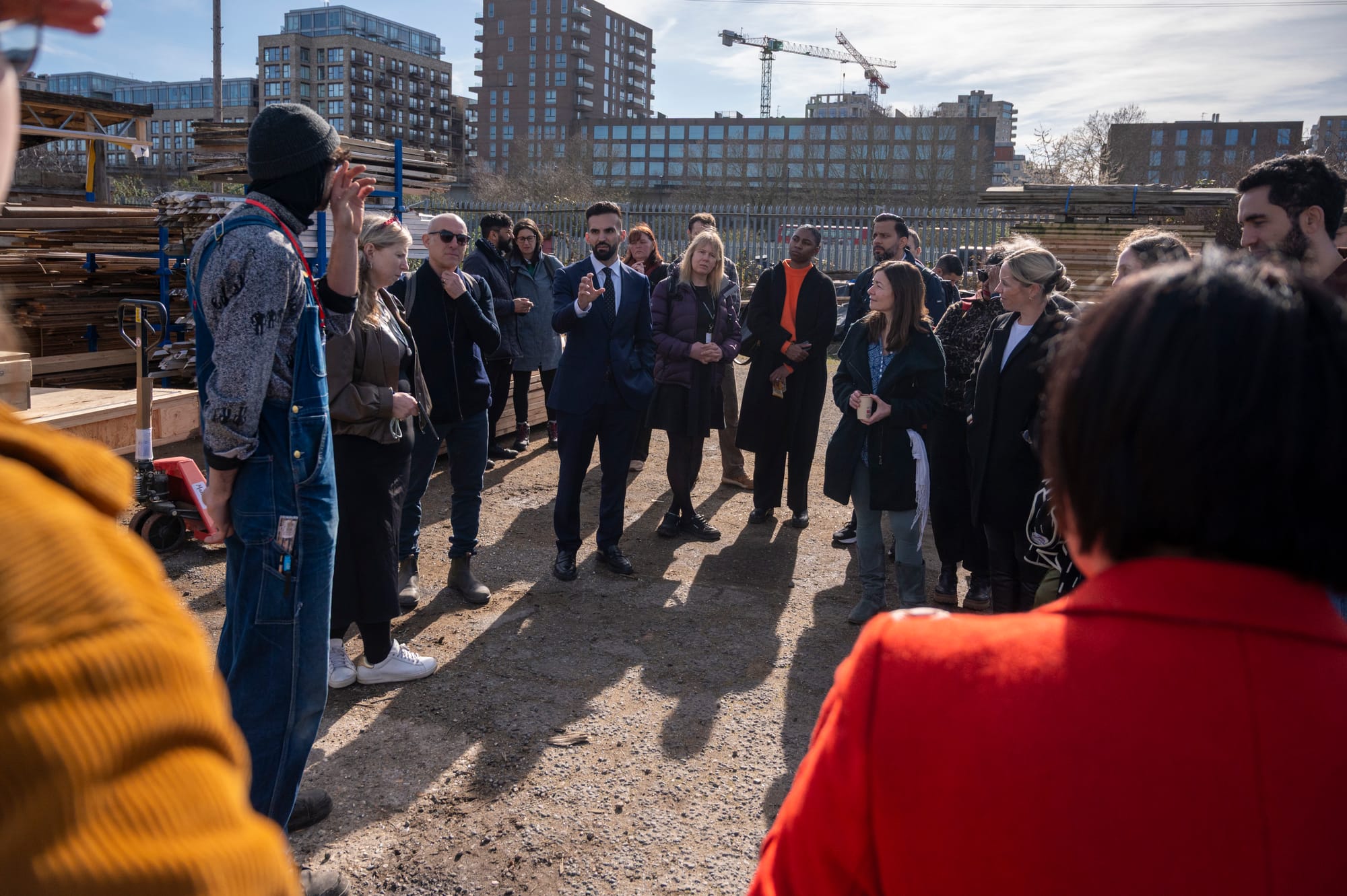
Tipping Point East launch | Pictures credit: Stephen Norman Young
Vanessa: How did the collective will to create Tipping Point East grow out of your separate practices?
Akil: The idea has multiple origin stories. Material Cultures’ landmark Circular Economy Construction Hub 2022 report with the London Borough of Newham set a precedent for the public sector buy-in and scale of this work. In parallel, Joel De Mowbray, Director of Yes Make, had been in conversation with the Greater London Authority (GLA) about rehousing the organisation in the Royal Docks strategic area. And in 2024, we trialled the first iteration of Material Store - an infrastructure for excess materials from cultural institutions to be redistributed to community organisations - at University of the Arts London in Camberwell and had since been looking to situate this operation in a more permanent space.
Importantly, our organisations had begun overlapping before Tipping Point East. Years ago, Seth Scafe-Smith, our Co-Director at the RESOLVE Collective, worked at Lambeth Council with Joel and we’d frequently collaborated on a number of smaller projects with Yes Make. When Joel called to say he’d been speaking to GLA about a vacant site in Silvertown, we’d been evicted from our former Croydon studio and were sharing a space with Material Cultures in Hackney. We were literally in the room together when the call came and we said: let's all do this together.
After months of negotiations with the GLA we formed the charity Tipping Point East and took on the lease for a key part of the 20,000 square metre site in Silvertown, which is parcelled up into a puzzle of different leases. To take on this section of the site now is an important first move. It became a really interesting starting point because the negotiation process with the land owners took all of us together to accomplish.
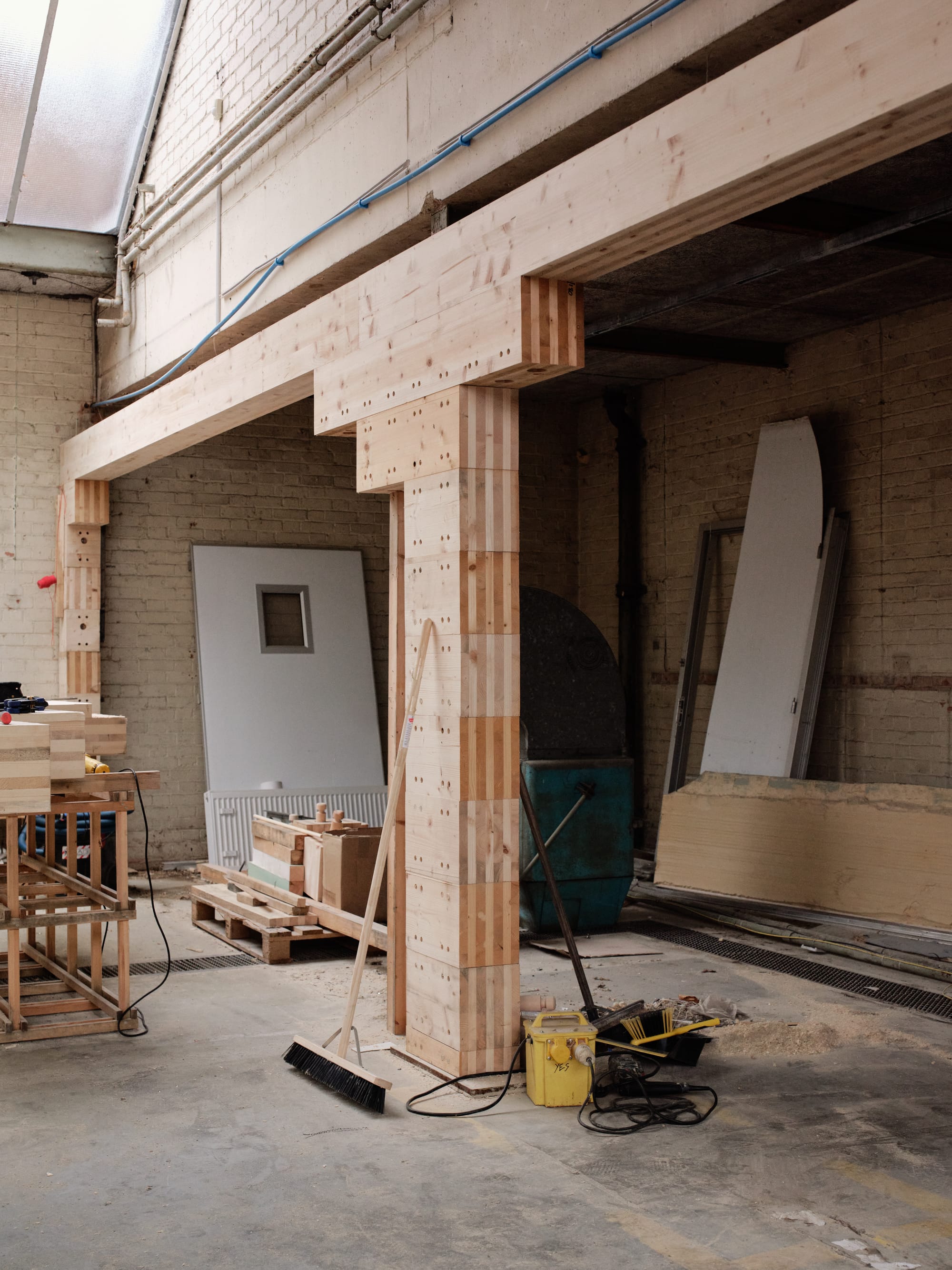
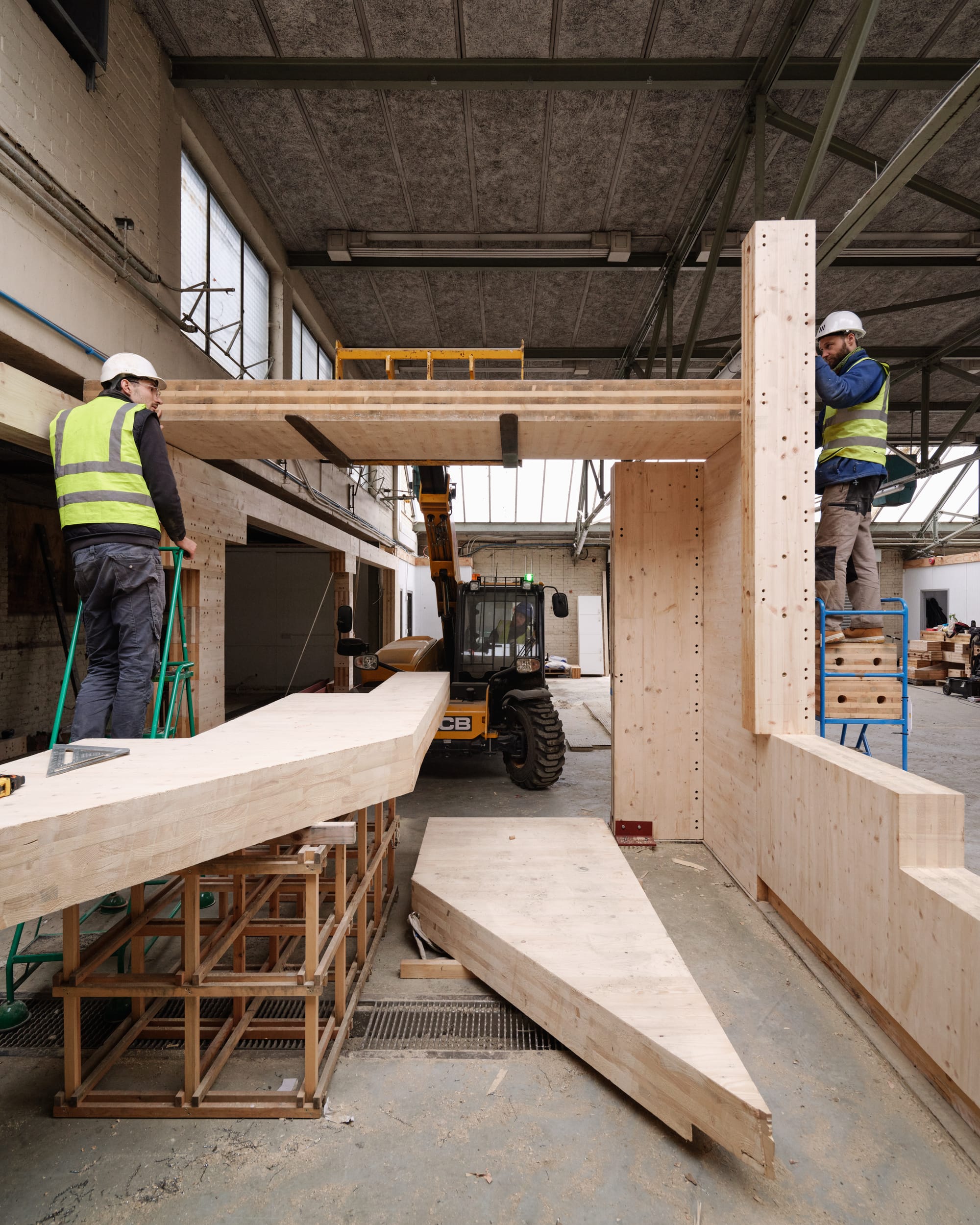
TPE office building construction | Pictures credit: Henry Woide
Vanessa: That must have been a steep learning curve.
Akil: It was really interesting to learn not just through the material side of things. We had to quickly understand and utilise the vehicles and the infrastructure needed to unlock these types of projects; sites that could serve communities but are instead locked in with landowners.
We were the right amount of stupid, at the right time, and with the right amount of collective resources to be able to do something like this. Now, the crime would be to hoard the lease to ourselves and not commit to sharing it more openly and making it publishable. I think it makes a really good template for how to do, and importantly, how not to do this type of thing.
Vanessa: This site is really interesting - can you explain the context of Tipping Point East?
Akil: I think the context is really important: being in Silvertown. The area has these histories of industrialisation and labour but also intimacy and domesticity, with really beautiful overlaps. It is also a landscape deeply mired in colonial history with big paradoxes, big developments and City Airport. And on our side of North Woolwich Road, you have essentially abandoned land that comes, almost customarily, with obscured histories and counter-cultural activities.
Vanessa: As a self initiated project were you writing your own brief?
Akil: Before Tipping Point East, our ambitions were not in dialogue. What we as RESOLVE wanted was a home for Material Store. Yes Make do a very similar thing with materials from various industries, taking them from places that are being demolished, such as timber, stone, glass, metal, plastic, large construction components. Material Cultures are interested in 1:1 demonstrators and their learning programme, MAKE, looking at accessible construction skills that respond to crises of climate, biodiversity and housing. When we all got together, this became a place to host those ambitions. It is the perfect opportunity to rewrite our briefs, collectively.
Vanessa: You have a huge challenge ahead of you - how do you filter materials and is everything taken? Is there stuff that no one wants?
Freya: We would love to get to a position in the industry where all material is welcome. We've got a massive space but there are millions of tons of materials going to waste streams every year.
Yes Make will take standard timber sheet material with minimum sizes. If it's got nails, if it's painted or varnished, that's not a problem. With components like doors, windows, light fittings we’ll take stuff at scale because we know we can use our collective imagination to come up with something to feed that into.
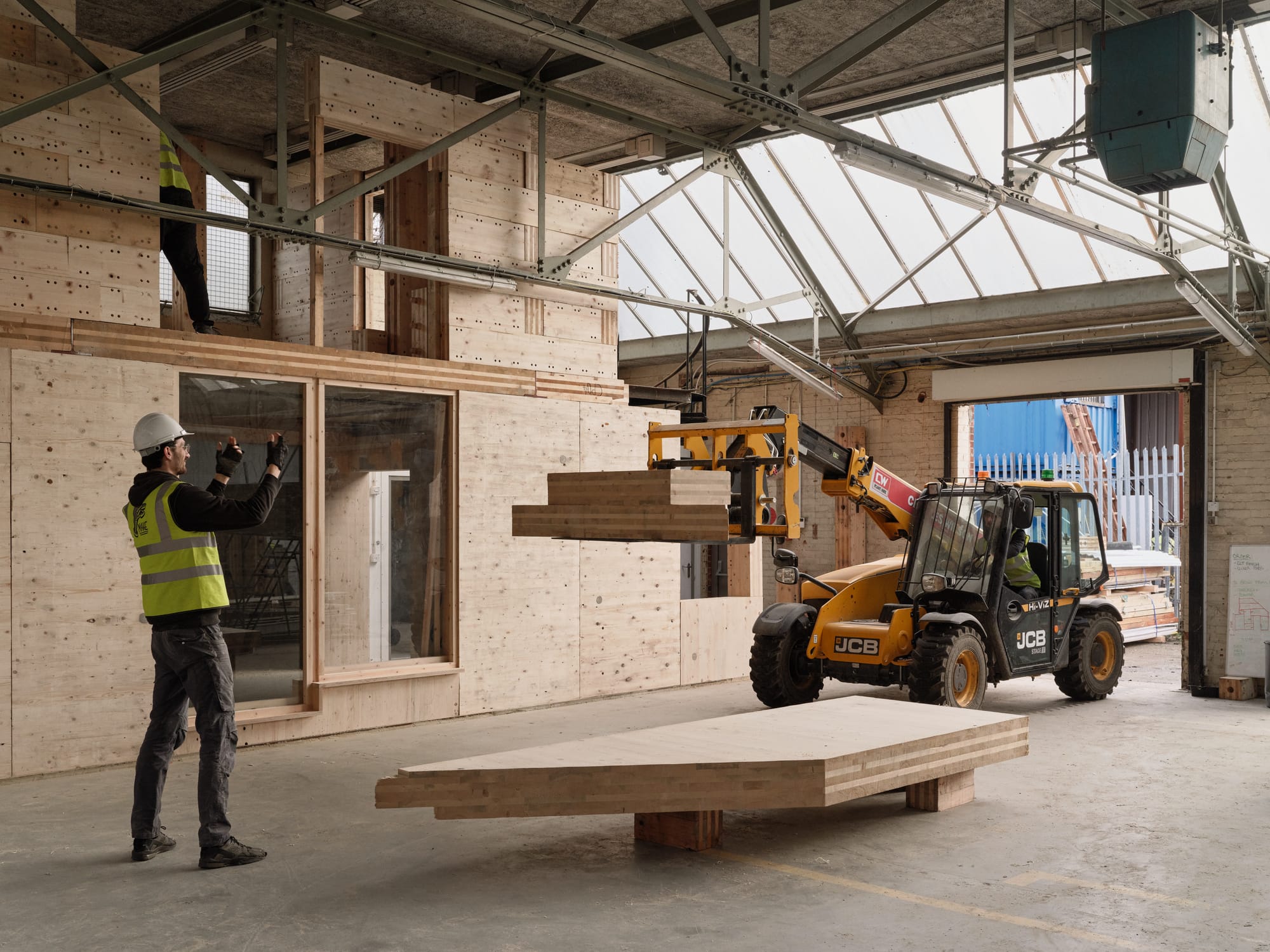
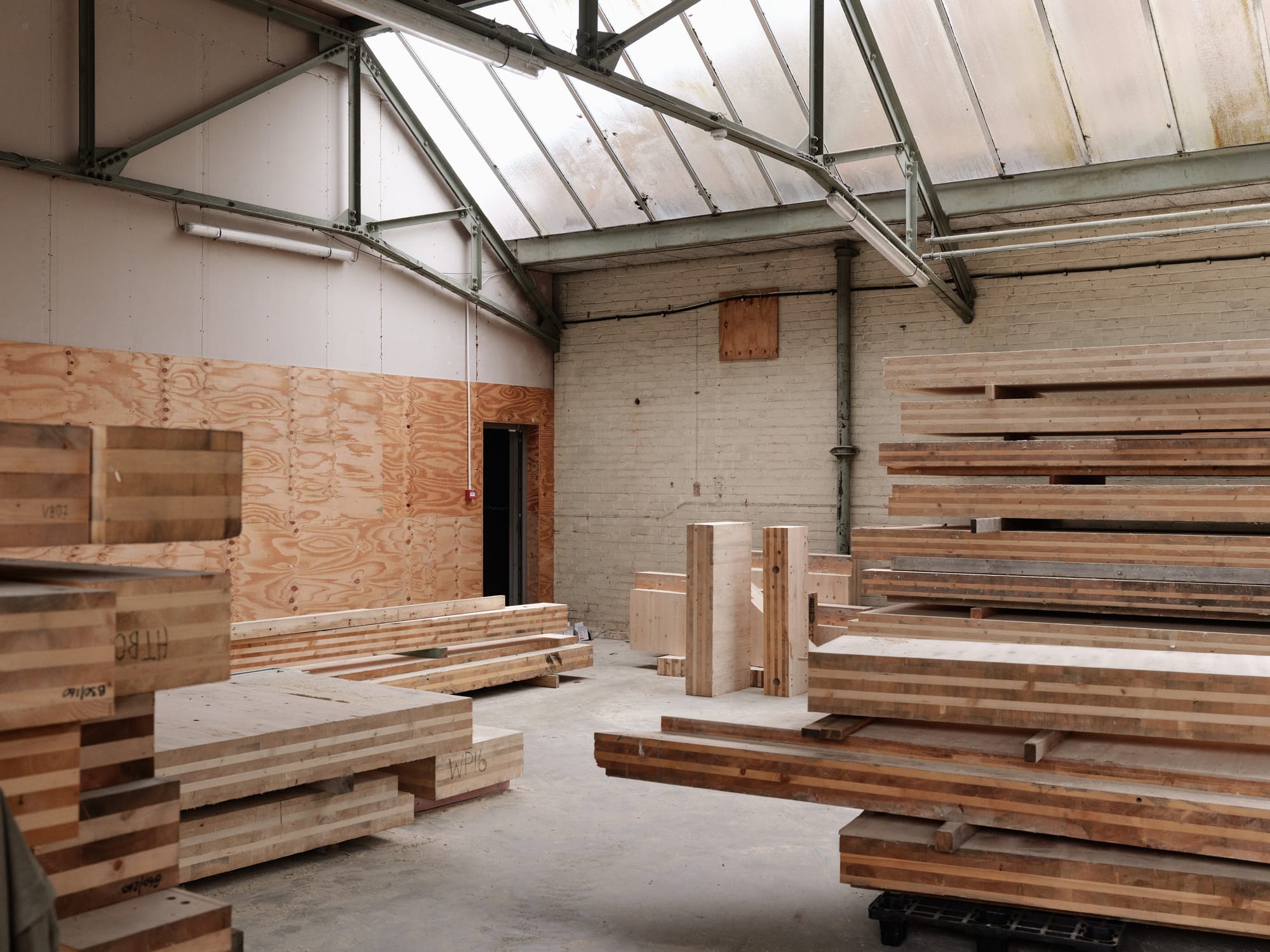
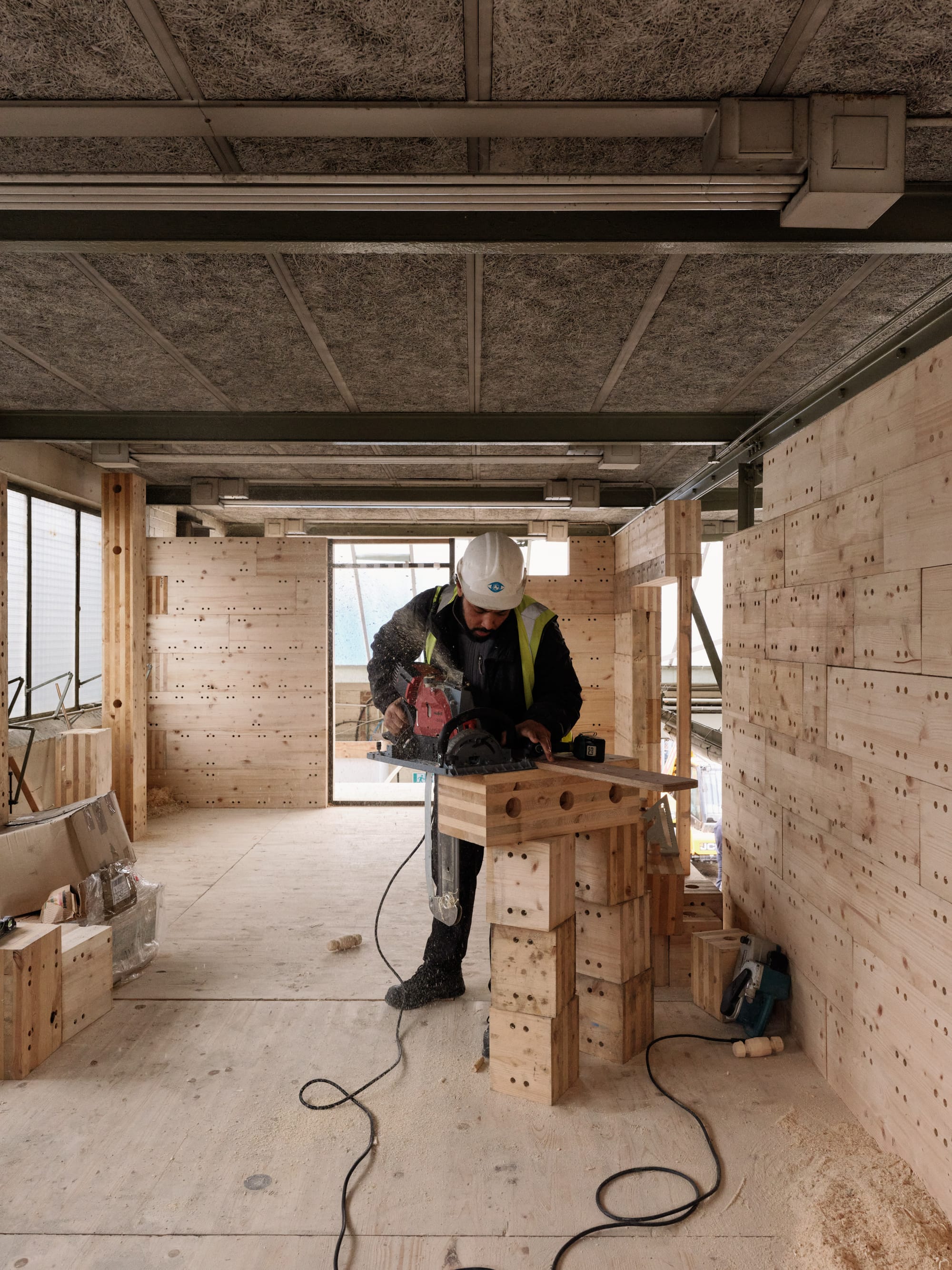
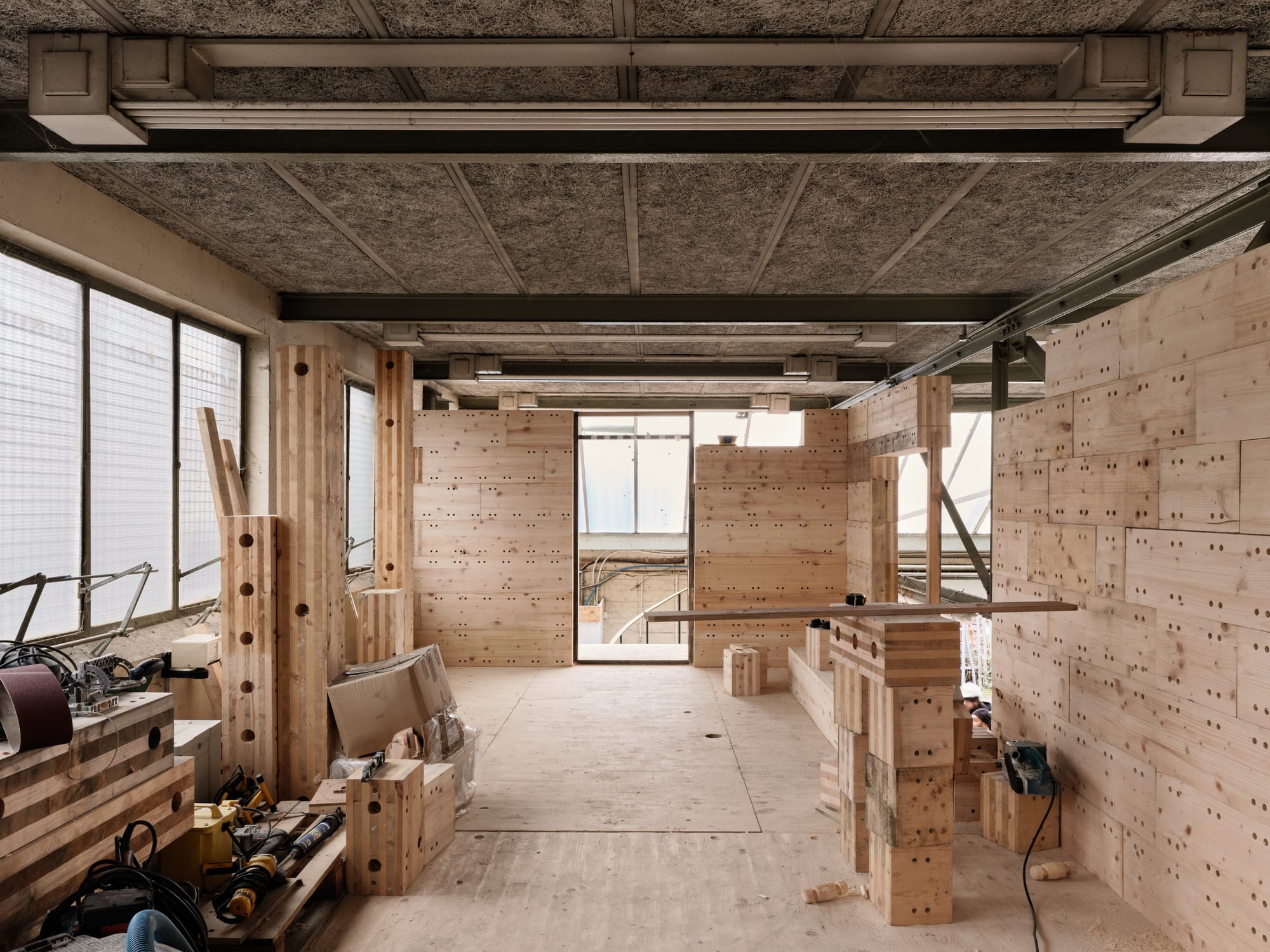
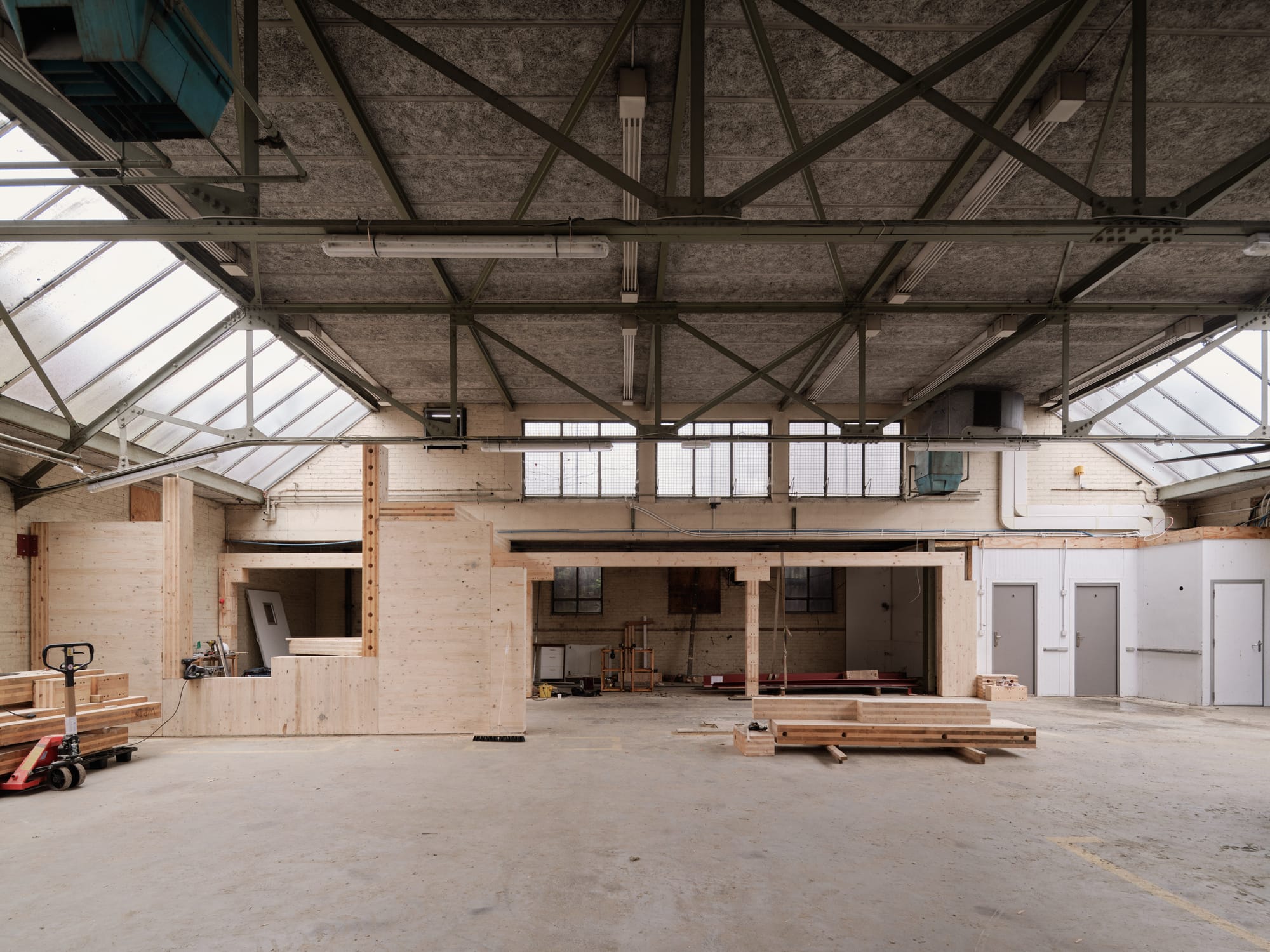
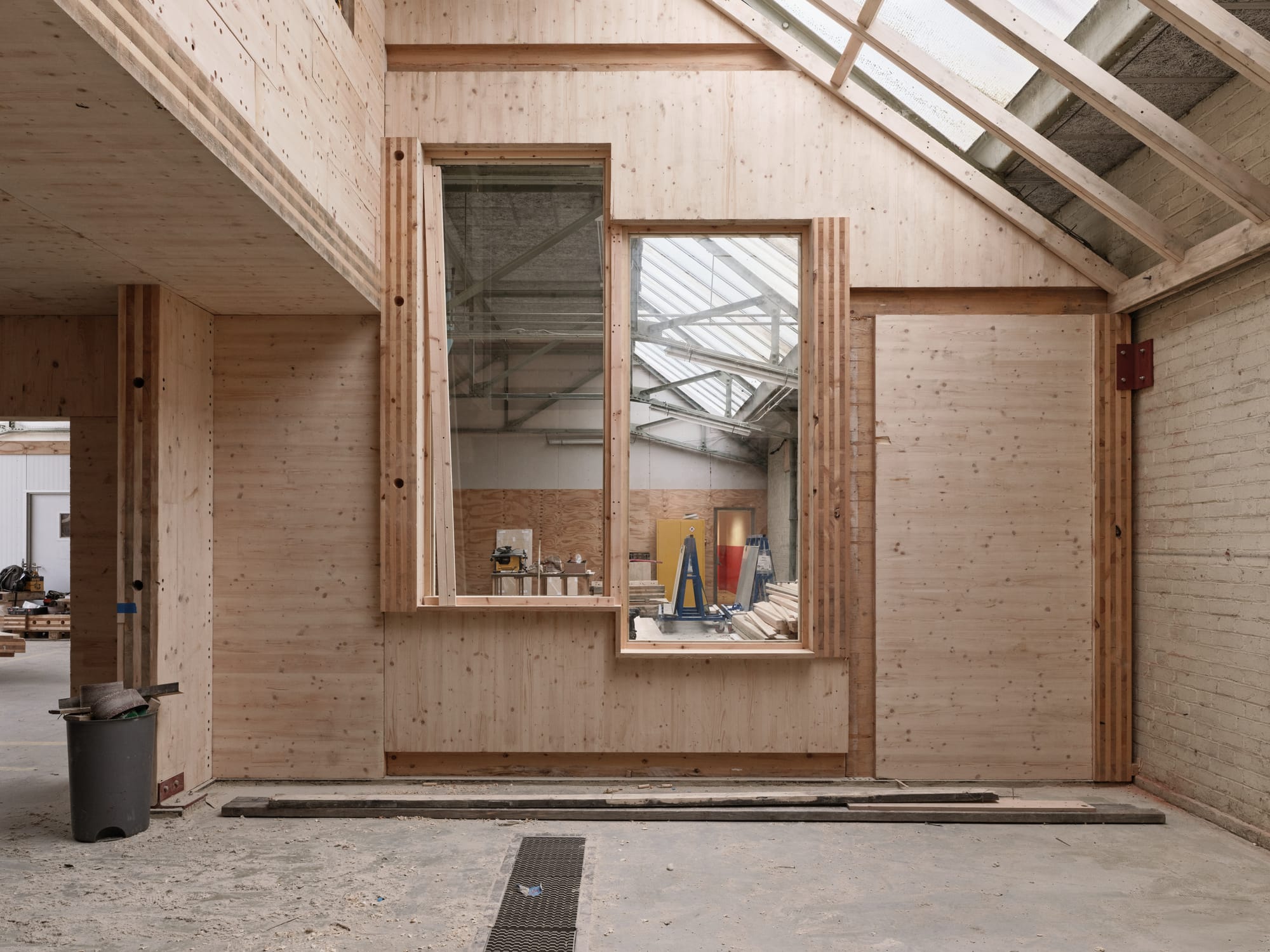
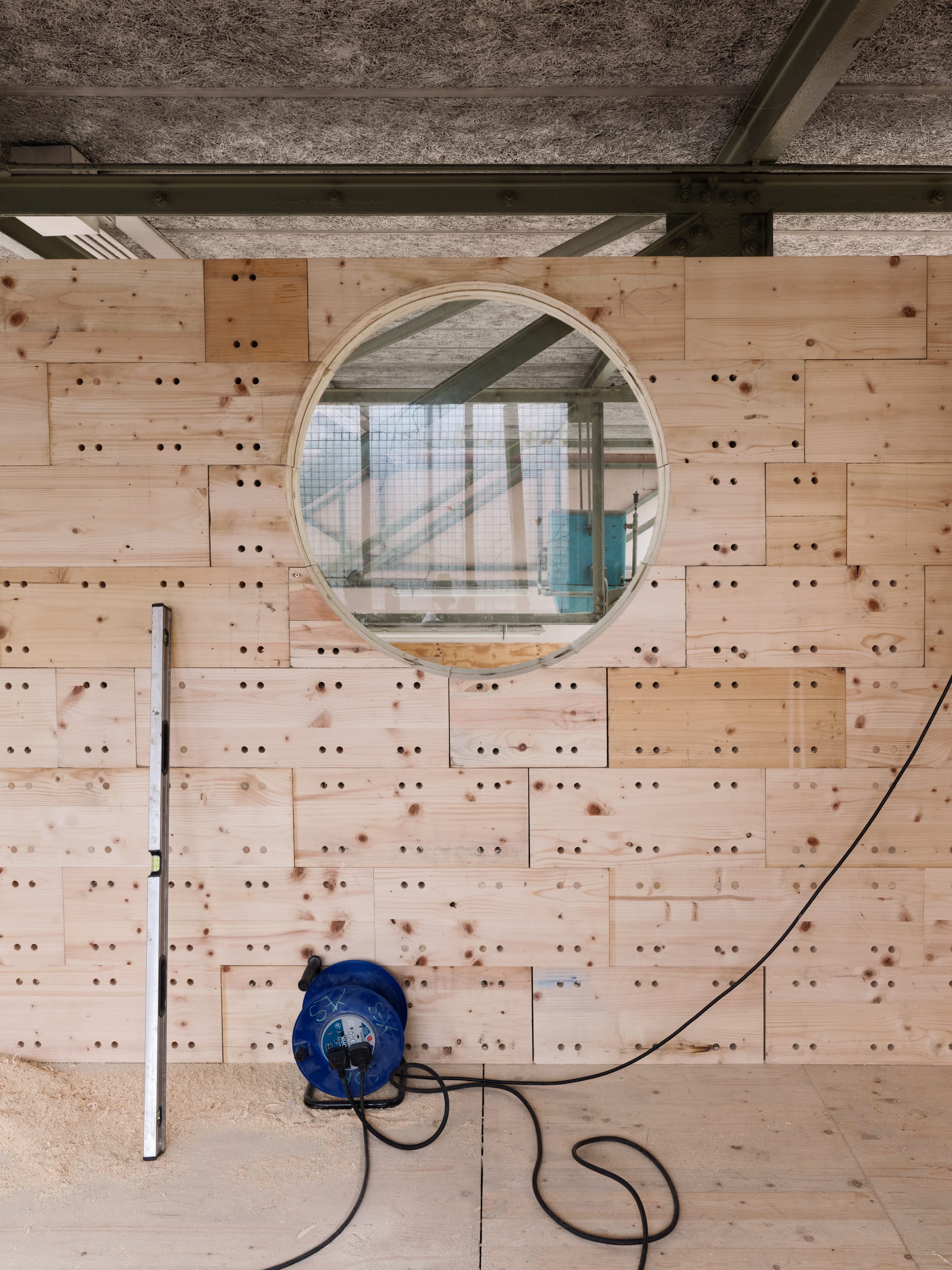
The retrofitted TPE building is made entirely from reclaimed materials and is designed for disassembly and future reuse | Pictures credit: Henry Woide
Vanessa: How are people finding out about Tipping Point East?
Freya: There is a phenomenal amount of work done by word of mouth. The demand to have somewhere to offer materials to is huge, but there is no service to facilitate it.
There are a massive amount of small scale communities who are desperate for materials. Timber prices and construction is really expensive, communities have no public funding but really need spaces. We act as the cog in the middle. To do that you have to create a system to move things around.
Working alongside Material Index, we’ll do a site visit to work out what materials are available and then do the calculations for transport. We’ll aim to match the price of a skip. It’s about making it accessible and affordable. Yes Make are looking at re-accreditation for structural steel and a way of visually re-grading timber. A full system change has to happen.
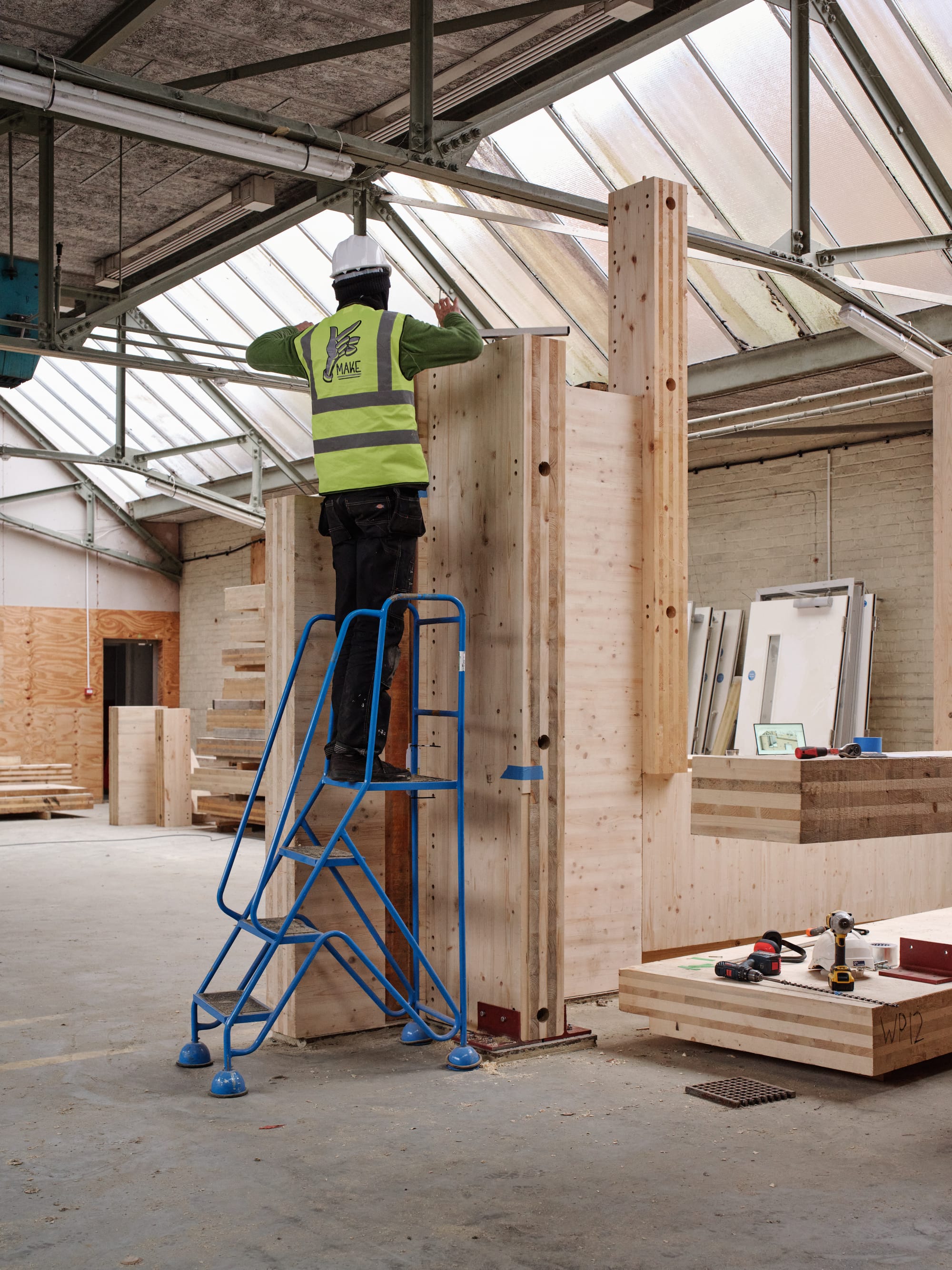
Vanessa: Where do the materials come from and can you explain what happens when the materials arrive at Tipping Point East?
The majority of materials are from the construction sector. The trucks will come into the drop zone and then at that point this will be our processing areas, denailing, descrewing and cutting into standard lengths. We are working alongside educational institutions for the training and mindset change of students going into architecture and the building industry to get them familiar with the practical realities.
We will reach a scale where we'll start looking at large scale industrial machinery.
We’ve had initial chats with Waste Contractors who get virgin timber which they shred - absolutely every bit, from oak to cedar. There’s a demand for glass and a huge supply of it. You can recut laminated glass, saving on raw materials.
Vanessa: How does the reclamation of materials fit with the wider story of what you’re doing here?
Freya: Community involvement, training and education - all of these different elements need to line up. I've been working in this space for three or four years. I've seen the tide turn in the last six to twelve months. It's phenomenal.
Tipping Point East is supported by the Mayor of London and the London Borough of Newham.