Featured
An architecture of integrity with Alventosa Morell Arquitectes and Joan J. Fortuny
The Balearic Islands of Spain have long drawn tourists. Lured by blue skies and warm seas, over fifteen million international visitors came in 2024 alone. The same year, the Islands was gaining recognition for a different reason; a new vernacular in architecture, one that prioritises material integrity and environmental responsibility.
At its centre is IBAVI, the Balearic Institute of Housing whose housing programme has positioned the archipelago as a model of low-impact construction. Funded by the Balearic Government, IBAVI operates with rigorous energy and material guidelines, yet allows room for architectural experimentation. Each project is awarded through open competition, challenging practices to propose architecture that is both technically exacting and socially responsive.
The Islands face a dual crisis of climate change and restricted housing access. Decades of speculative development and overtourism have made home ownership unattainable for many. In response, IBAVI has announced plans to construct more than a thousand public housing units by 2026, buildings that are as much research projects as places to live.
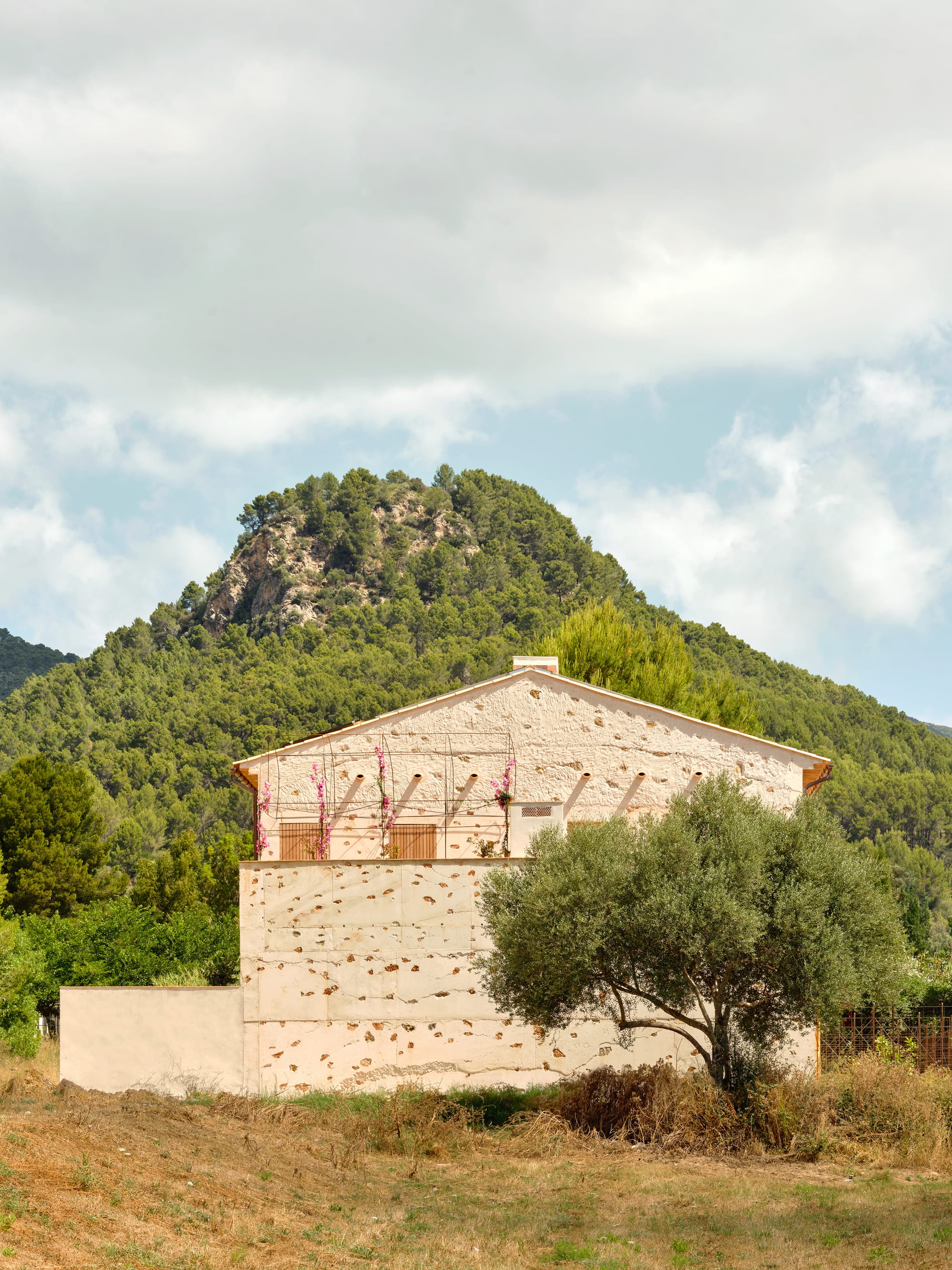
Alventosa Morell and the IBAVI Ethos
Barcelona-based Alventosa Morell Arquitectes, founded by Marc Alventosa Zaidin and Xavier Morell Jané, appear natural collaborators for IBAVI. The practice is known for work rooted in environmental awareness and intelligent material use, from cork-clad structures to experimental low-carbon design strategies.
IBAVI projects are public works, typically run via public competitions or procurement frameworks. Alventosa Morell won the competition in partnership with Palma, Mallorca based architect Joan J. Fortuny to build a housing project, located in Puigpunyent, Mallorca. The site is located in a newly developed area of Puigpunyent known as Ses Veles, forming a boundary between the town and the surrounding rural land; the Tramuntana mountain range valley.
In keeping with IBAVI principals, the building is designed with an emphasis on sustainability, energy efficiency, and environmental respect. Equally important is a close connection to traditional crafts and local construction methods.
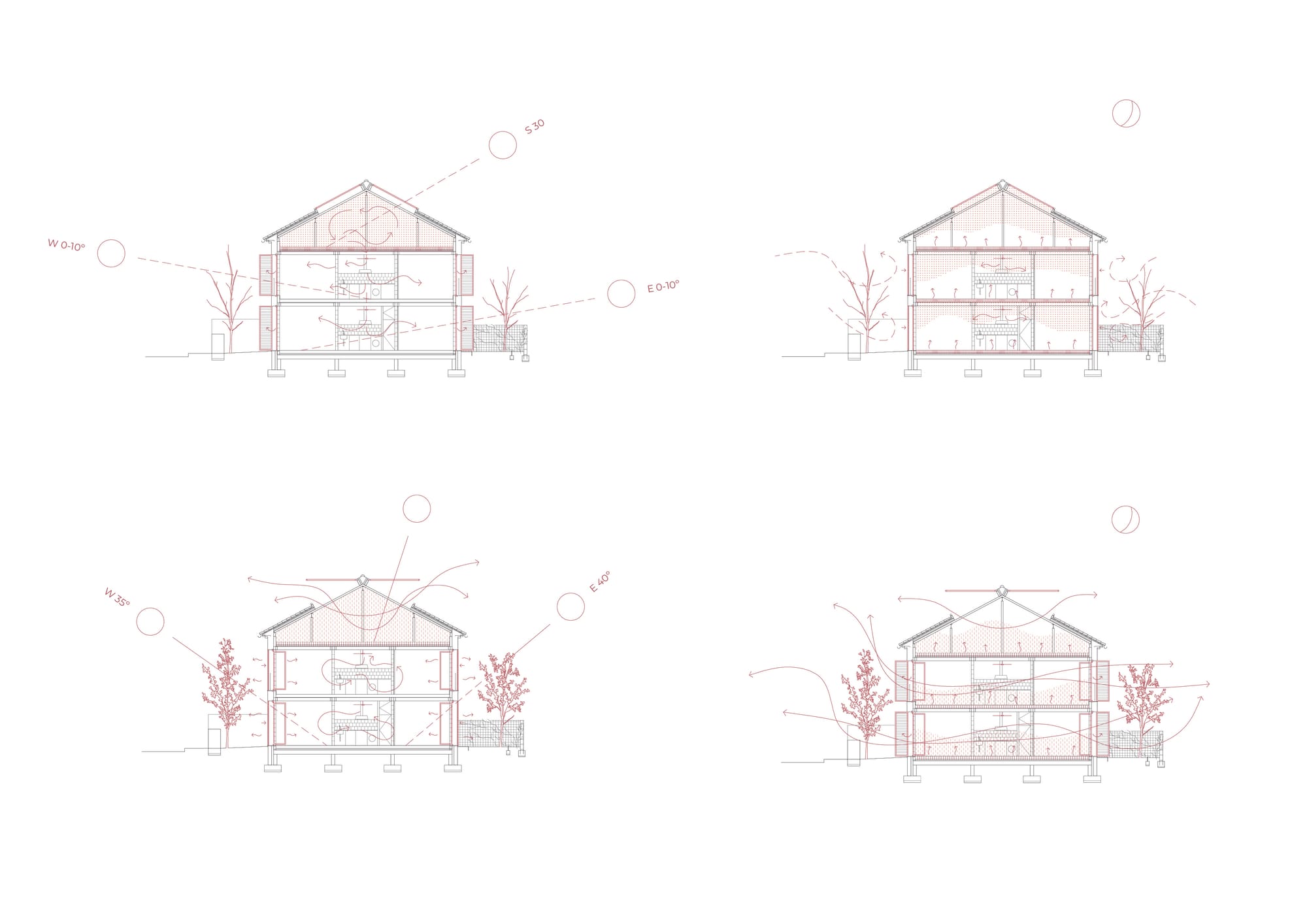
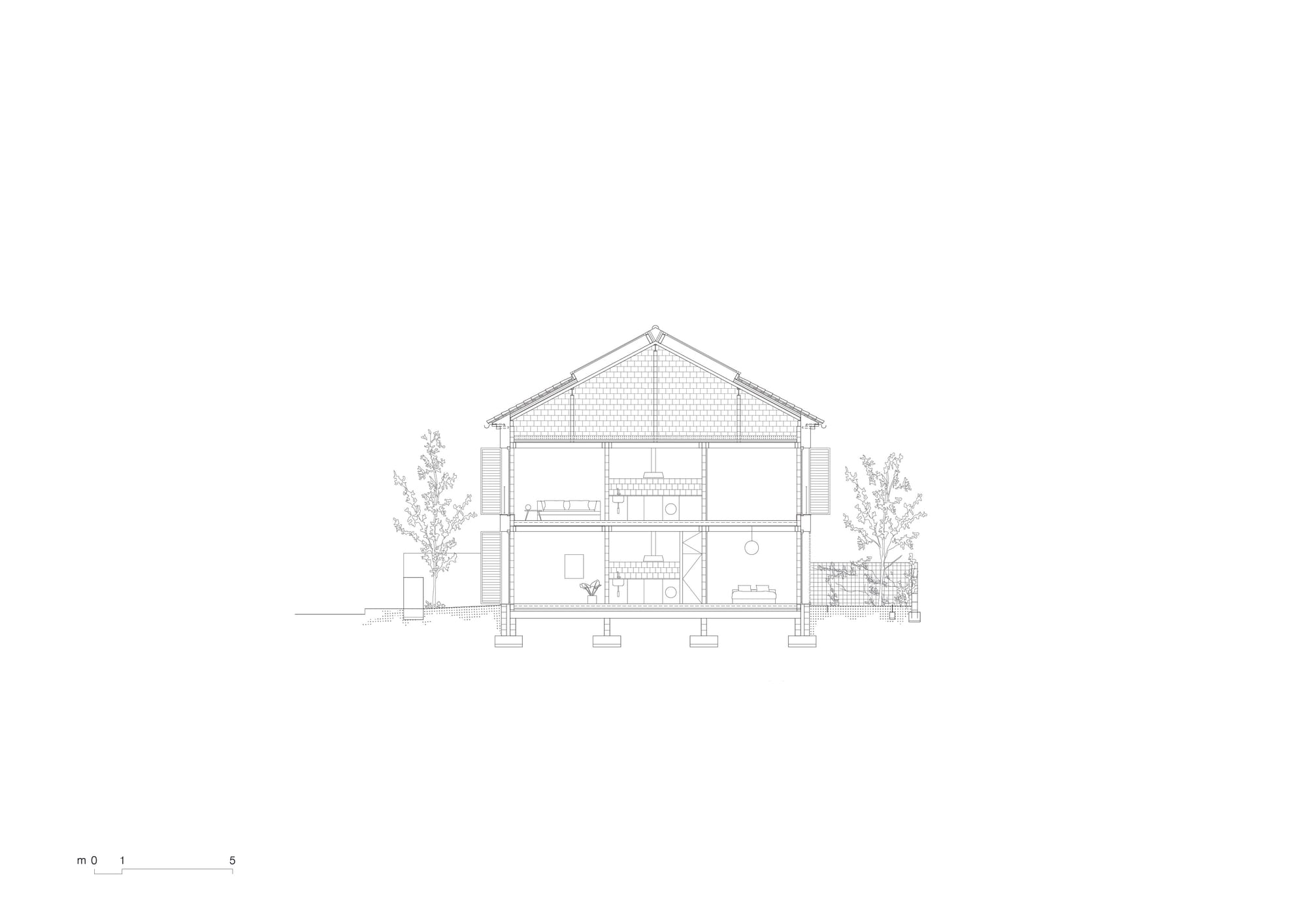
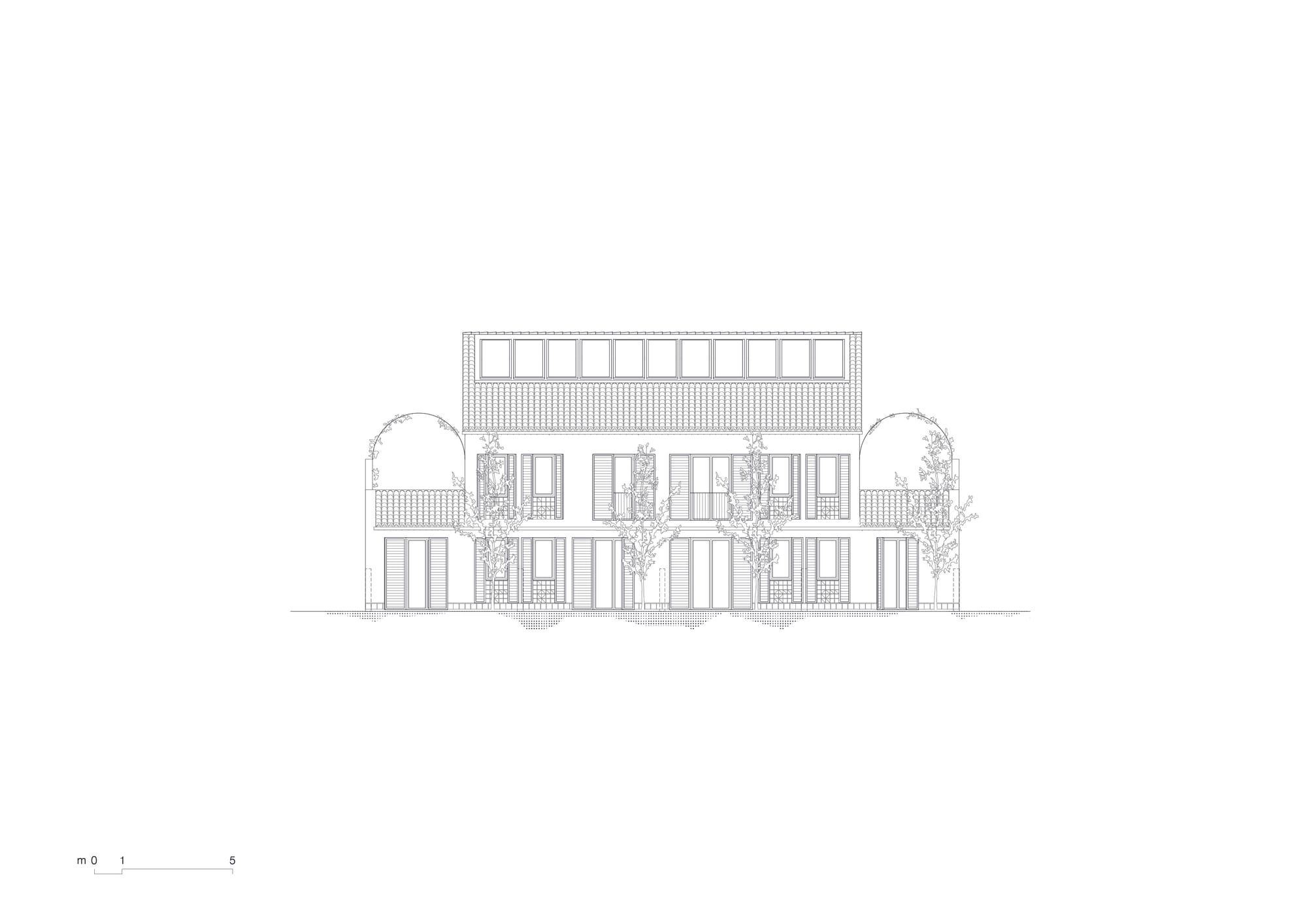
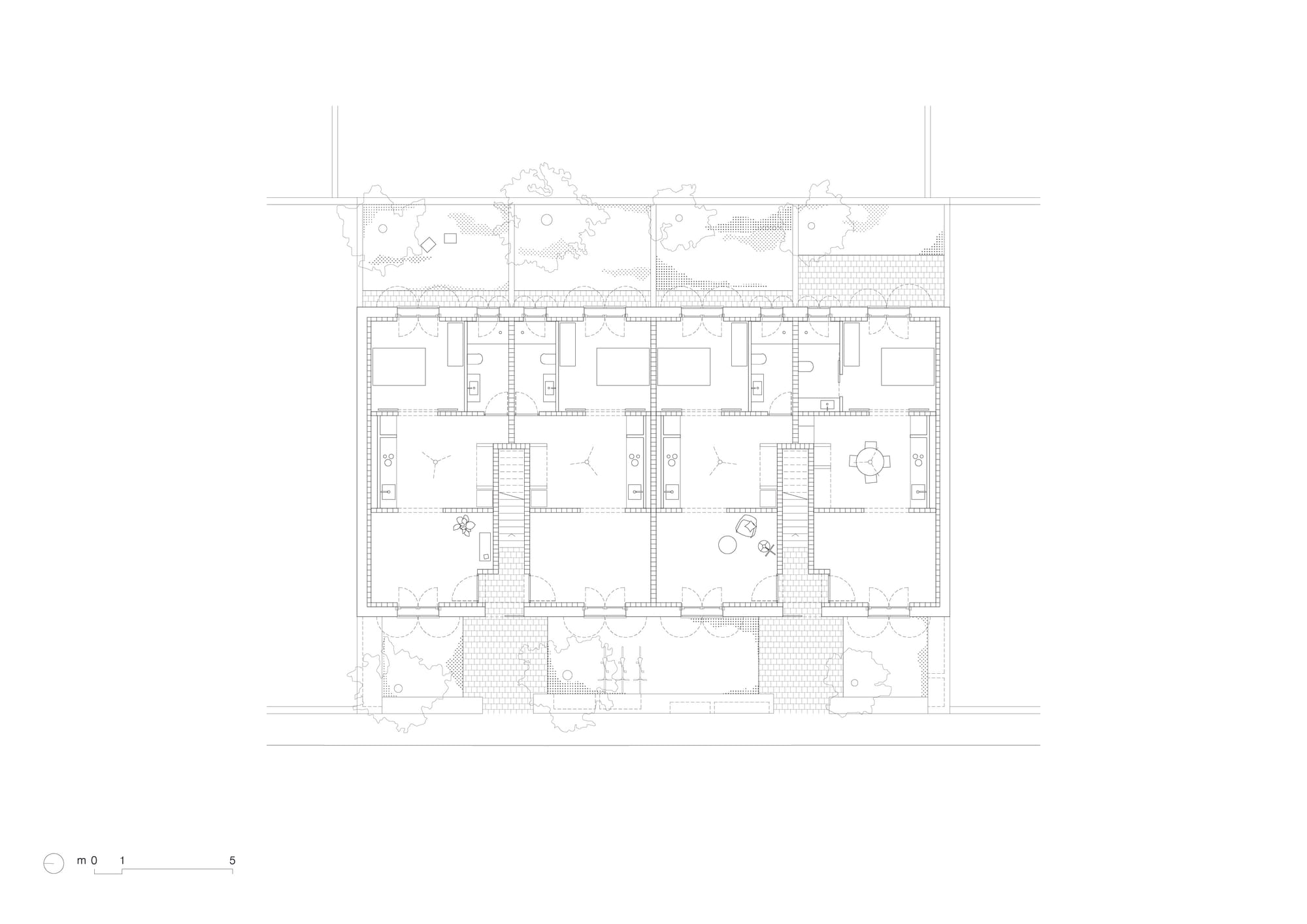
Architectural drawings by Alventosa Morell and Fortuny
Archeology of site
Material experimentation defined the project. The architects sought to use the fewest possible layers in the building envelope, making every component perform multiple functions. Working with Fortuny and the Universitat de les Illes Balears (UIB), the team undertook extensive testing of soils, aggregates, and lime mixes to achieve the required thermal resistance and structural integrity.
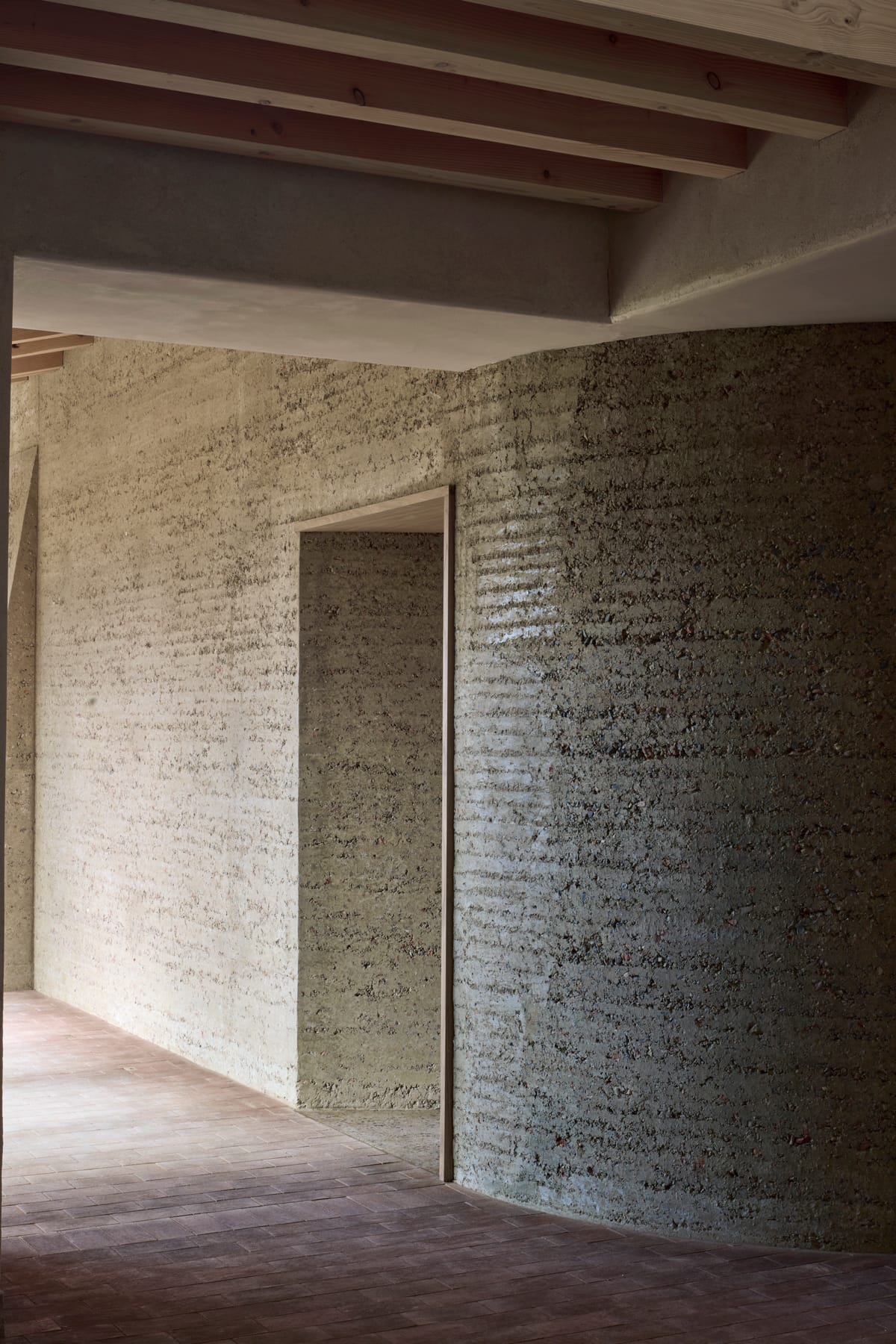
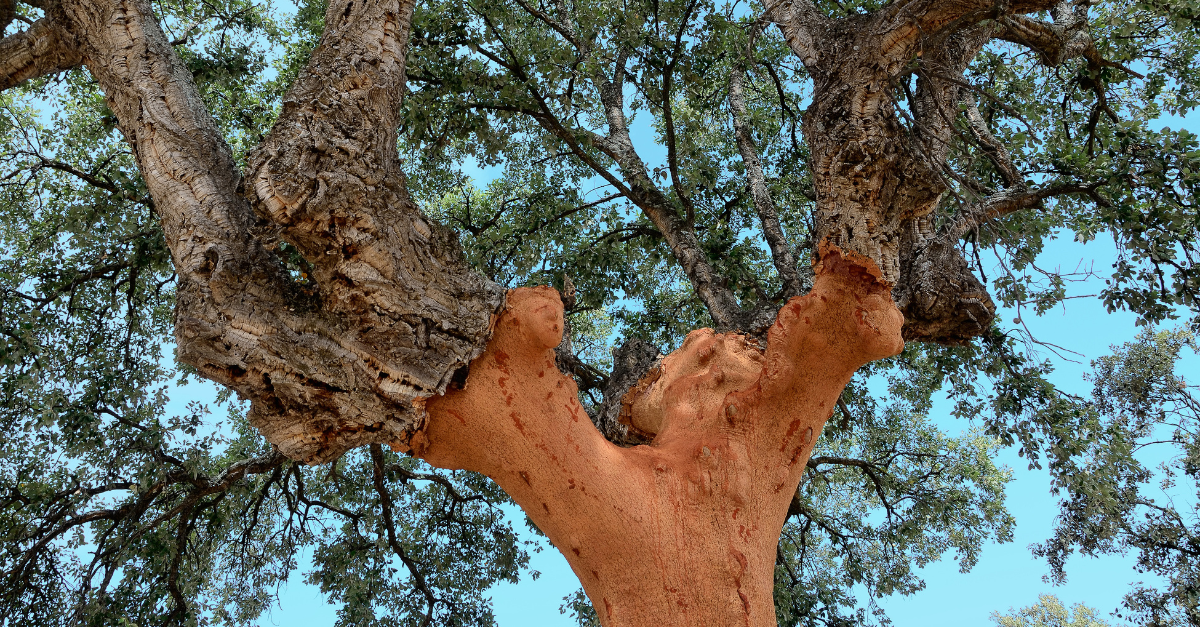
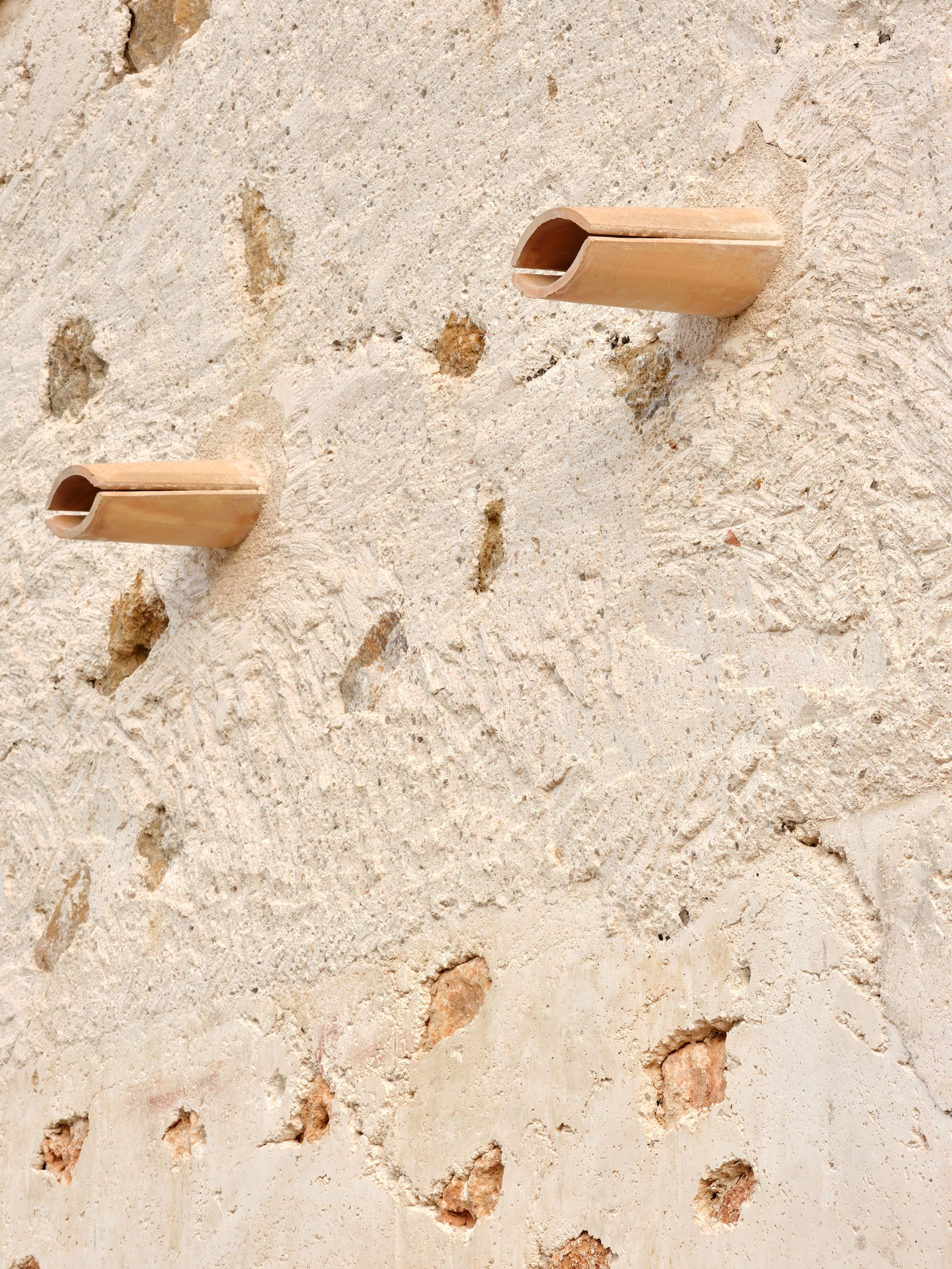
The result is an architecture drawn from its site. Stones excavated from the ground were reused in exterior cyclopean walls composed of earth, lime, clay, aggregate, and water. Early trials introduced cork for insulation, but its poor compression performance ruled it out as a structural additive. Instead, cork found a role as insulation between the ceramic interior walls and the compacted-earth exterior.
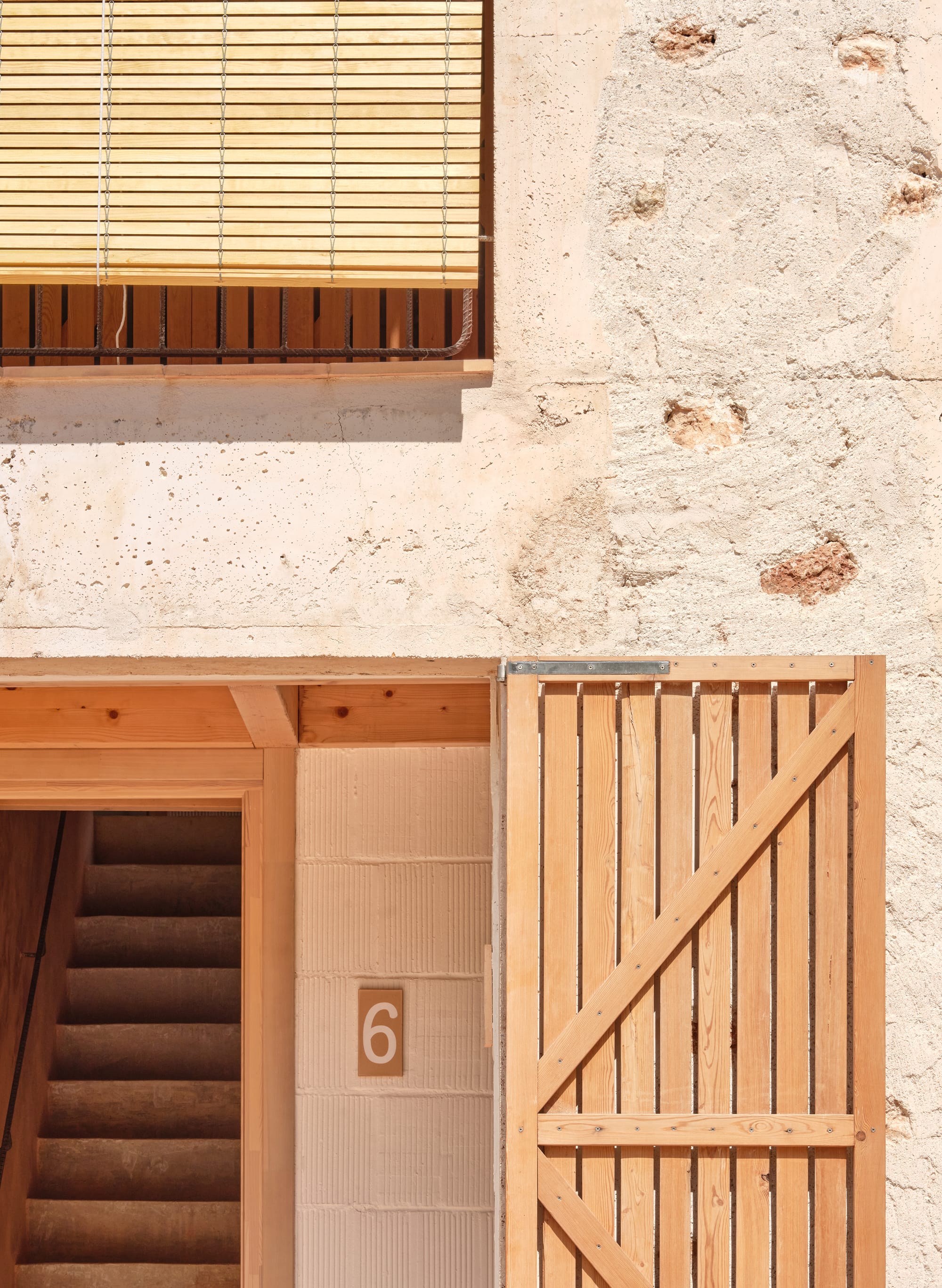
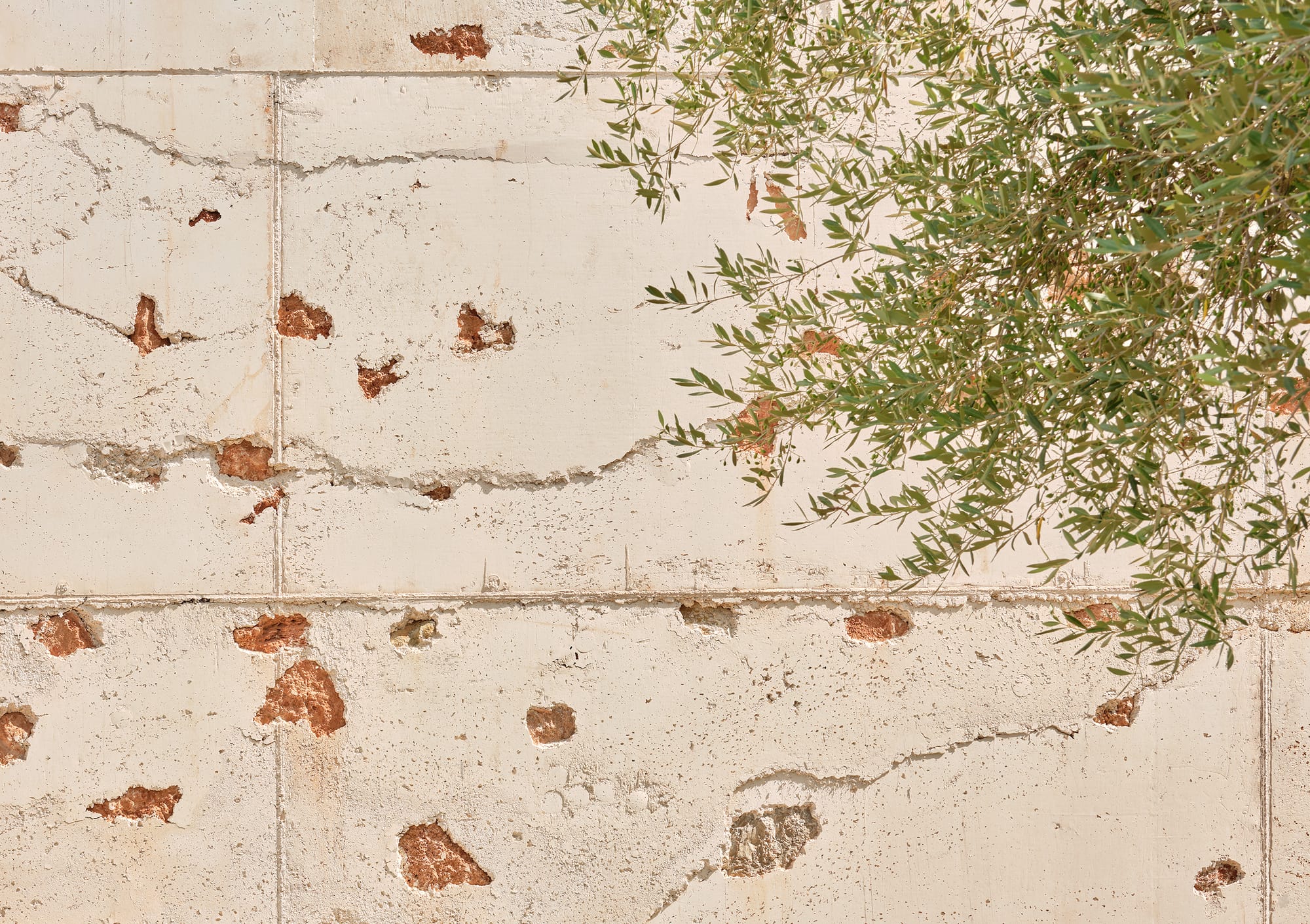
Stone façade details | Ses Veles Puigpunyent by Alventosa Morell and Fortuny | Images credit: José Hevia
Joan J. Fortuny worked alongside Alventosa Morell to develop research to test the properties of the materials from soil from the plot and provided local knowledge to ensure materials excavation and the construction process went smoothly. Fortuny’s local knowledge greatly helped address issues around how to build with the companies on the island. Local contractors required training in new methods, and finding the right collaborators took over a year. The process became an act of knowledge exchange, rebuilding a language of traditional construction adapted to contemporary performance demands.
Building from the earth
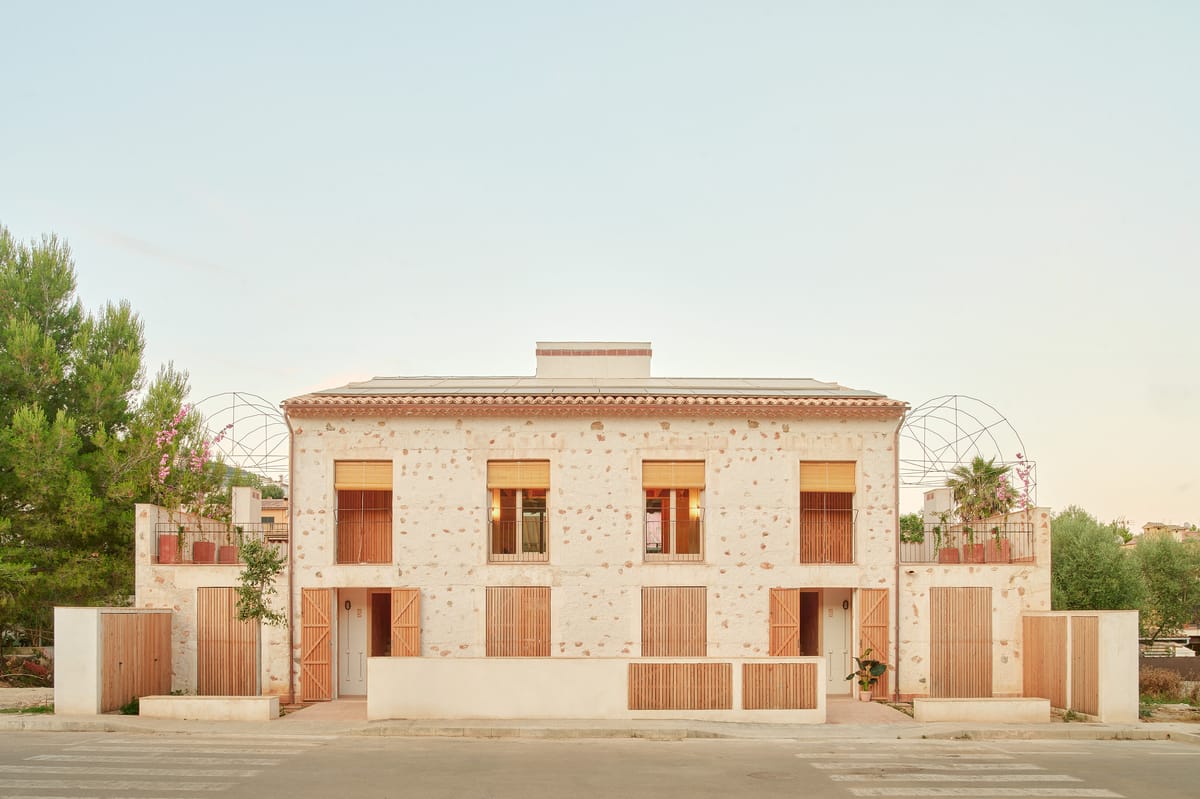
The completed building contains six dwellings across two levels under a simple gable roof: four one-bedroom homes on the ground floor, each with a private patio, and two two-bedroom units above, each opening onto a terrace. The kitchen forms the social heart, linking flexible spaces that adapt to daily life.
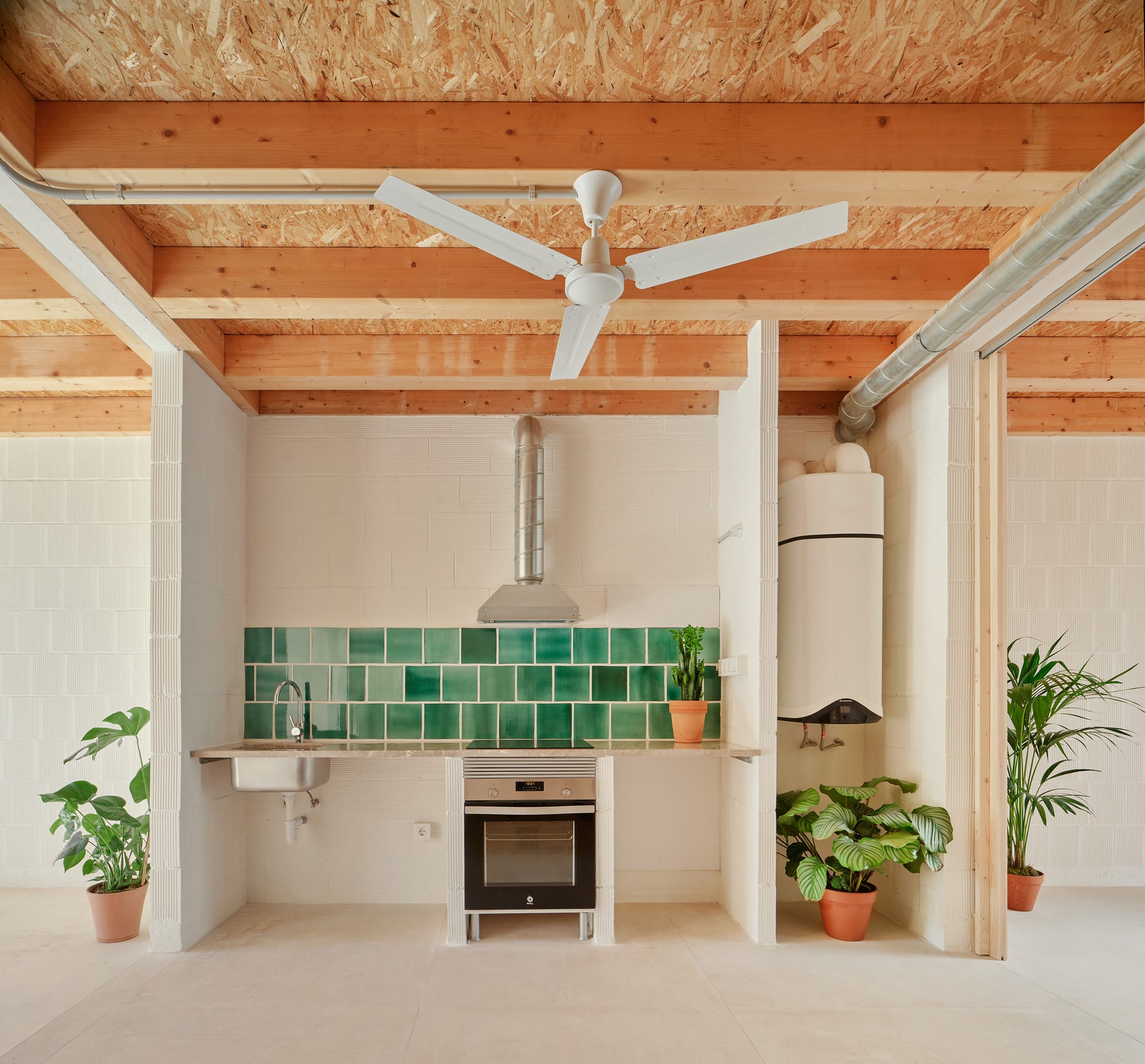
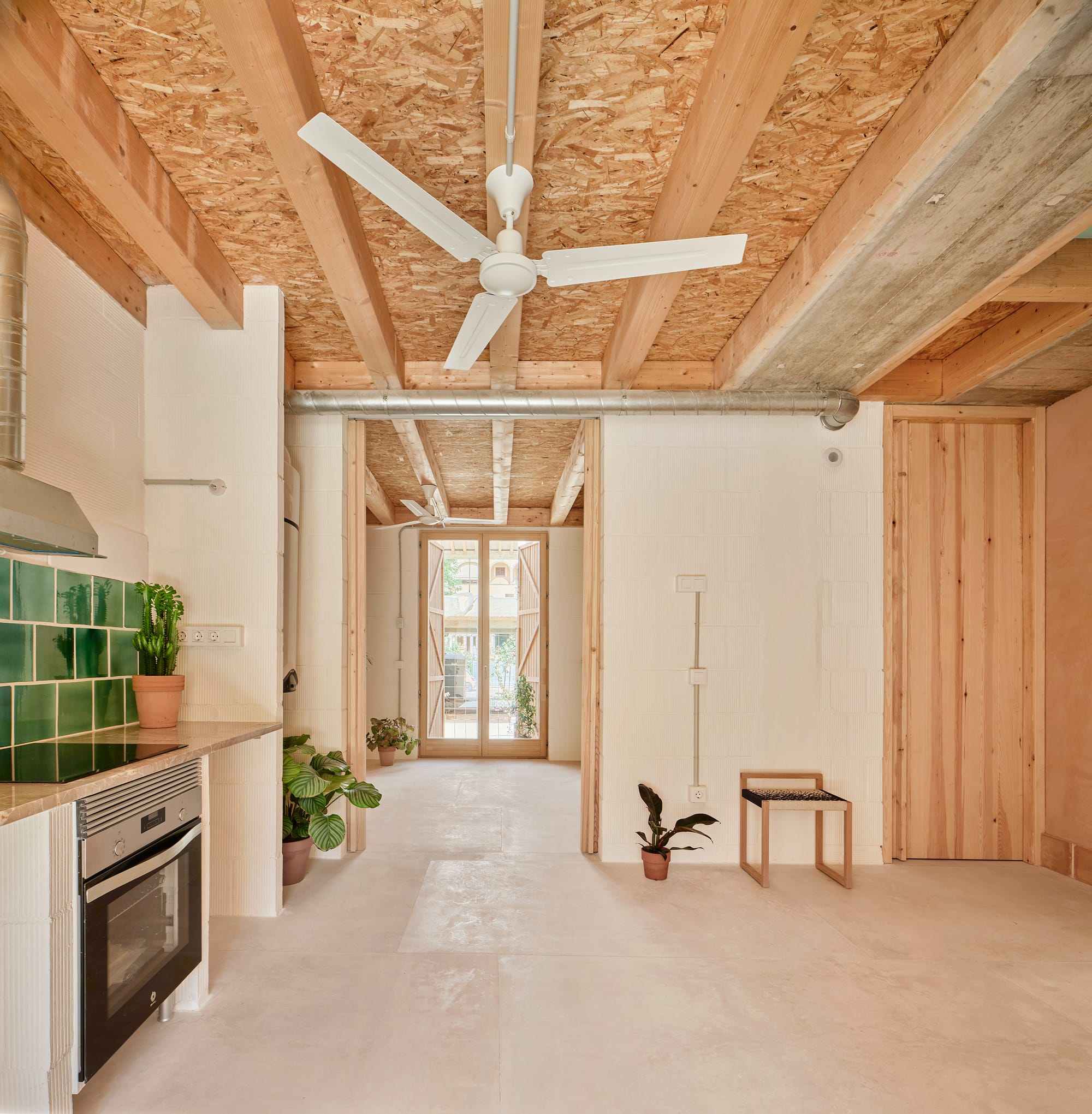
Kitchen | Ses Veles Puigpunyent by Alventosa Morell and Fortuny | Images credit: José Hevia
Passive design principles underpin the project. Orientation, cross-ventilation, and solar shading mitigate summer heat, while the building’s high thermal mass stores warmth through winter. A 'Trombé' roof system captures solar energy, storing and releasing it naturally, eliminating the need for mechanical heating or cooling. Photovoltaic panels on the roof ensure self-sufficient energy consumption.
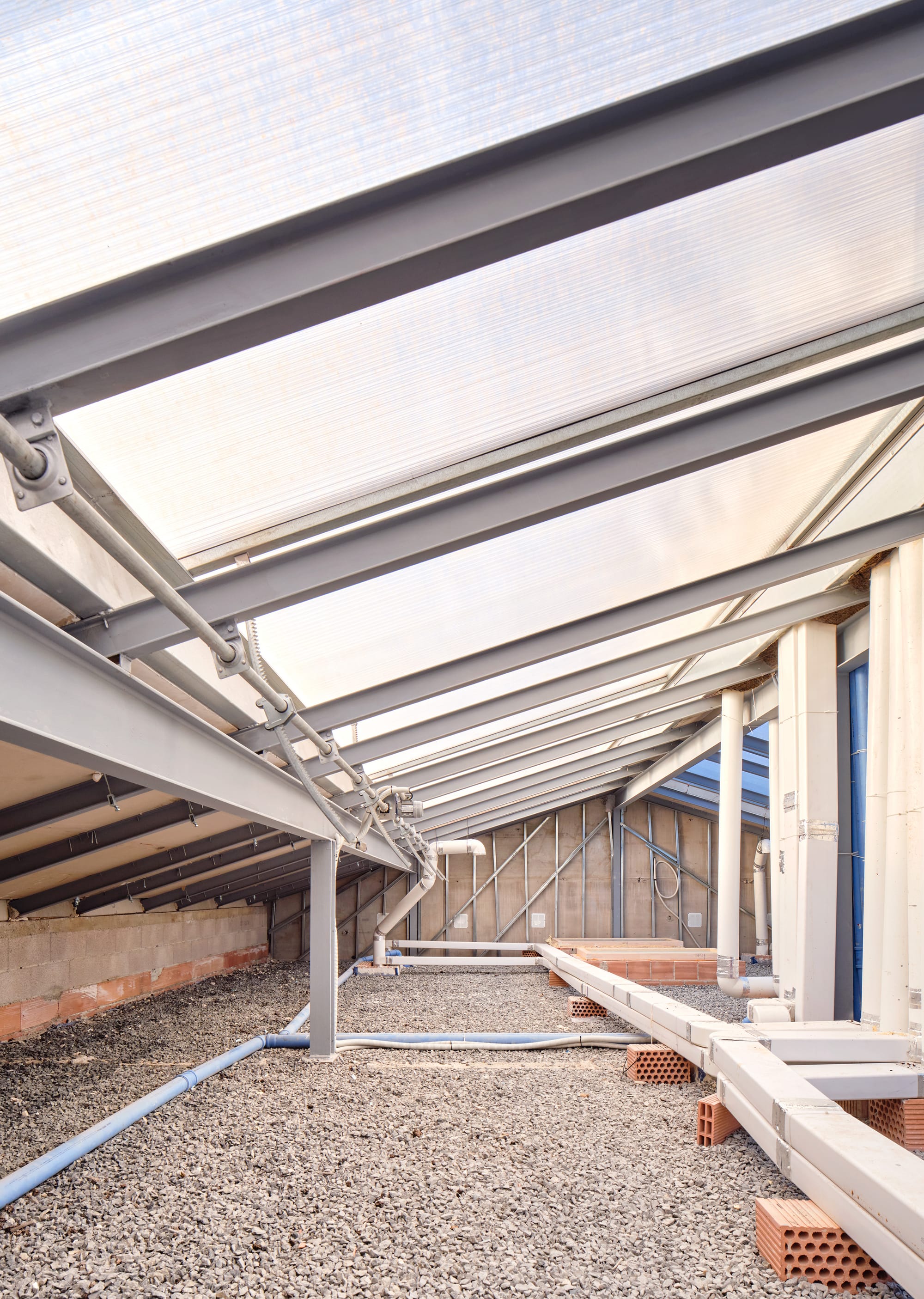
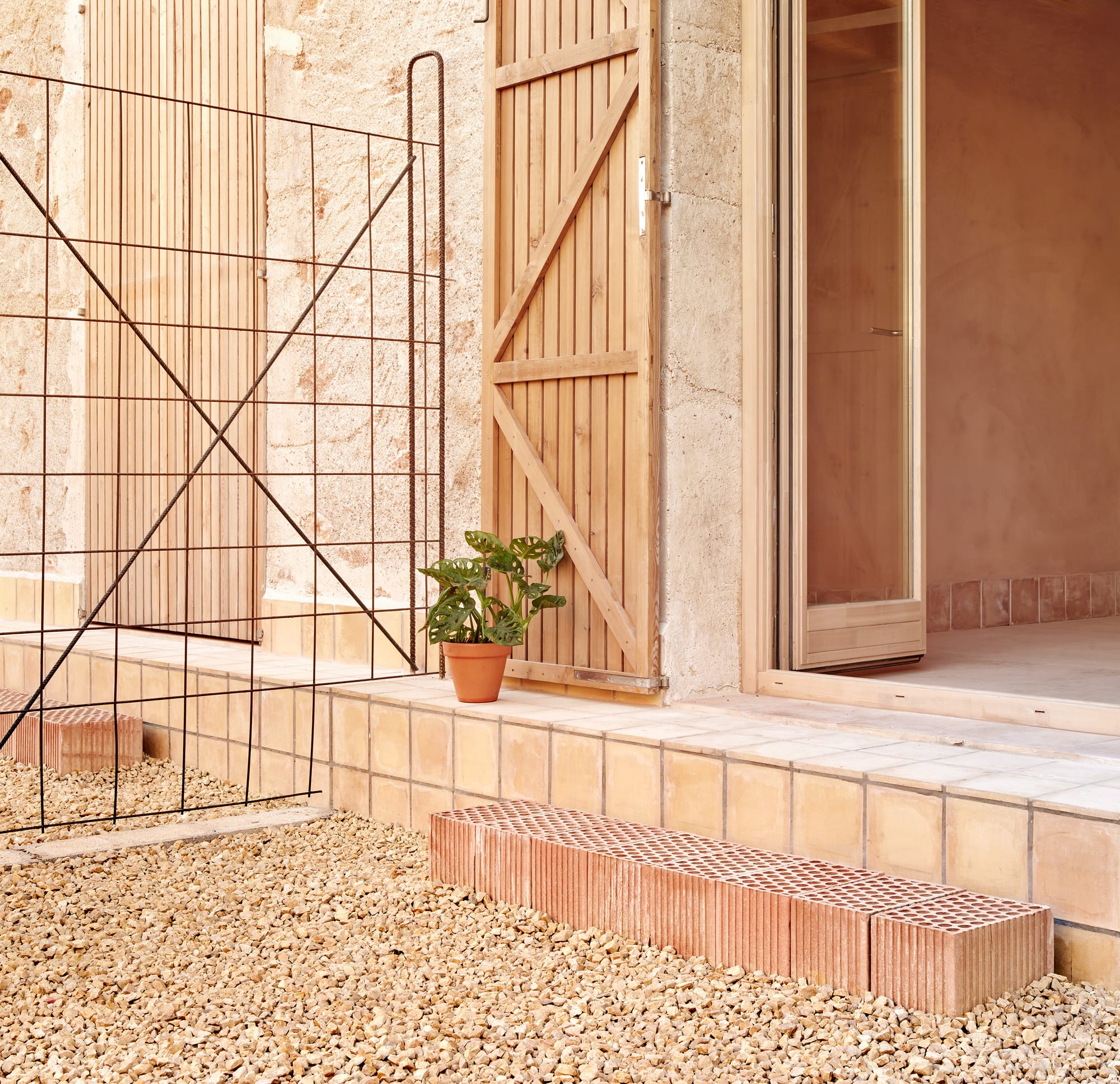
Passive design elements | Ses Veles Puigpunyent by Alventosa Morell and Fortuny | Images credit: José Hevia
Highly energy-efficient active systems provide domestic hot water generation through an aerothermal system. Ventilation is provided through heat recovery units connected to a communal aerothermal unit that tempers the indoor air with a constant airflow adapted to heating and cooling demands. This utilisation of the dwellings' natural energy achieves a nearly zero-energy building.
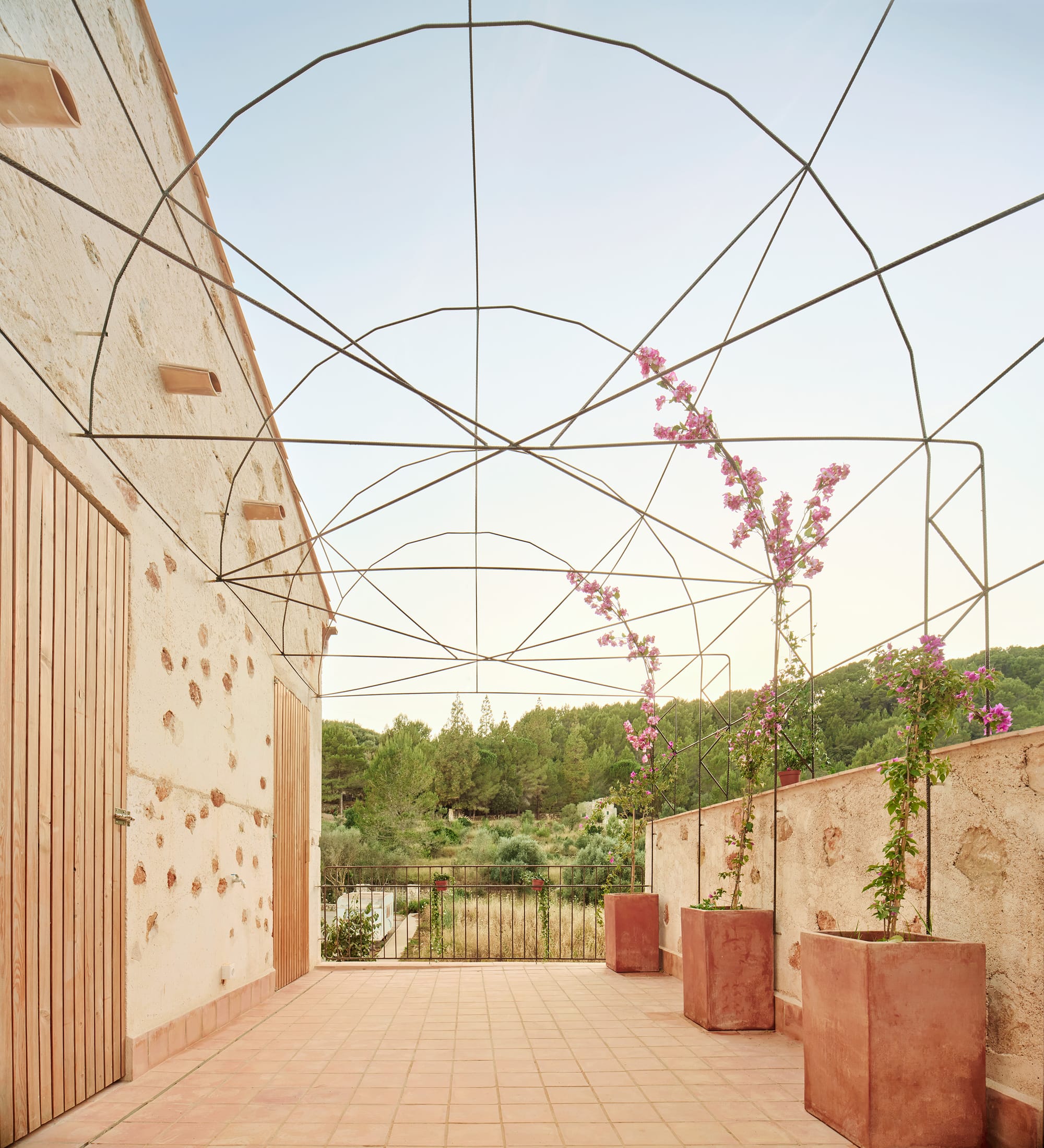
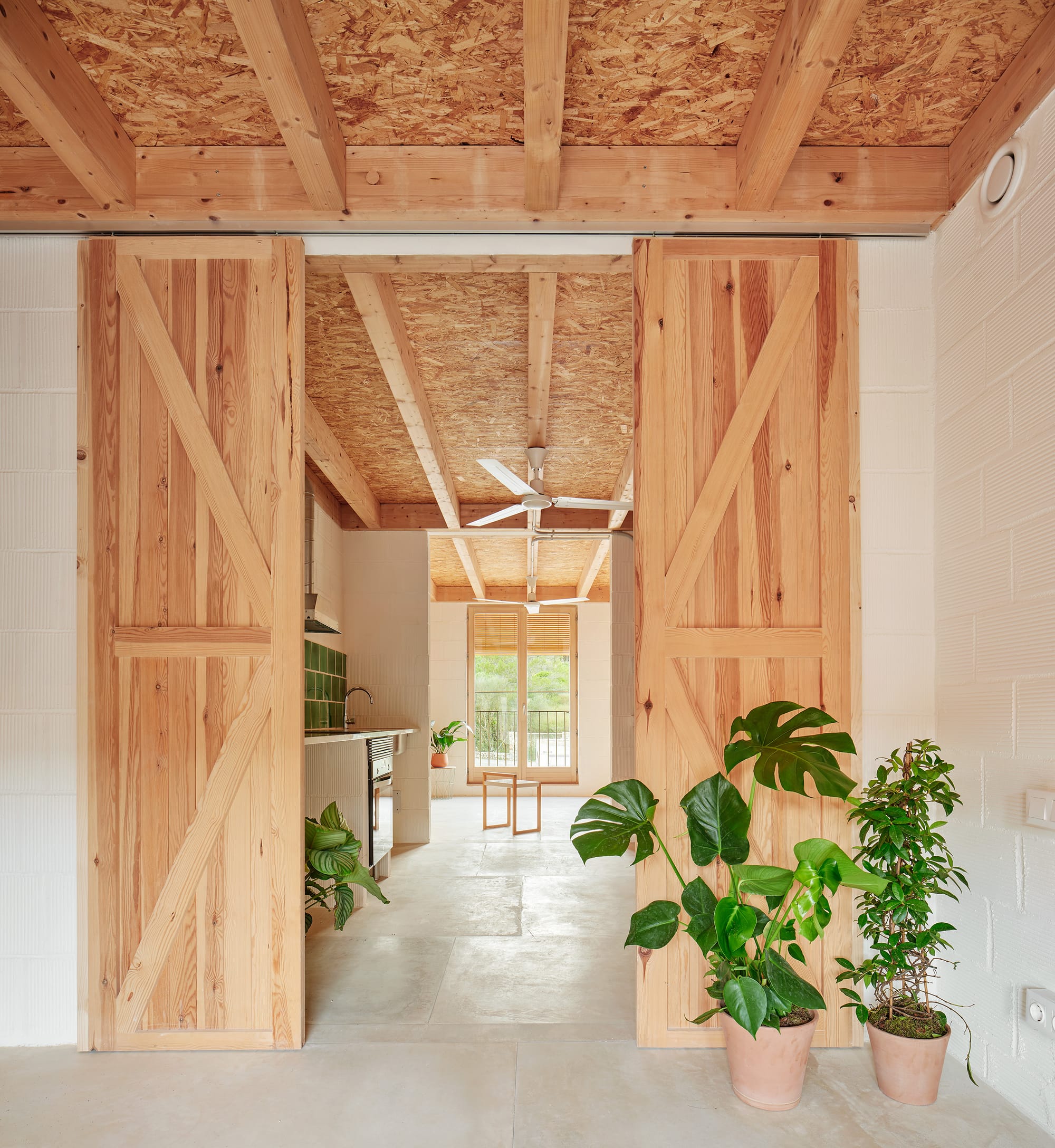
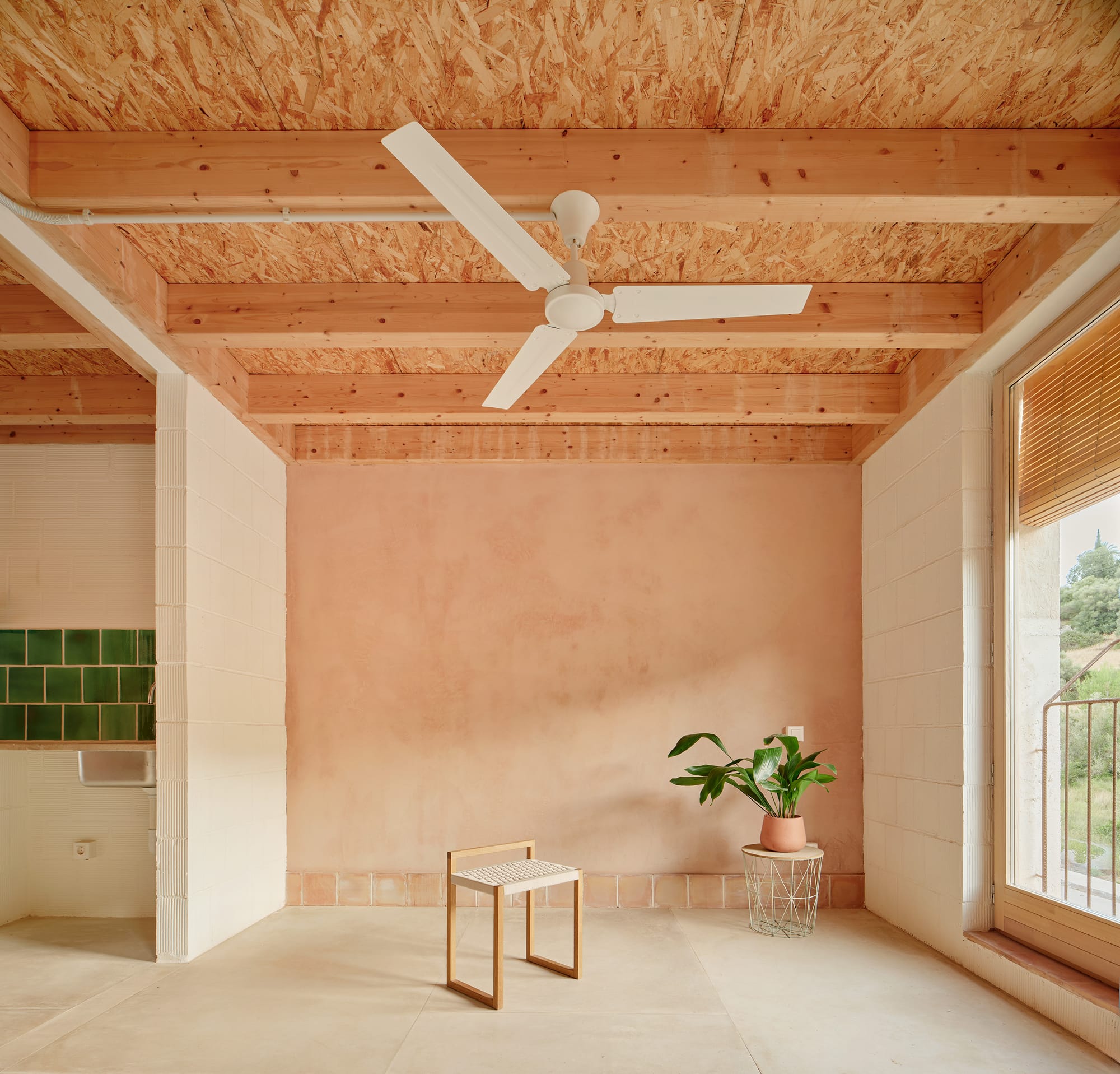
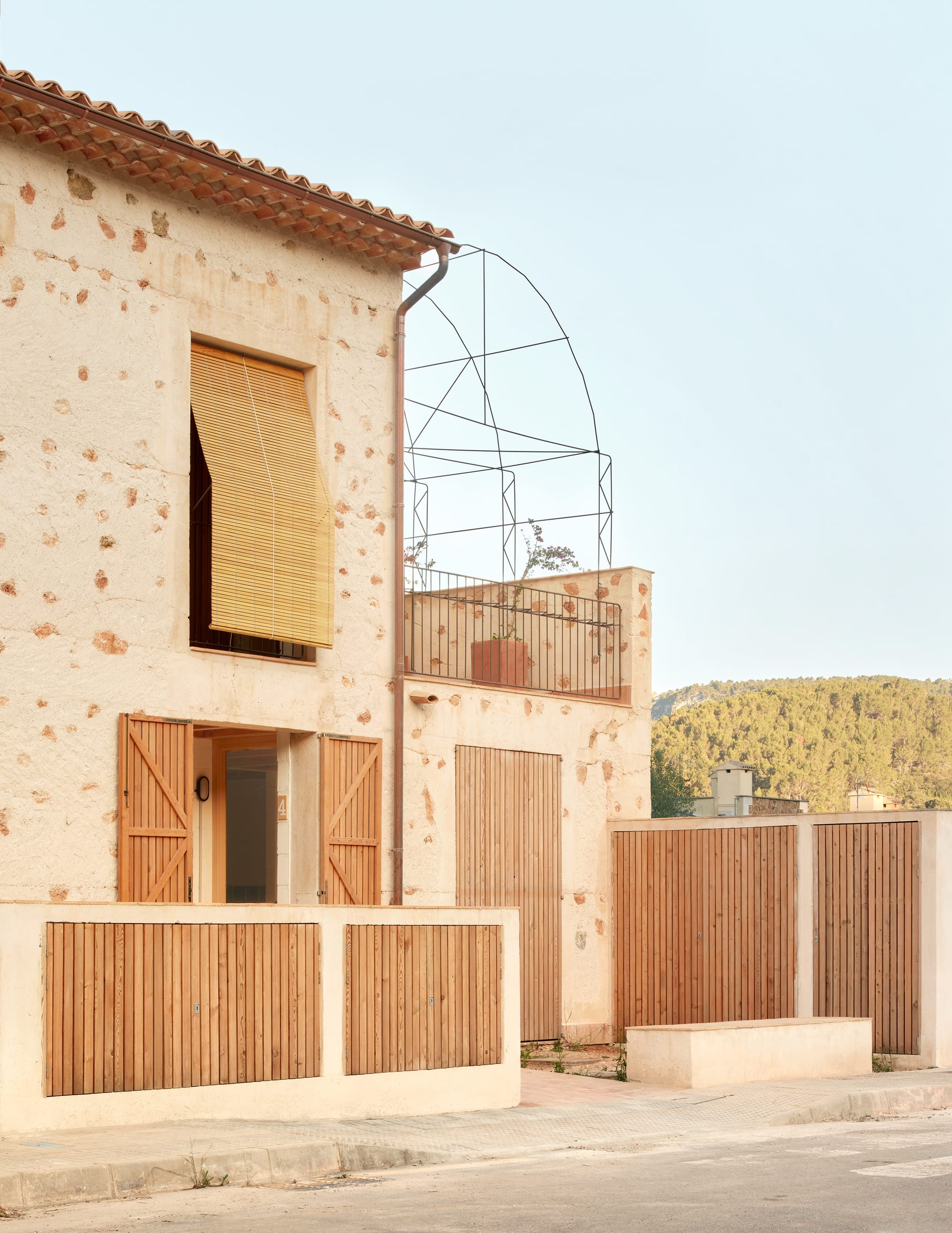
Interior and exterior views | Ses Veles Puigpunyent by Alventosa Morell and Fortuny | Images credit: José Hevia
A natural materials palette for interior spaces includes ceramic partitions filled with quarry sand and finished with clay plaster mixed with straw while floors, joinery and fittings are crafted from FSC-certified wood and local lime binds the interior floor surfaces. Exterior pavements and roof tiles were sourced from local suppliers.
Beyond the islands
For Alventosa Morell, Puigpunyent is part of an ongoing inquiry into building honestly and locally. The studio is now developing a new mix for rammed earth walls, experimenting with lime ratios and volcanic aggregates in rammed-earth construction. Their research continues to push for materials that breathe, balance, and belong.
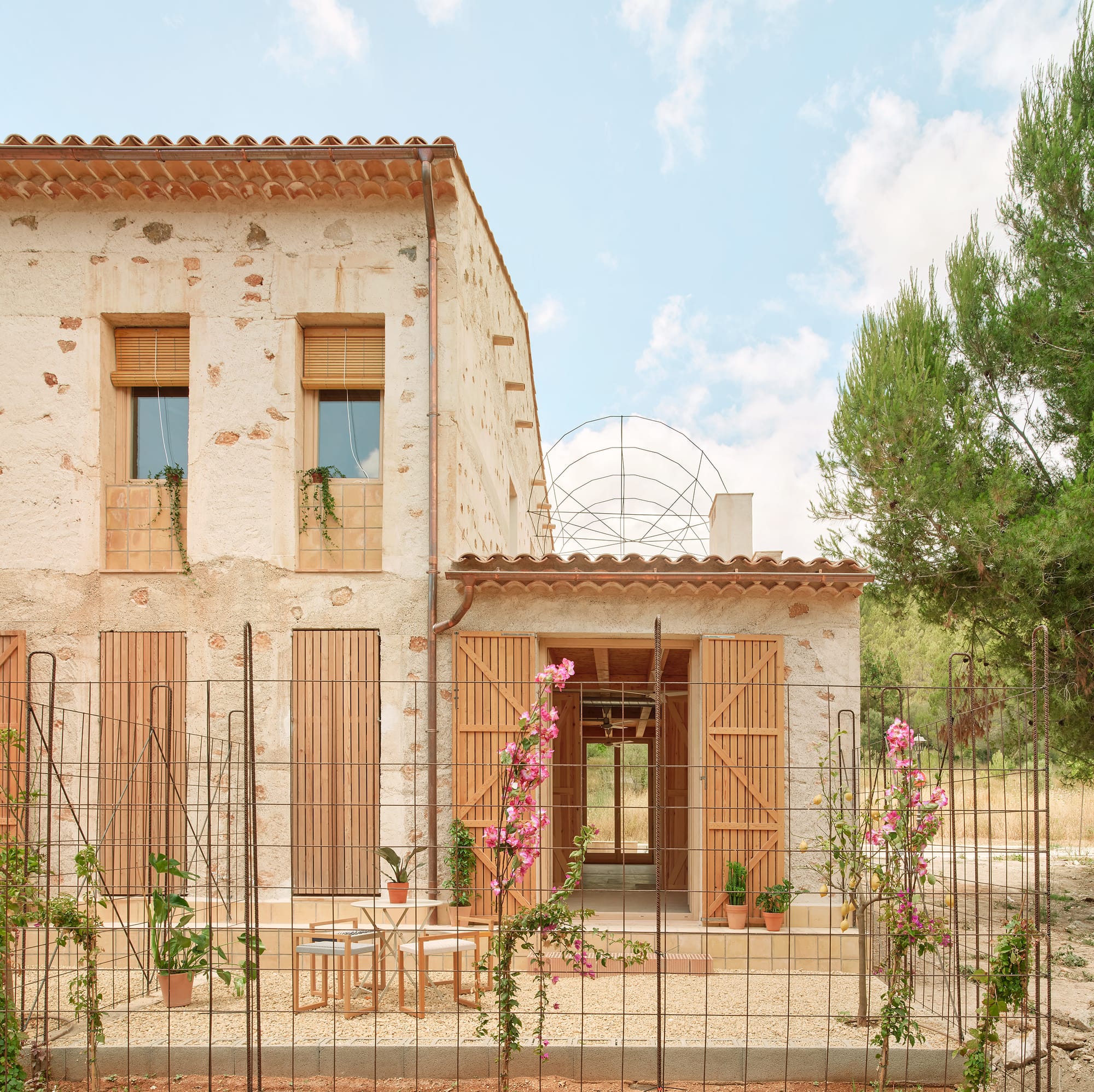
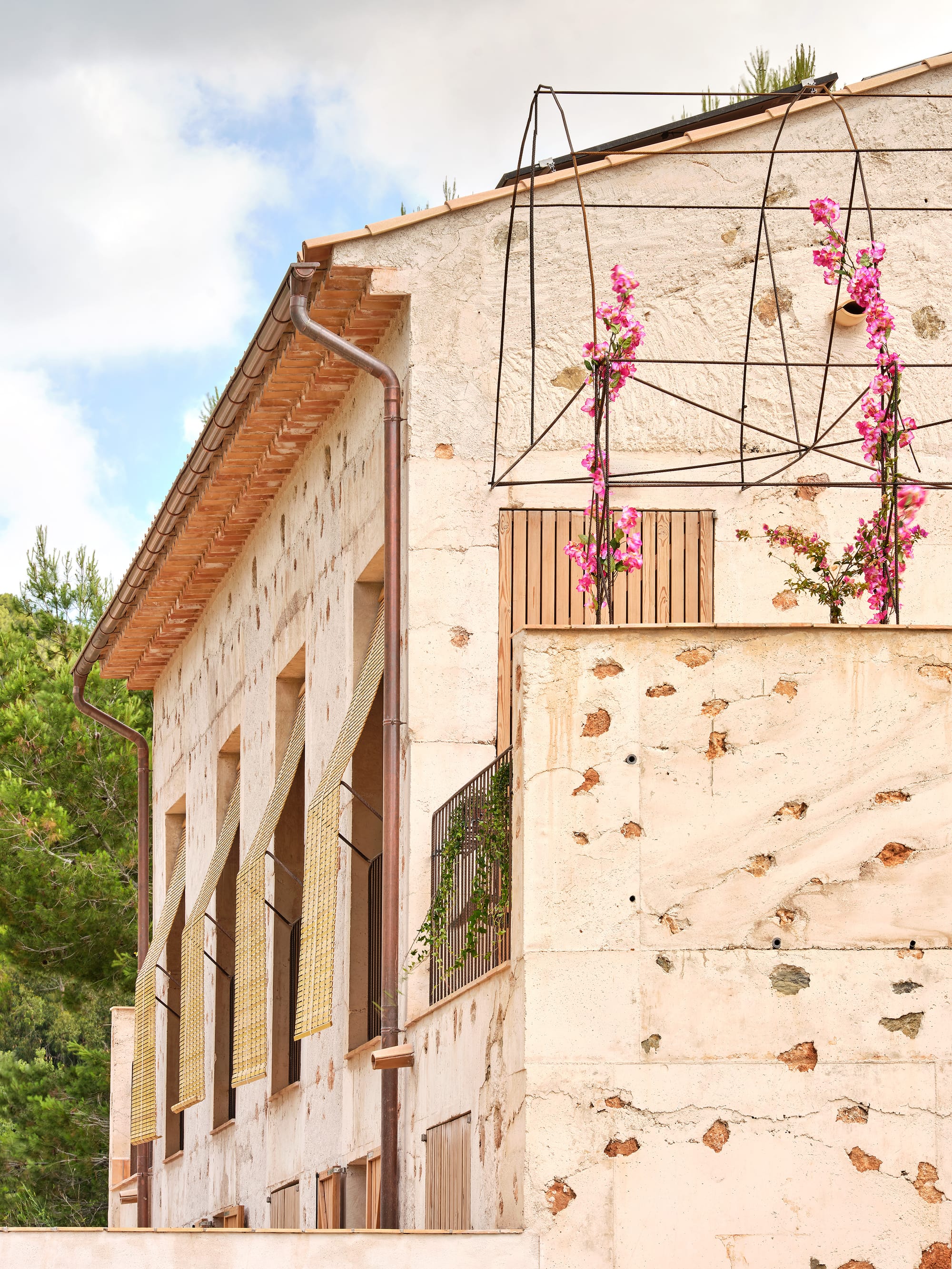
Exterior view | Ses Veles Puigpunyent by Alventosa Morell and Fortuny | Images credit: José Hevia
IBAVI’s approach has influenced architects far beyond the Balearics. Its insistence on sustainability as both ethos and methodology has created a distinct architectural culture. Yet pressure from the conventional construction industry threatens to erode these gains, as established industry players resist change.
For now, IBAVI continues to insist that every project is a site of innovation, proof that public housing can be both ecologically rigorous and profoundly humane. The results, including Alventosa Morell and Fortuny’s award-winning Ses Veles project - winner of the 2025 A+A Multi-Unit Sustainable Housing category - are quietly revolutionary.