Featured
An architecture of patience: Rammed Earth House by Tuckey Design Studio
The subject of time is increasingly referenced in architectural discourse. We long for time, time is often against us; deadlines loom, time is money with ever faster efficiencies. In response, ideas around slow architecture are gaining ground. The recently completed Rammed Earth House in Wiltshire by Tuckey Design Studio is the culmination of a careful and considered approach and a celebration of the radical act of taking time.
Commissioned by a couple who met later in life, they knew how they wanted to live together in the house, to be aware of the arc of the sun and the landscape beyond. As part of their brief to potential architects, they asked for a bibliography, perhaps with the intention that the chosen books would reveal something about the architect. That Jonathan Tuckey selected In Praise of Shadows, Japanese author Jun’ichirō Tanizaki’s 1933 contemplations on material authenticity was seen as a positive sign.
For Jonathan Tuckey, the invitation to build from the earth was a reflection of ideas found in Building on the Built; his studio’s ongoing platform for sharing articles and events celebrating an architectural sensibility that engages with existing fabric and the belief that architecture should participate in time rather than resist it. This ethos grounds the Wiltshire house, which revisits the earth beneath a vanished brickworks and imagines a dwelling whose walls remember their own origins. The proposal presented by the studio suggested how a house can literally grow from the ground on which it stands, while reusing the physical matter of what came before.
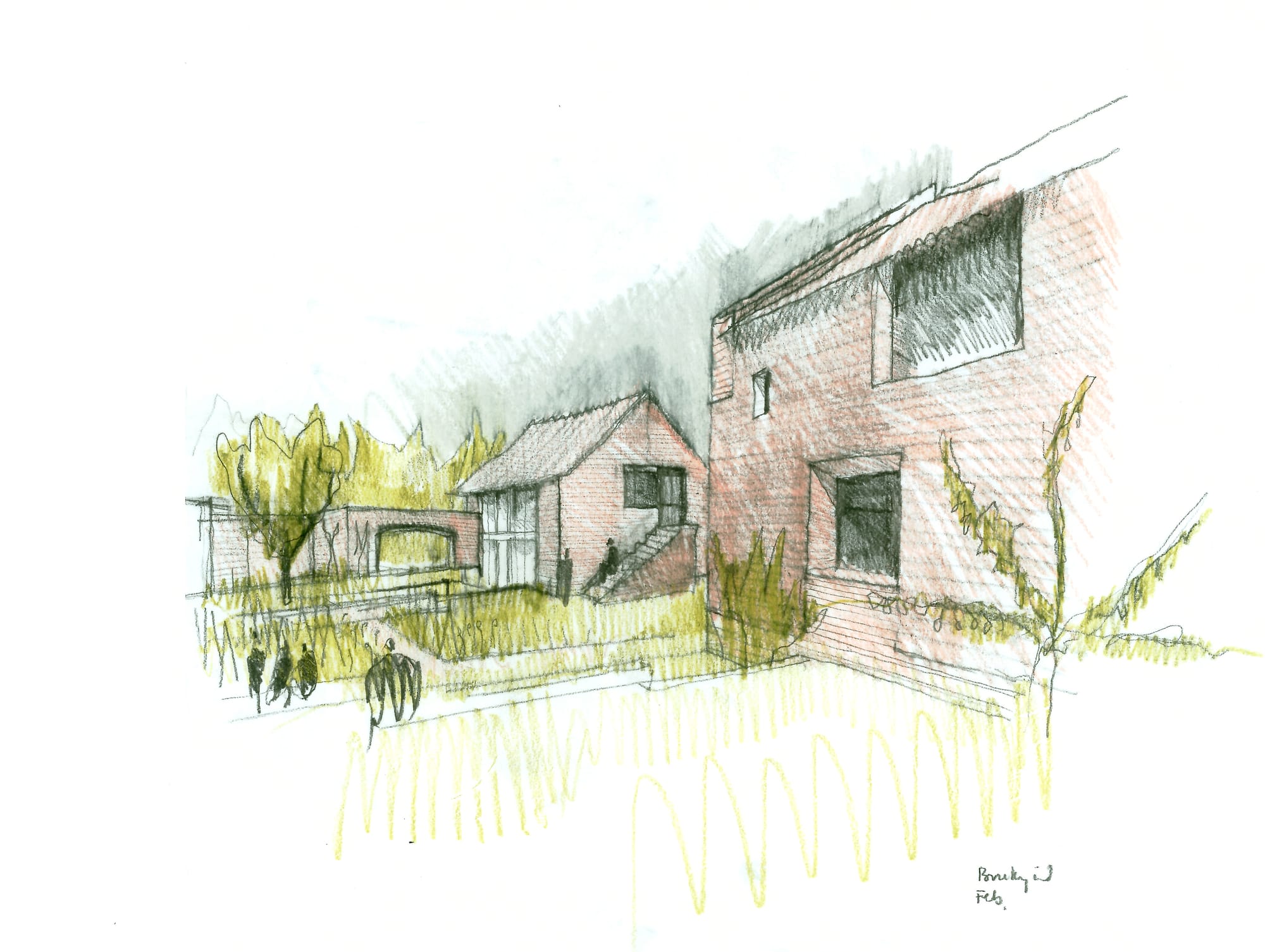
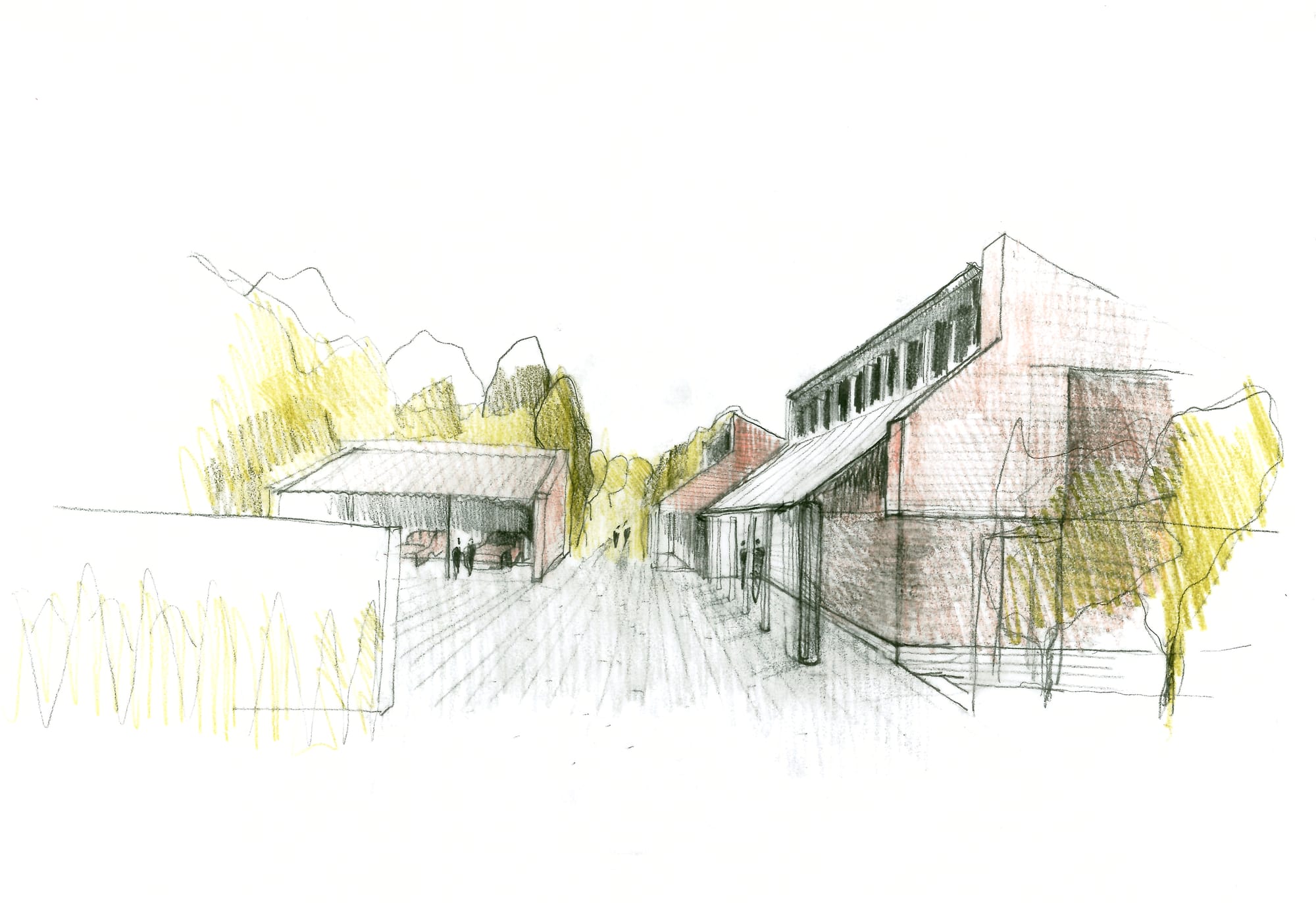
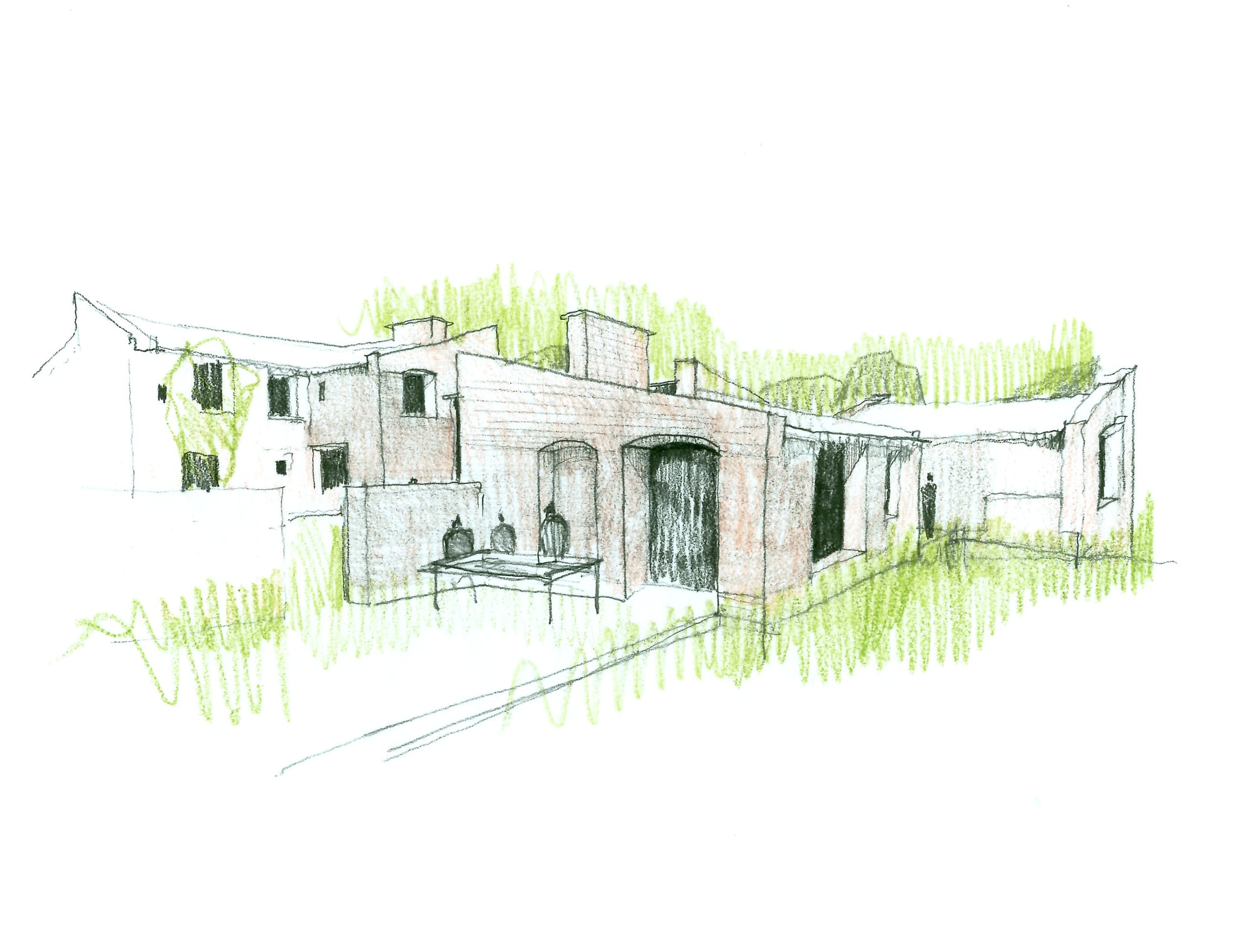
Rammed Earth House sketches by Tuckey Design Studio
Origins in earth
The site itself bears geological and industrial memory: once a 19th‑century brickworks, the practice’s research revealed that the good clay had long vanished, leaving imperfect deposits ideal for rammed earth. Victorian brick buildings were left in situ to be retrofitted by the practice as guest accommodation, while additions from the 1990s were demolished, creating the perfect aggregate for mixing with the clay. This paradox - where what is left behind proves most useful - sets the project’s tone. Material economy was both a necessity and ethos.
Rammed earth, an ancient building method, involves compacting layers of damp earth mixed with aggregate within temporary formwork. Global rammed‑earth pioneer Martin Rauch of Austria’s Lehm Ton Erde advised throughout, ensuring the unstabilised mix could endure the British climate. Travel restrictions during Covid forced collaboration online, while Rowland Keable advised construction company Stonewood’s craftsmen on the execution of meticulous trials at the site.
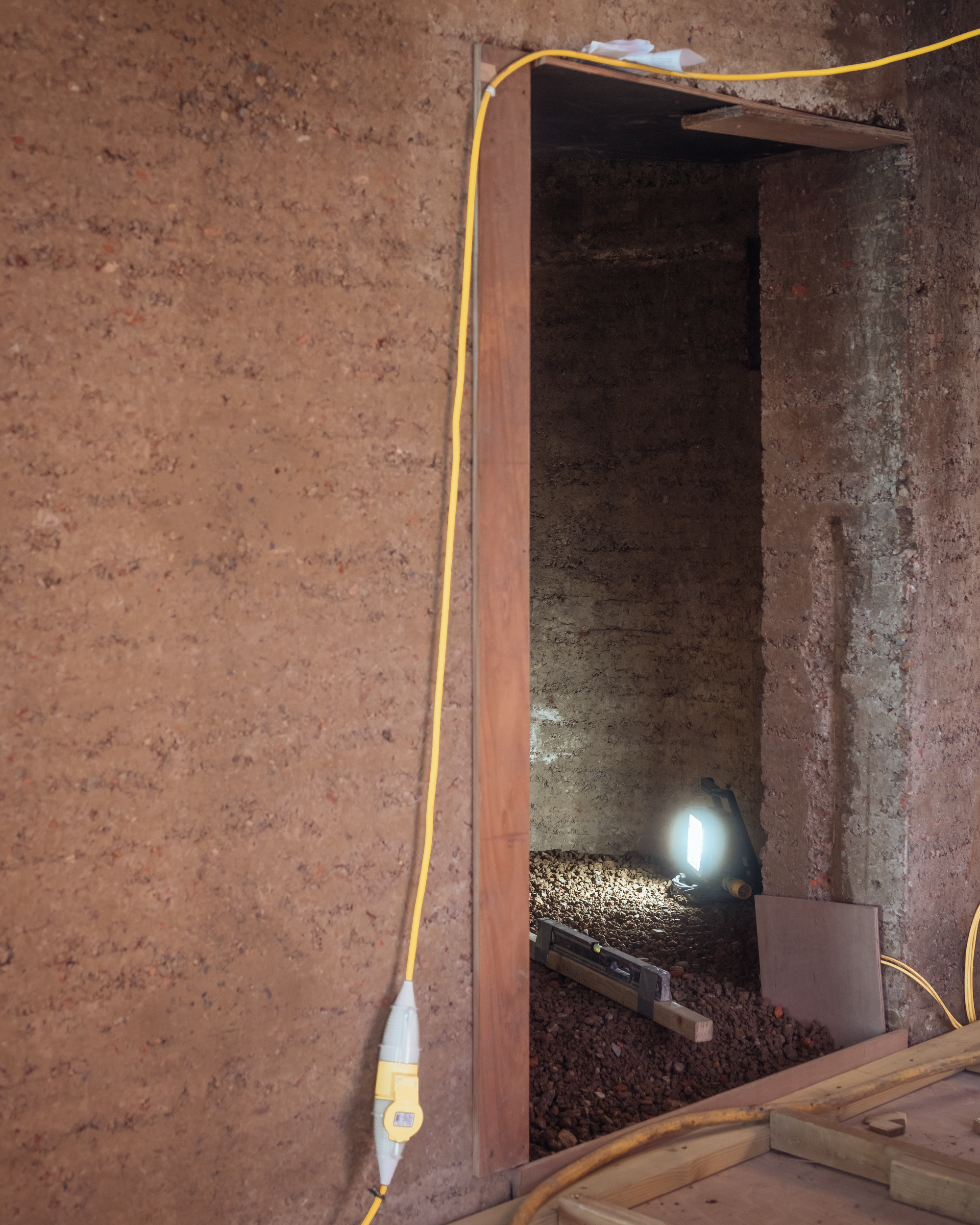
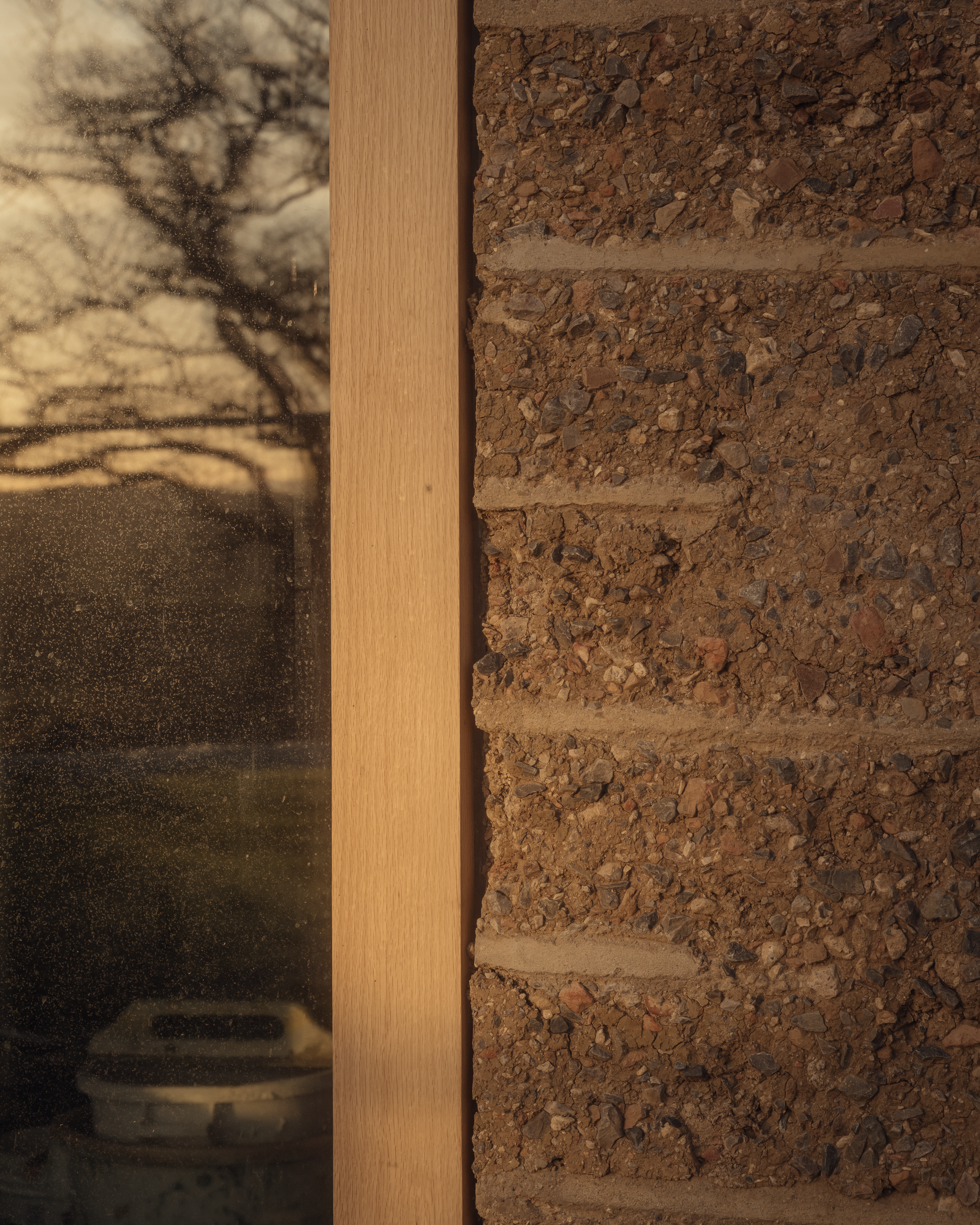
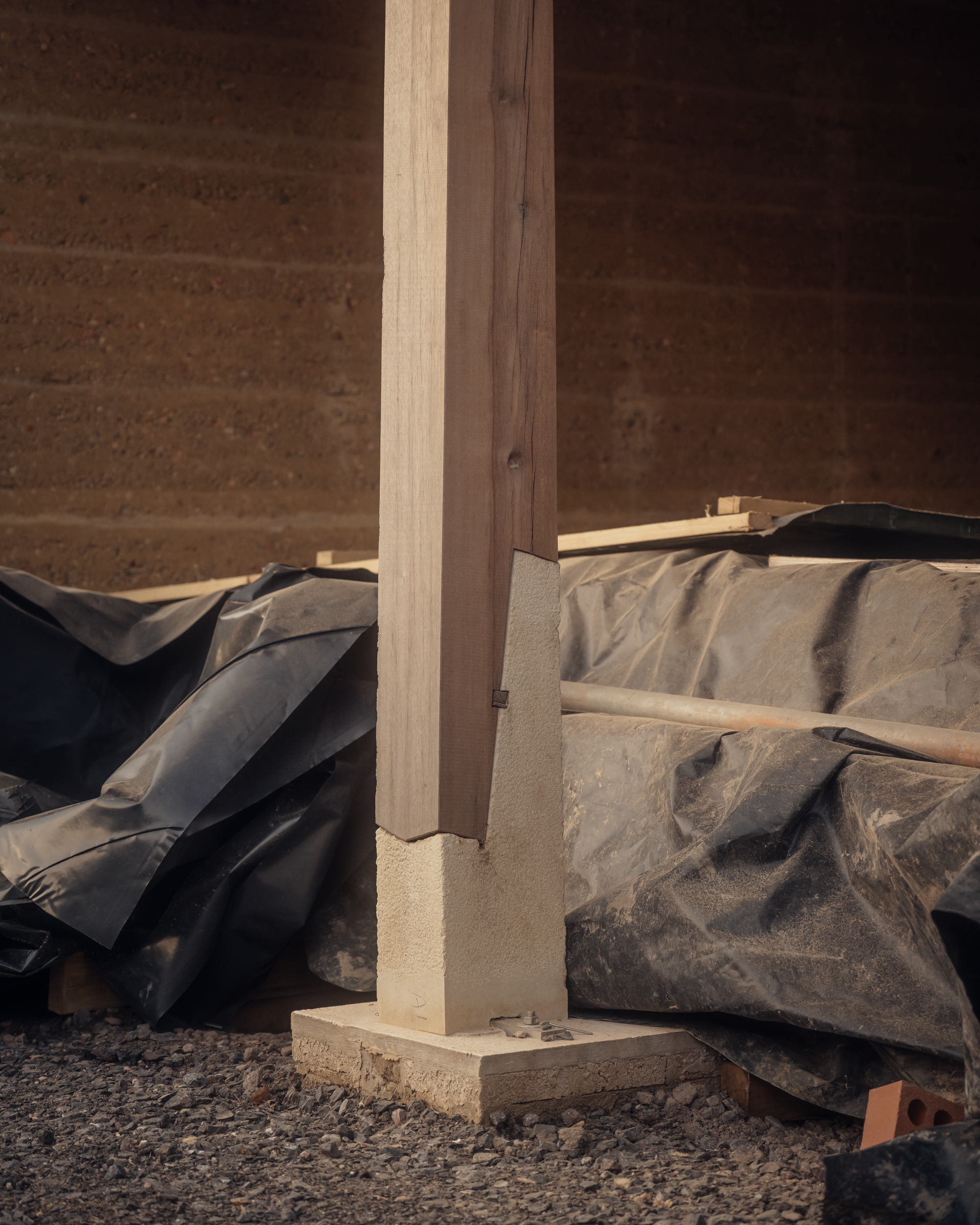
Rammed Earth House construction | Picture credits: Jim Stephenson
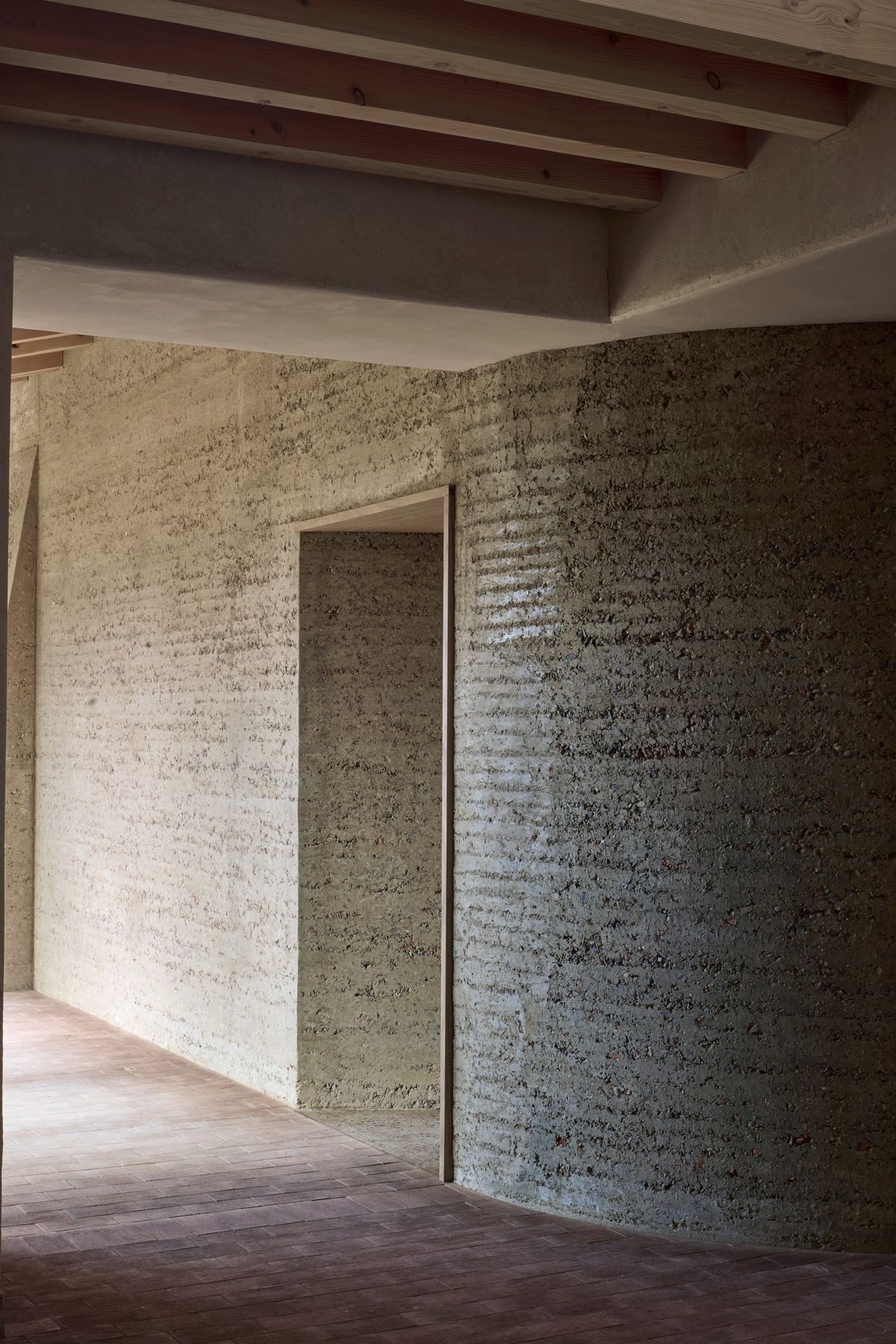
In a process driven by the practicalities of material availability, the team mixed equal parts of clay, crushed brick, concrete rubble, locally quarried limestone gravel and water to achieve structural strength without resorting to cement stabilisation. The site became a working quarry and laboratory: earth was sifted, weighed, rammed, left to dry for weeks, then adjusted by touch. The colour of the rammed earth is determined by the aggregate with samples ranging from a pale, almost white to grey. The team chose an earthy, sandy mix. Rauch’s deep knowledge of working in rammed earth, gained over years of experimentation, informed the detailing: stratas of sharp sand and lime mortar ‘speed checks’ arranged sequentially across the walls gently slows the rain. Overhanging brick gables protect the most vulnerable planes and a brick plinth prevents ground moisture from rising into the base.
A Wiltshire typology reimagined
In response to the site’s location in a protected National Landscape, the house draws lessons from Wiltshire’s dispersed farmsteads, where low forms of tractor buildings, granaries, dovecoats and stores cluster around successive courtyards. The architects inverted this agricultural typology into a domestic sequence of two walled gardens, one catching morning light from the east, the other evening sun from the west. This choreography creates ambiguity, with the boundaries of walls, gardens and interior rooms softened by the rammed earth’s textural continuity. The clients are keen and knowledgeable gardeners who wanted the garden to be as intertwined with the house as possible. Spaces were composed in conversation with the planting by garden designer Pip Morrison. Here doorways frame vistas of plant filled soil beds with the walled gardens functioning as climatic filters to modulate wind and light.
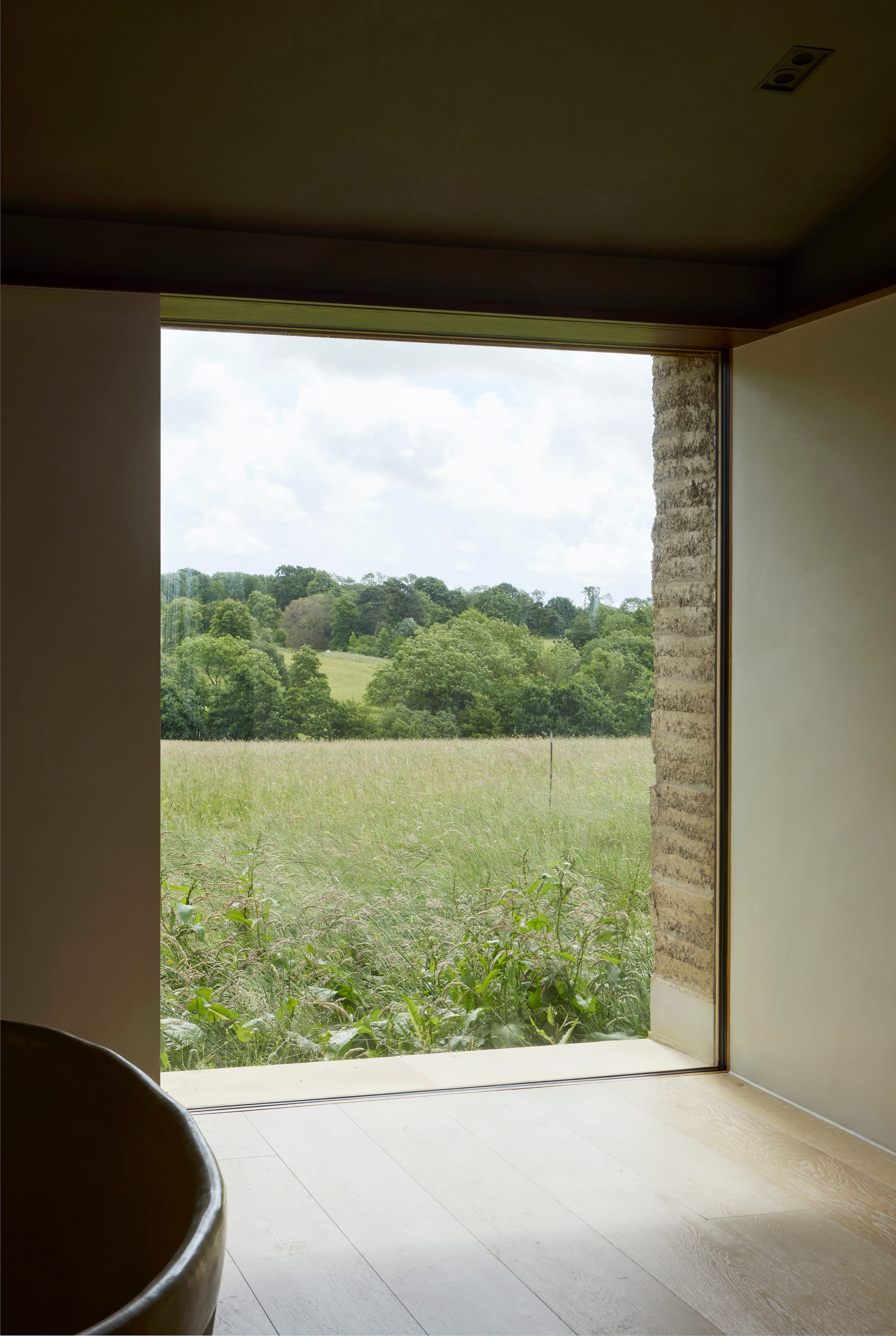
If the visible archeology of the walls are testament to the project’s collaborative craftsmanship, the material choices throughout illustrate the skill of trades turned experimenters. Timber specialists refined the use of oak externally, Douglas fir internally and walnut in the kitchen. Hardwearing greenheart wood - salvaged from disused coastal piers - form columns pegged into stone bases. Roofs are clad in cedar shingles and copper downpipes gleam like instruments against the walls. Chicksgrove limestone sills and lime-concrete mix lintels provide careful capillary breaks, protecting the unstabilised mix from moisture.
Close collaborators engineering practice Webb Yates looked at the performance value of the rammed earth. Their calculations accepted mild surface erosion as part of the design life, with 400mm thick walls engineered for 350mm, allowing for erosion without compromising structural integrity. As the engineer recalled, early anxiety over rain‑etched walls was countered by Martin Rauch reminding the team that ‘nature is the artist’. This acceptance of impermanence echoes his broader message: erosion is not decay but dialogue between weather and wall. The clients remained calm throughout.
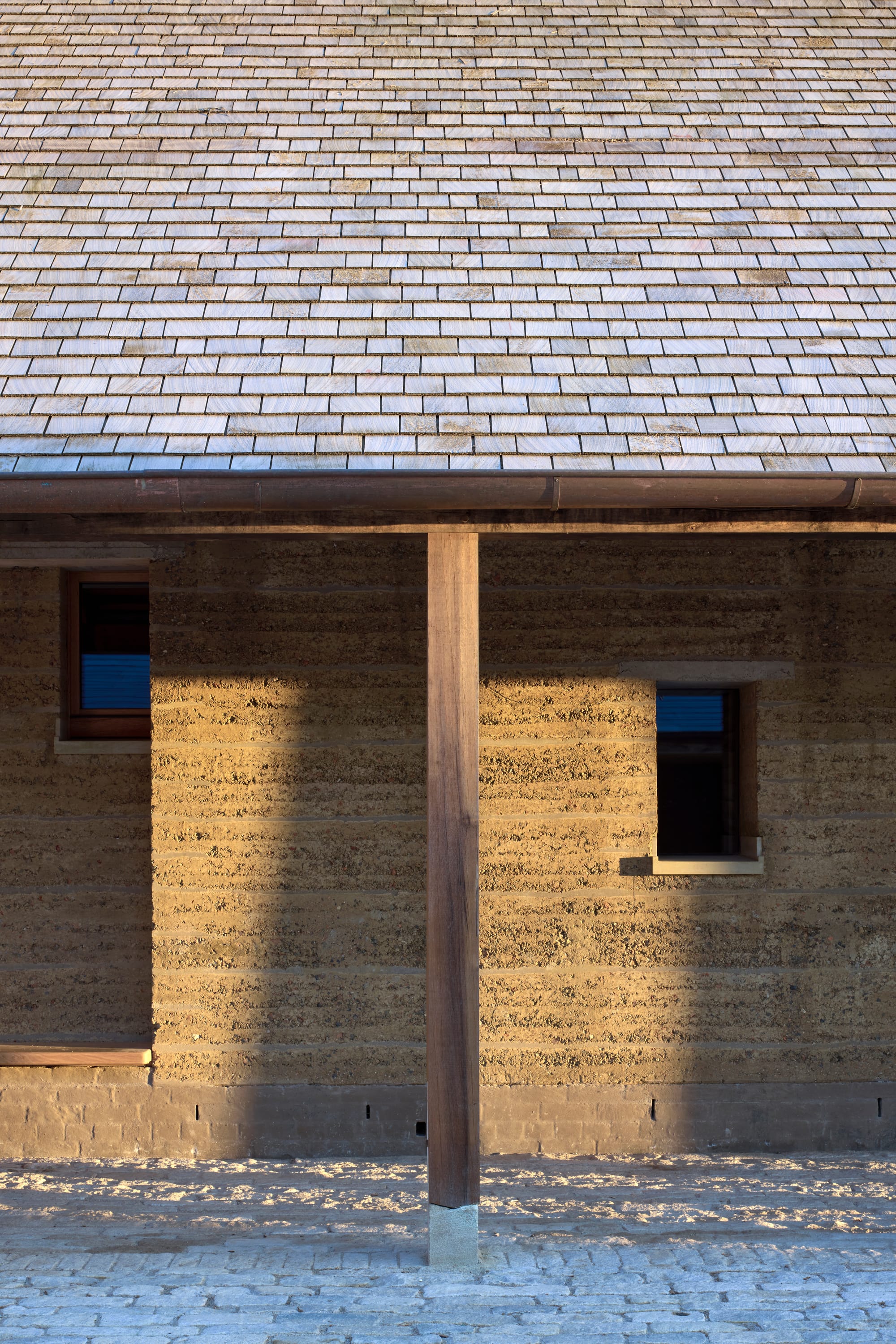
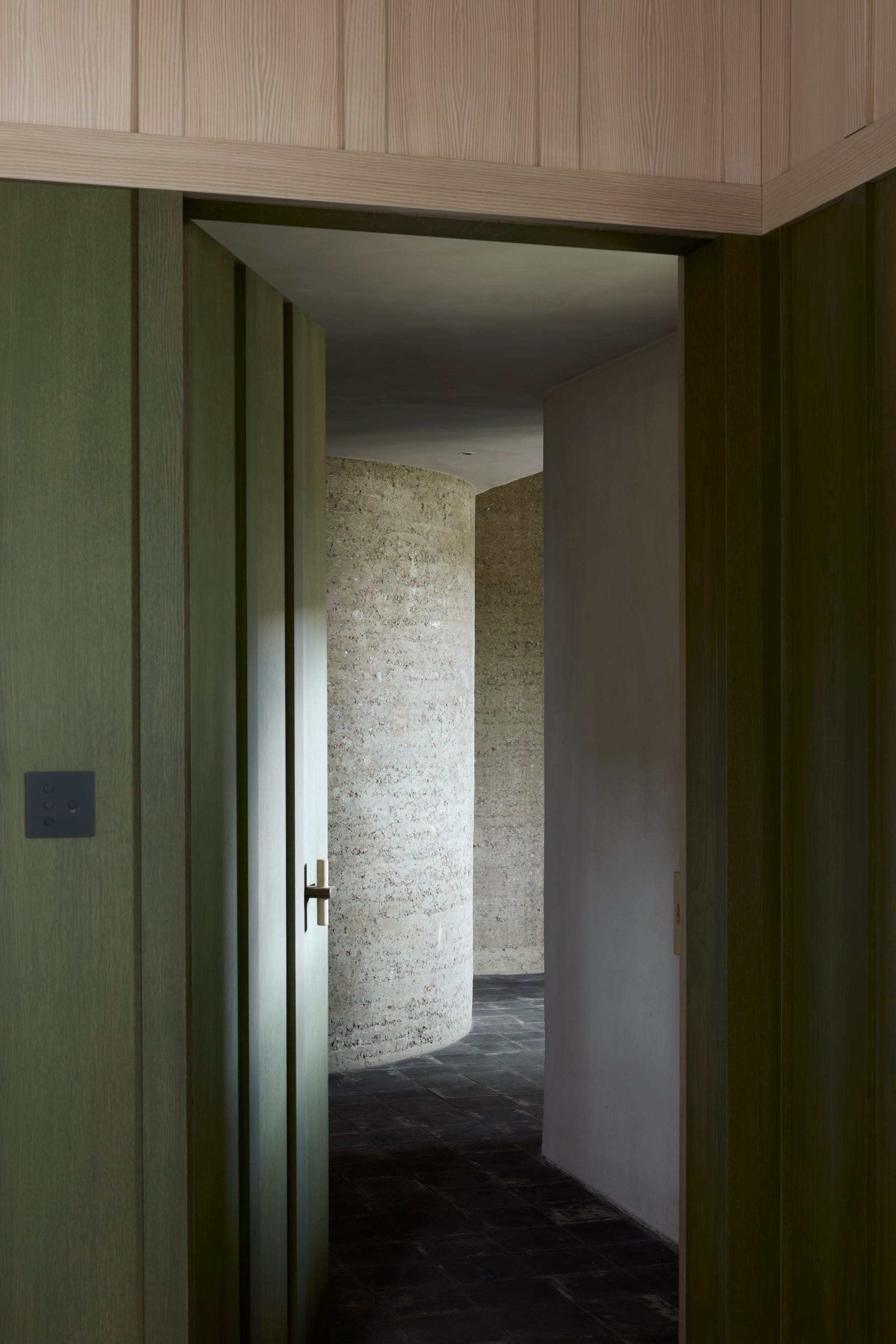
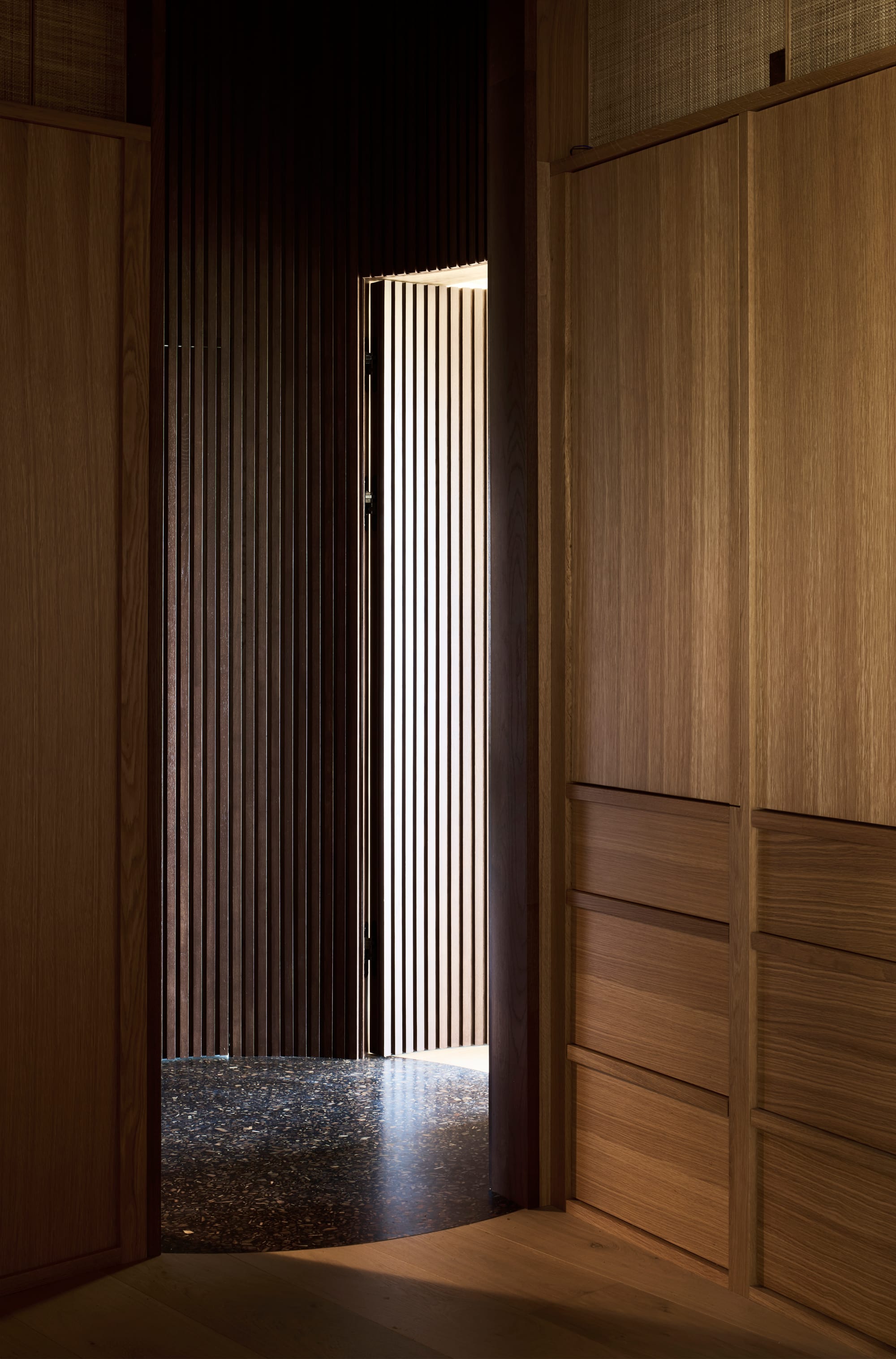
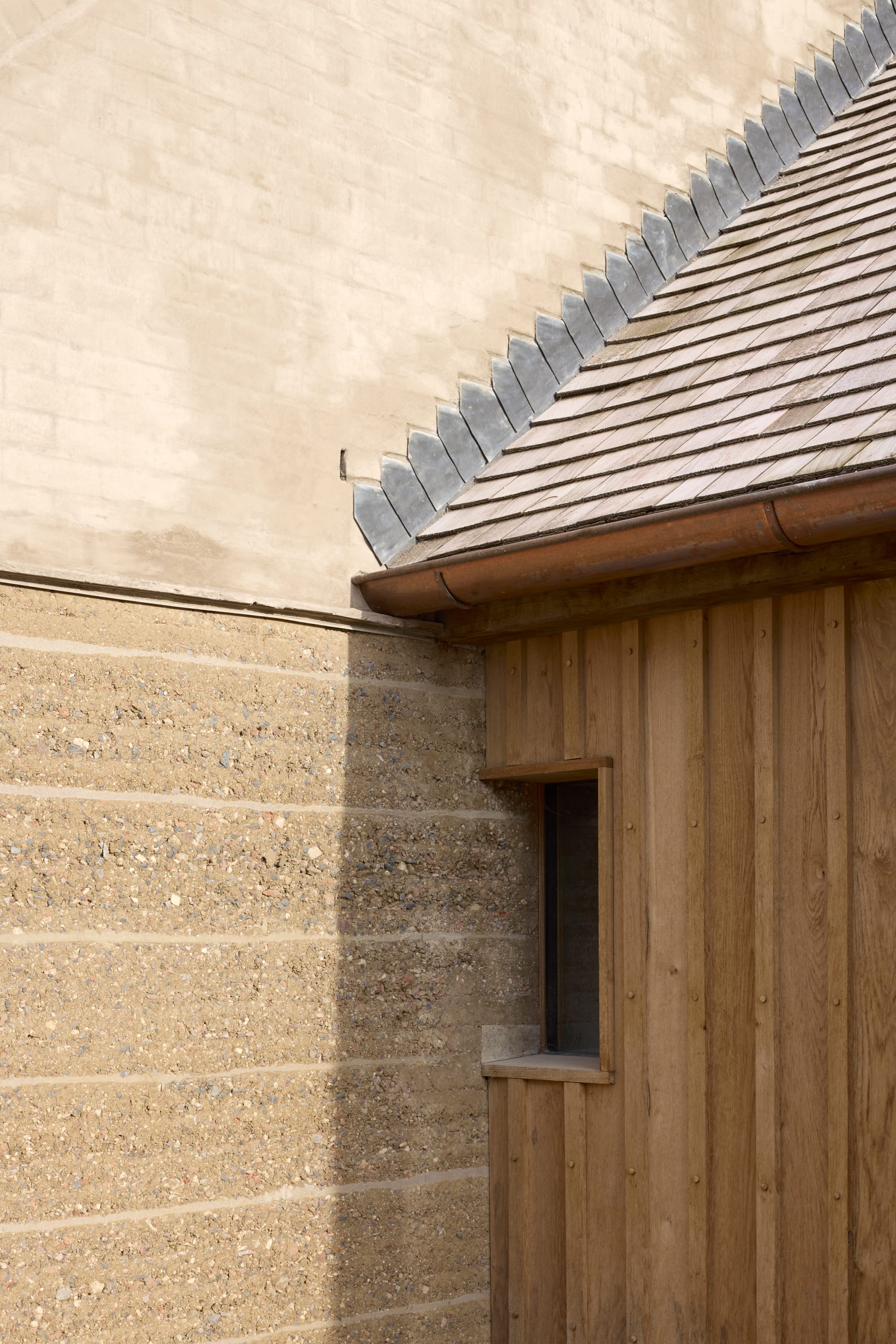
Rammed Earth House by Tuckey Design Studio | Picture credit: James Brittain
Inside, the light-filled house feels part excavation, part refuge. The rammed earth surface retains the archaeology of making, showing traces of shuttering, streaks from the compaction layers and subtle shifts of tone where batches meet. The walls’ thickness allows rooms to nest within their depth, with rafters embedded directly into the mass, and window reveals carved like grottoes. Breakout spaces and recesses punctuate circulation, creating moments for pause between rooms. Clayworks supplied Cornish clay plasters and lime finishes internally, while recycled wood fibre insulated the walls. A two‑storey curved staircase, rendered with a traditional milk‑based casein coating, twists upwards in a delicate counterpoint to the earth’s weight.
Interior Designers Todhunter Earle were appointed from the outset. Their sensitive design introduces softness through textiles and a palette attuned to the landscape’s muted greens and browns, while accommodating the clients’ eclectic furniture and art that narrates lives well‑travelled.
Layering of time
The house re-establishes rammed earth as a credible structural medium in Britain’s damp climate, proof that innovation can arise from re‑reading traditional intelligence within contemporary practice. Rather than resisting change, the house incorporates maintenance as part of its life cycle with repair as part of the craft; wetting the surface, pressing in new earth, letting it cure.
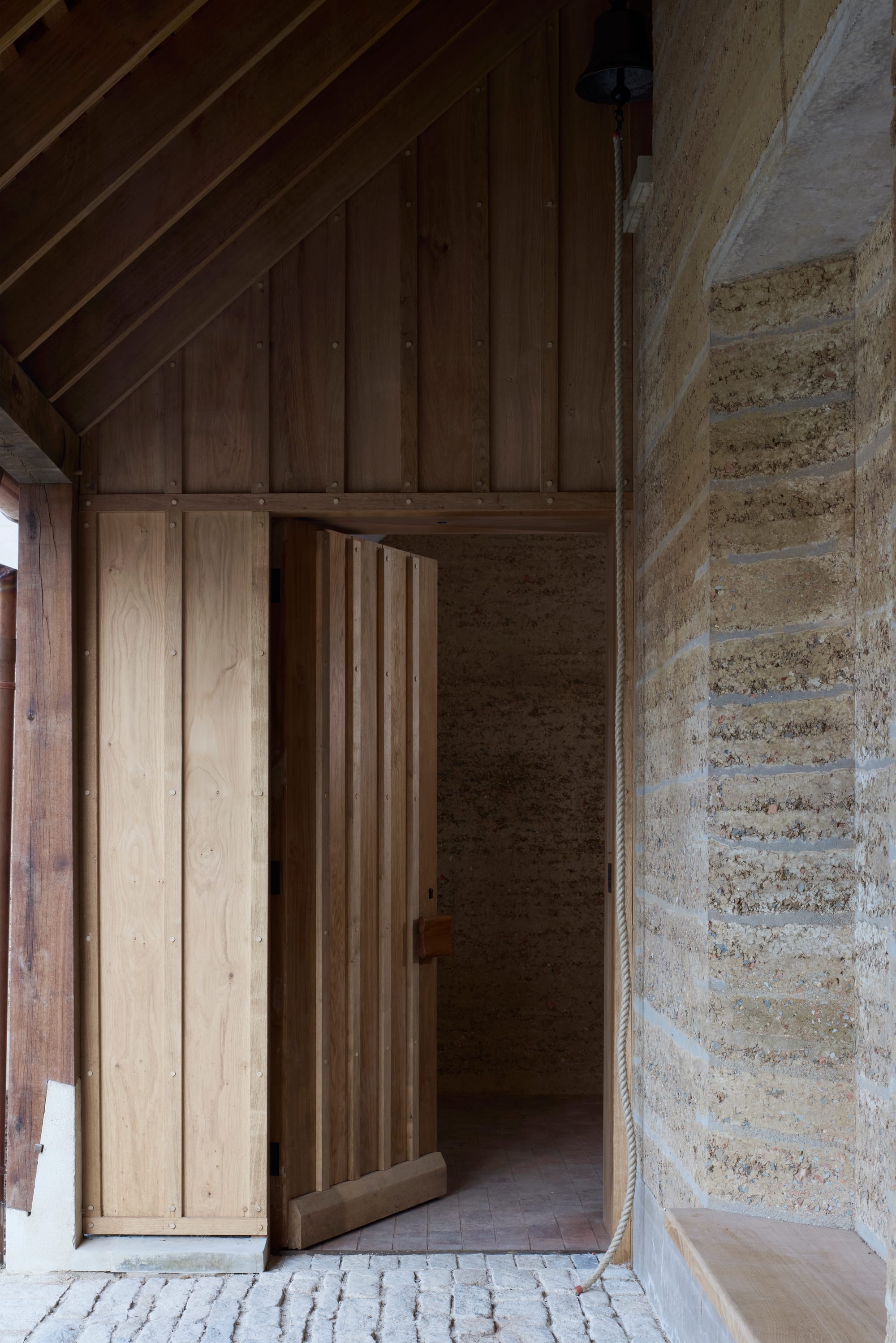
The architects are collaborating with Stonewood to investigate the use of rammed earth for prefabricated panels for terraced housing, with prefabrication proposed for sites near to where there is clay and construction waste. In Austria, half of Martin Rauch’s production is now prefabrication
For Tuckey Design Studio, the Rammed Earth House extends Building on the Built’s ethos into the ground itself by using the geological remnants of the land. The result is a home so self-assured that it could be centuries old or brand new. It is a structure that listens to the earth, honours its origins and, in doing so, rediscovers architecture as a conversation across time.