Constructing change: the circular economy building solution
The construction industry needs to change. The facts are unequivocal; not only are we rapidly depleting the world’s natural material resources, more than a third of waste in global landfill is estimated to be of demolition and construction origin. Challenging current linear practices from extraction, to construction, to waste, Scottish startup Kenoteq is reimagining the brick by creating a climate conscious circular ecosystem. The K-Briq will play a pivotal part in the transition to a low carbon future as a product that requires minimal changes to existing construction methods habits and importantly, is beautiful.
Reimagining the traditional brick
Kenoteq started life as an academic-industry collaboration at Edinburgh’s Heriot-Watt University led by Professor in Geotechnical and Geoenvironmental Engineering Gabriela Medero and Dr Sam Chapman. The pair joined forces with waste management specialists Hamilton Waste & Recycling Ltd who had come to the University in search of ideas to deal with recycled gypsum from waste plasterboard. Investment was sought to establish and staff a commercial scale production facility, push through construction product certification and so the K-Briq was born.
.jpg?s=1200&q=60)
Challenging the extractive and carbon intensive practices of the traditional brick industry with a product with the same performance and longevity but only 5% of the carbon emissions is a compelling narrative. Over ten years of research and development to create a fully circular solution from taking waste from the construction sector and returning it back to the construction sector as a product has paid off.
A circular approach
Head of Business Development Lucy Black is a passionate advocate of the K-Briq’s circular economy credentials. Lucy notes the brick’s ability to answer a lot of the challenges we are facing regarding waste. The built environment is responsible for 35% of Europe’s waste and 40% of all European material extraction with a huge amount of construction and demolition waste created not just in the UK, but globally every year. Due diligence revealed that Kenoteq could meet the UK's overall brick demand using recycled materials that already exist.
Making the bricks
The K-Briq’s environmental credentials are impressive; it requires no cement in its production, the brick is cured not fired and a range of colours negates the need for painting or surface treatments. The demolition waste for brick production is non-hazardous when removed from site, and is separated, screened and washed before processing, resulting in a certified inert recycled aggregate.
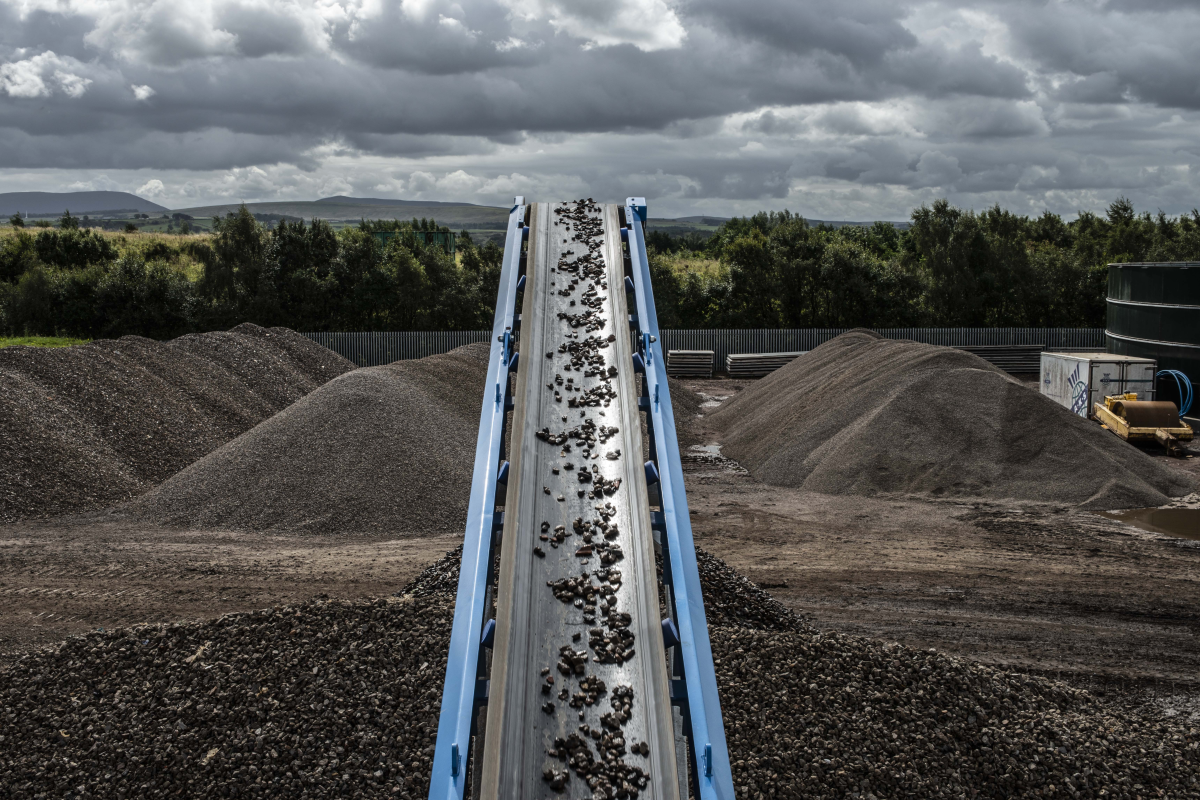
The final K-Briq with its added recycled gypsum and recycled pigments is made from over 95% recycled materials. Kenoteq have obtained regularity approval from the Scottish Environmental Protection Agency (SEPA), satisfying the agency’s ‘end of waste’ criteria, essential for turning building waste into a new product. The K-Briq has completed its full certification testing, with US product certification granted and European certification underway.
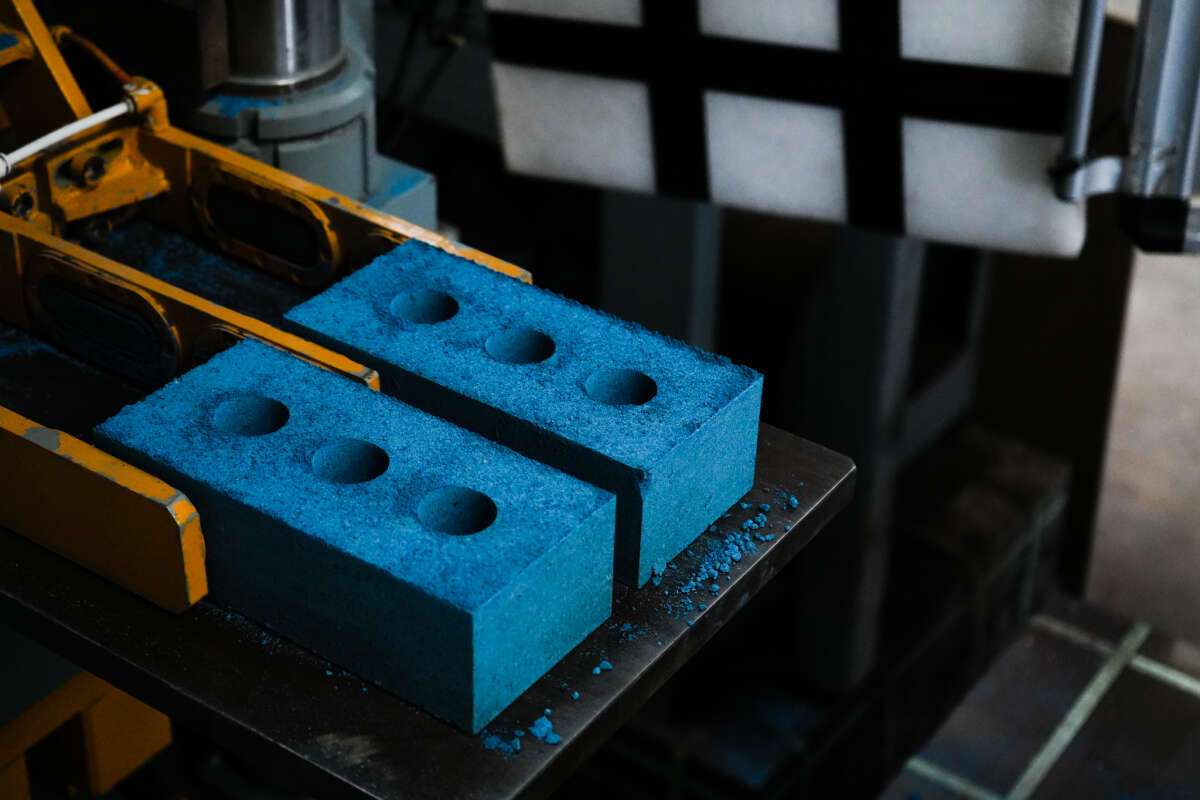
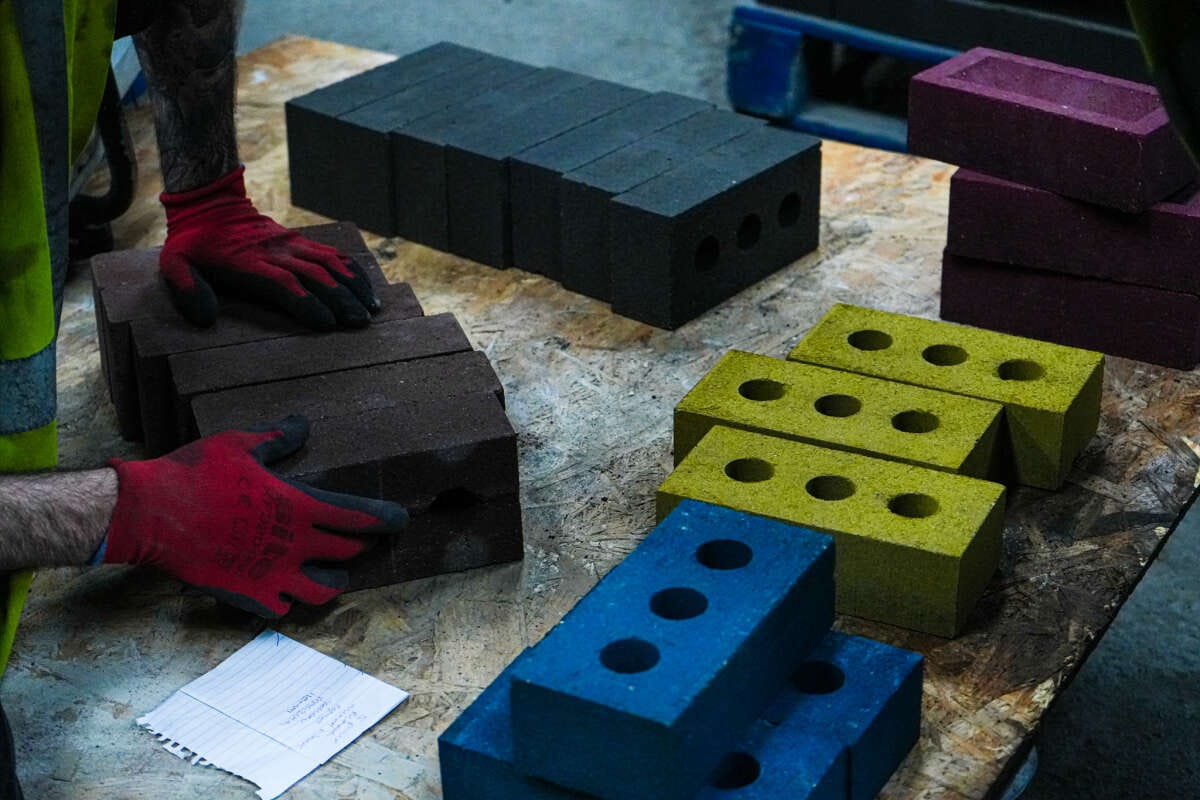
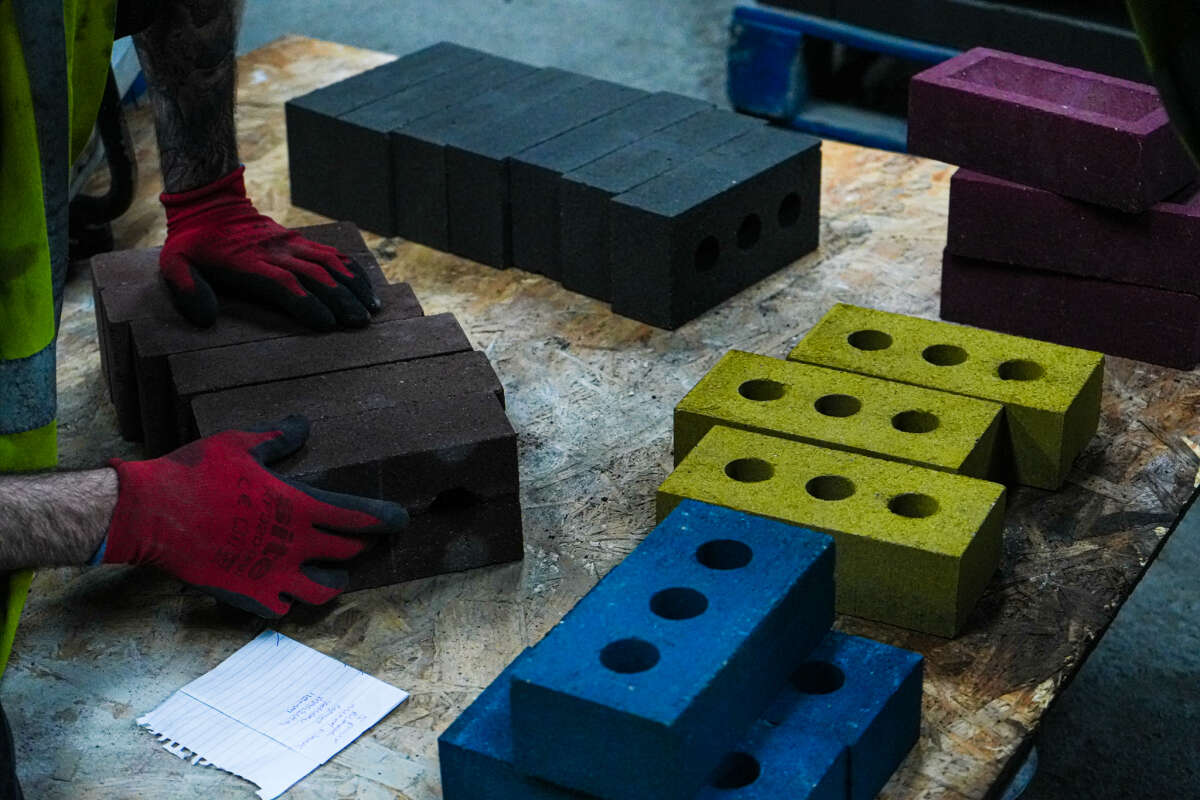
The K-Briq comes in a wide colour palette with contemporary greys and blacks, warm terracottas and rich yellows alongside more vibrant tones like cyan and magenta which are proving popular in the marketplace. Recycled non-toxic pigments are added to the product from the same source to ensure consistent technical performance. The K-Briq lays like traditional brick and traditional mortar can be used but the application of lime mortar is a more environmentally conscious choice.
Scaling the business
Kenoteq’s factory is capable of manufacturing 5 million K-Briqs a year, modest in terms of the UK's overall use at over 2 billion bricks a year but the concept is scalable. Future plans would see more regional production to benefit local circular supply chains with local waste recycled into locally manufactured K-Briqs. This avoids the transportation of both the waste materials and end product over long distances so keeps carbon emissions reduced, with local waste processed nearby to remanufacture it back into a K-Briq.
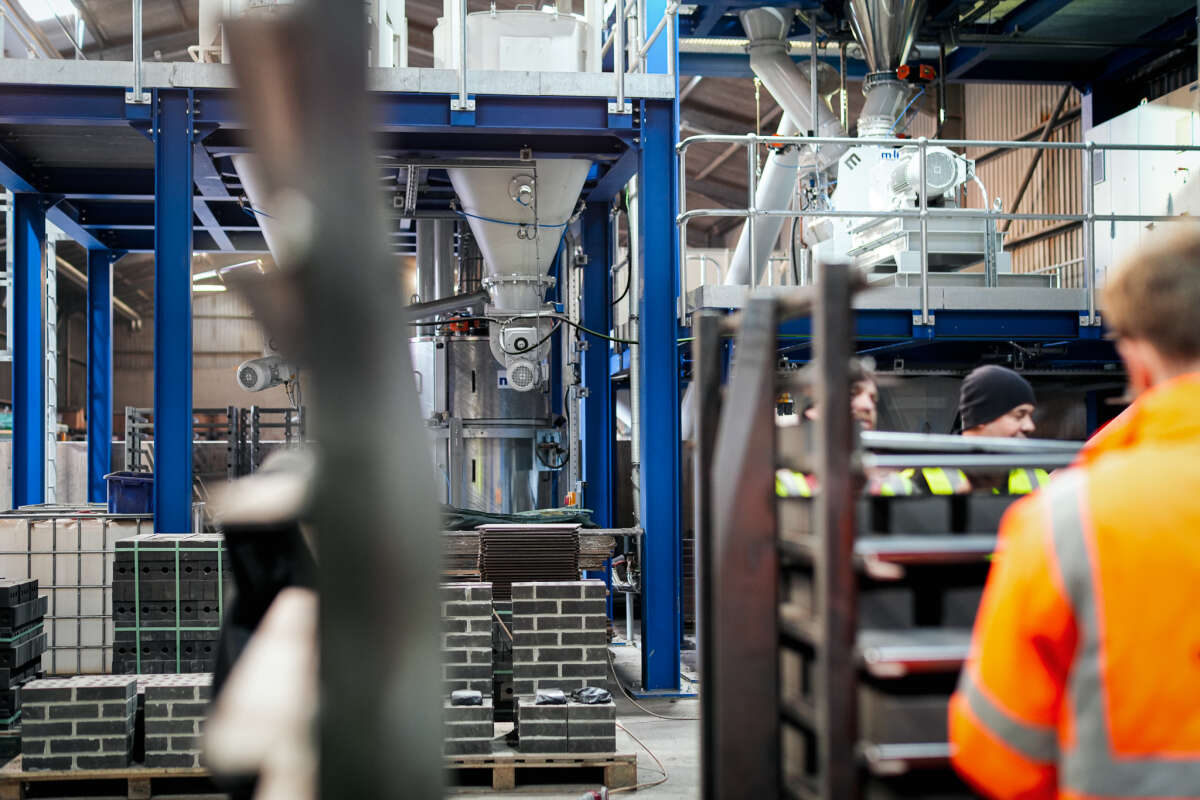
Lucy believes it's critical that Kenoteq has ambitions beyond being a single factory manufacturer and the company looks to maximise its technology to scale and ensure maximum environmental and low carbon impact of the K-Briq. The creation of local jobs with an environmental impact on local projects is an important benefit of the model. Kenoteq are looking at licensing or franchising the business model and the formulation in the future. For now, patents are in place that protect the manufacturing and composition of the K-Briq and manufacturing under license would therefore not compromise the integrity of the original K-Briq. The company would work with Environmental Protection agencies in different countries with known supply chains that adhere to regulatory and best practice to deliver a product of consistent quality.
Kenoteq is actively sharing the story of the K-Briq as they build up towards full scale commercialisation of the certified K-Briq, creating a huge amount of interest in the product and winning awards along the way. The K-Briq won the prestigious Dezeen Awards in Sustainable Design in 2022, a positive reinforcement they’re doing the right thing alongside capturing the imagination of the global public as well as the architect and specifier. The company is also part of the Scottish Construction Accord and has recently been invited to be part of King Charles’ Sustainable Materials Initiative.
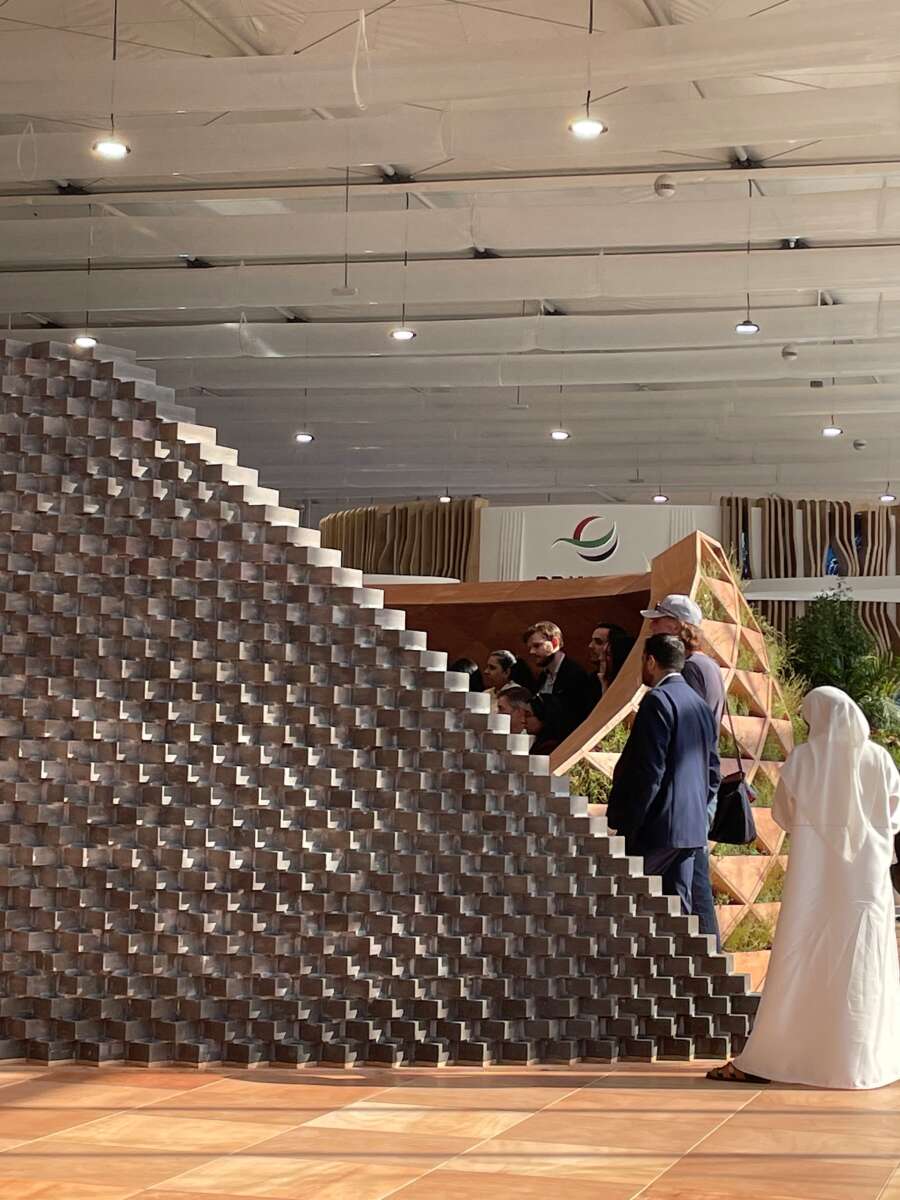
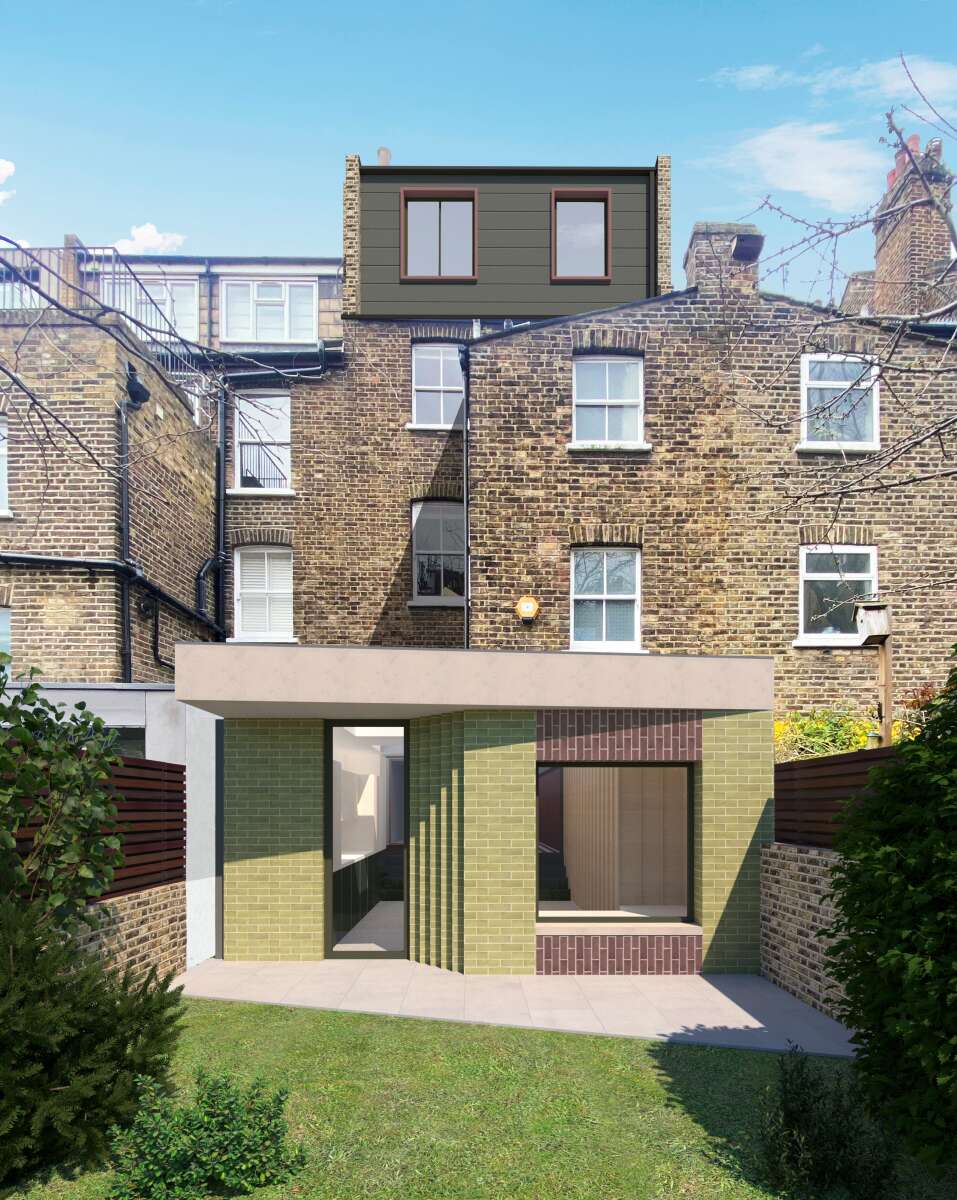
Left: COP28 K-Briq Pavilion, interior application. Right: Extension by Beyondd Design, exterior application. Image credits, Kenoteq
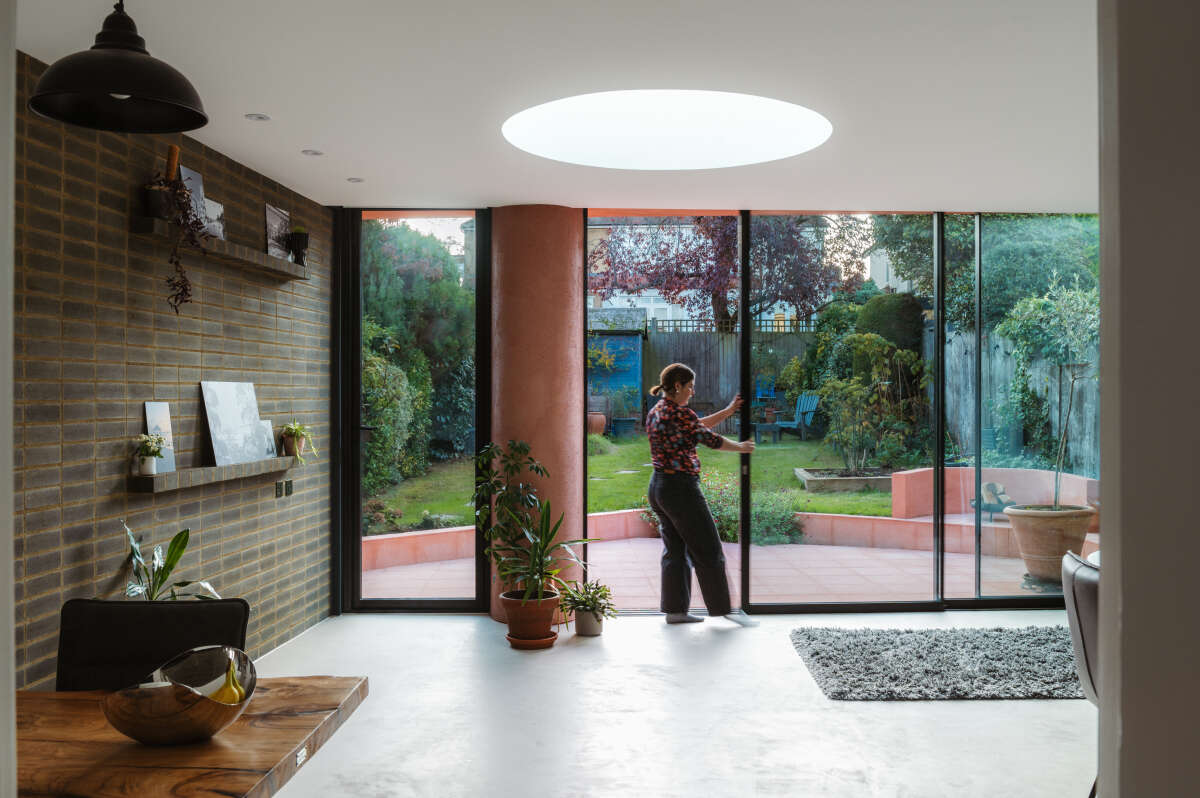
Kenoteq is building strong demonstrators that reveal the versatility of the K-Briq in different sectors. A Gullane Cyan K-Briq has been used in Germany by the Schwarz Group, Europe’s largest retail group and owners of Lidl and Kaufland, to create walls within the group’s flagship hypermarket store in terms of sustainable build, in Germany. Interest is coming from educational estates keen to embrace sustainable building materials to reduce carbon across universities and schools. Oaklands College in St Albans recently opened a new Construction Centre to provide teaching facilities for its construction skills curriculum and is one of the first projects in the UK to use the K-Briq in its facade. Selected as the masonry product for Scotland’s National Retrofit Centre, a deep retrofit of a large-scale industrial building, the K-Briq has been used to great effect in the lower plinth of the building.
Moving forwards, Lucy describes the challenge of keeping clients, specifiers and contractors on board during the journey to net zero and to mitigate against the use of cheaper, carbon heavy mainstream alternatives that might perform the same technically but are contributing to both the harmful extraction of raw materials from the planet’s finite supply, and to high carbon emissions. Kenoteq states their mission is to become a global leader in the world of ultra-low carbon sustainable building materials and with the hard work behind them, the future of the K-Briq looks bright.