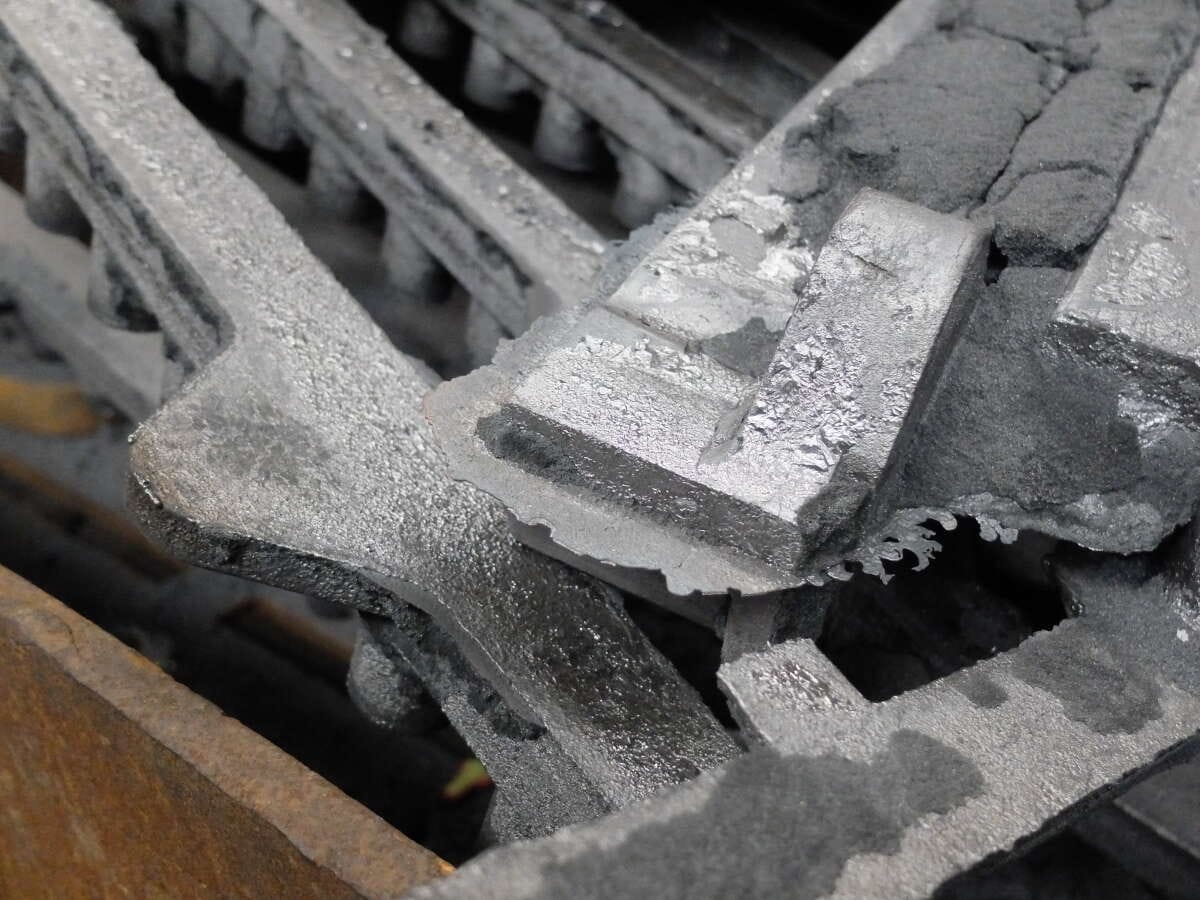
Cast iron production
Cast iron is a metal alloy, popular in architecture historically for its strength and flexibility to be cast into custom shapes. Although largely replaced by steel since the late 19th century, cast-iron is still produced for conservation projects and to a lesser extent new contemporary buildings, for example David Chipperfield's One Pancras Square. In this article, we discuss the basic stages in the production of cast-iron.
Raw Materials
Cast iron is produced with pig iron along with coke, limestone and often other raw materials. Coke, derived from coal, acts as both a heat source and reducing agent in the smelting process. Limestone is used as a flux to help purify the iron during smelting, removing impurities by forming slag.
Smelting
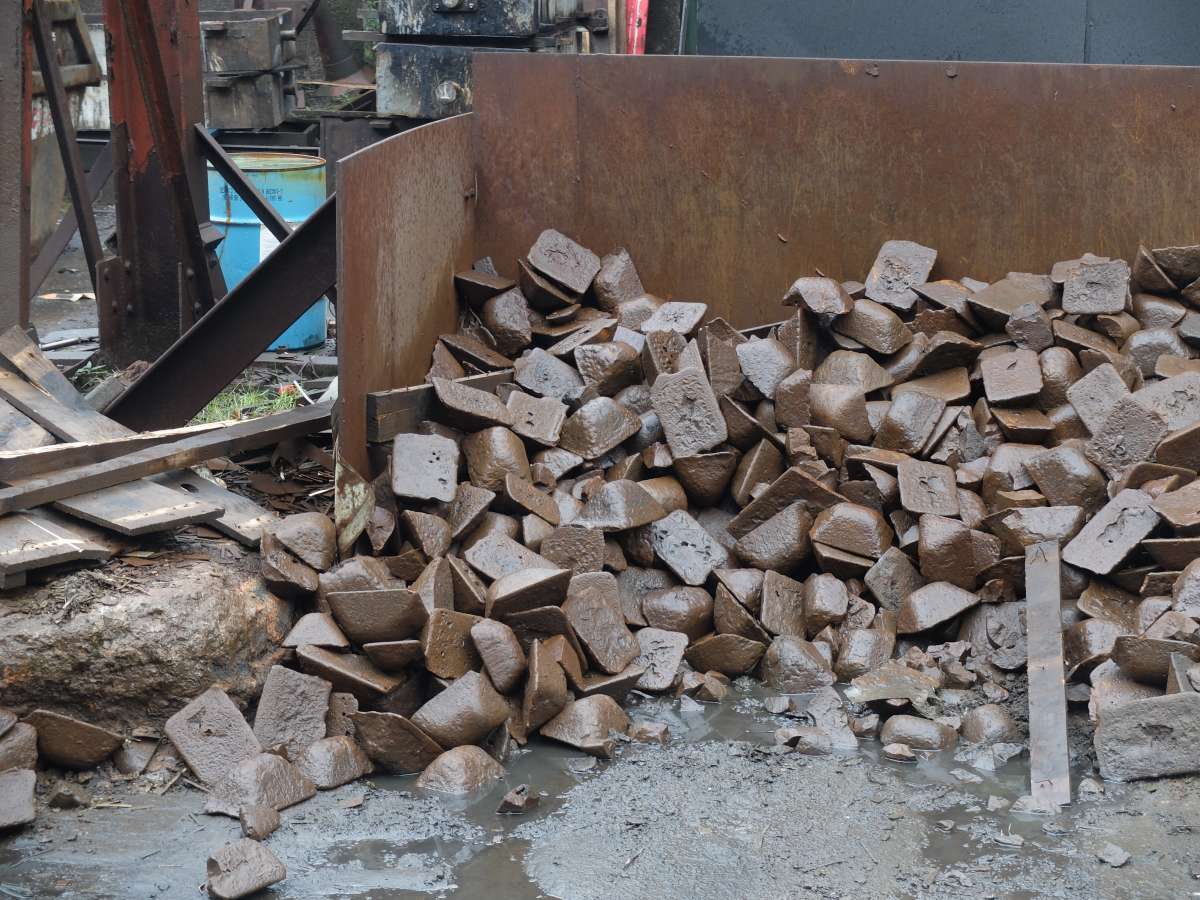
Smelting is the core process in cast iron production where raw materials transform into pig iron, the primary form of iron before it is either converted to steel or refined into cast iron. This transformation occurs in a blast furnace, where iron ore, coke, and limestone are layered and subjected to intense heat.
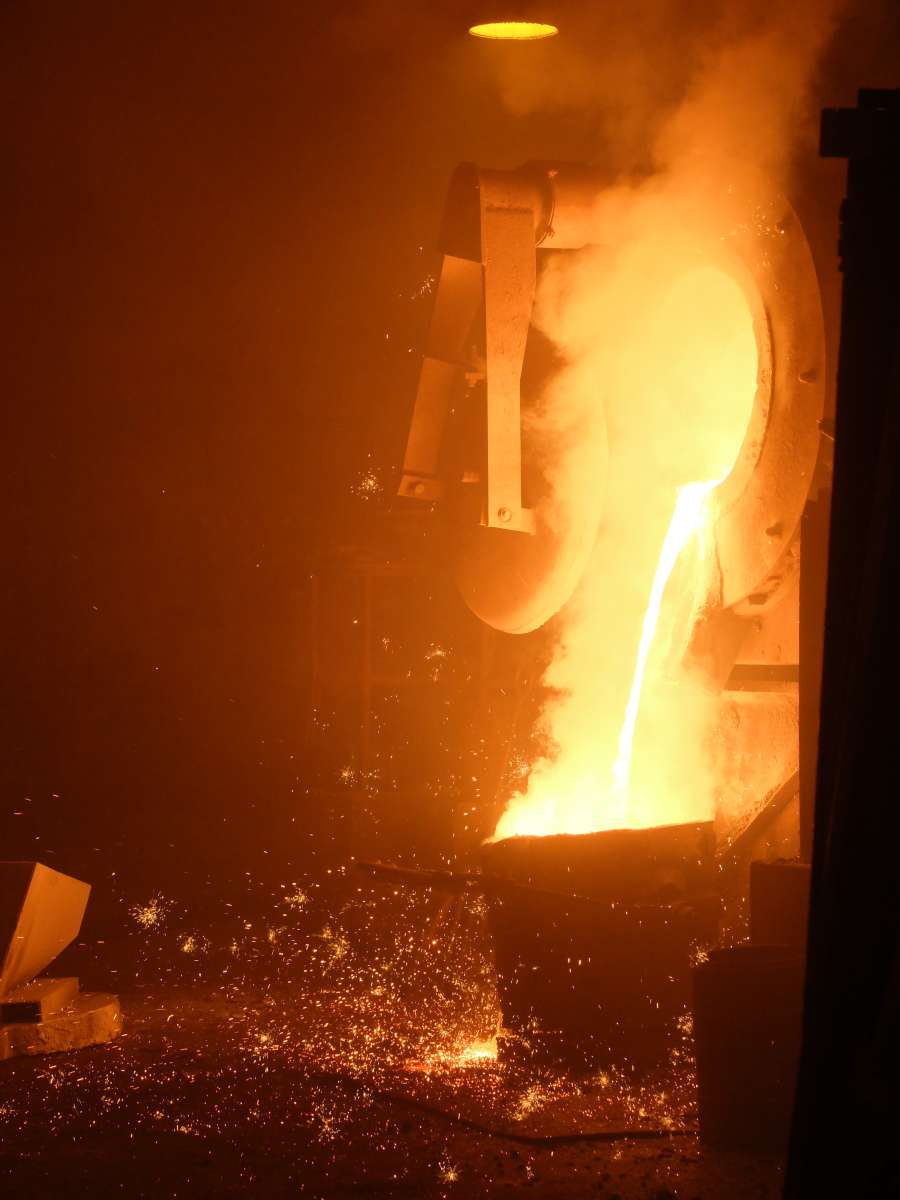
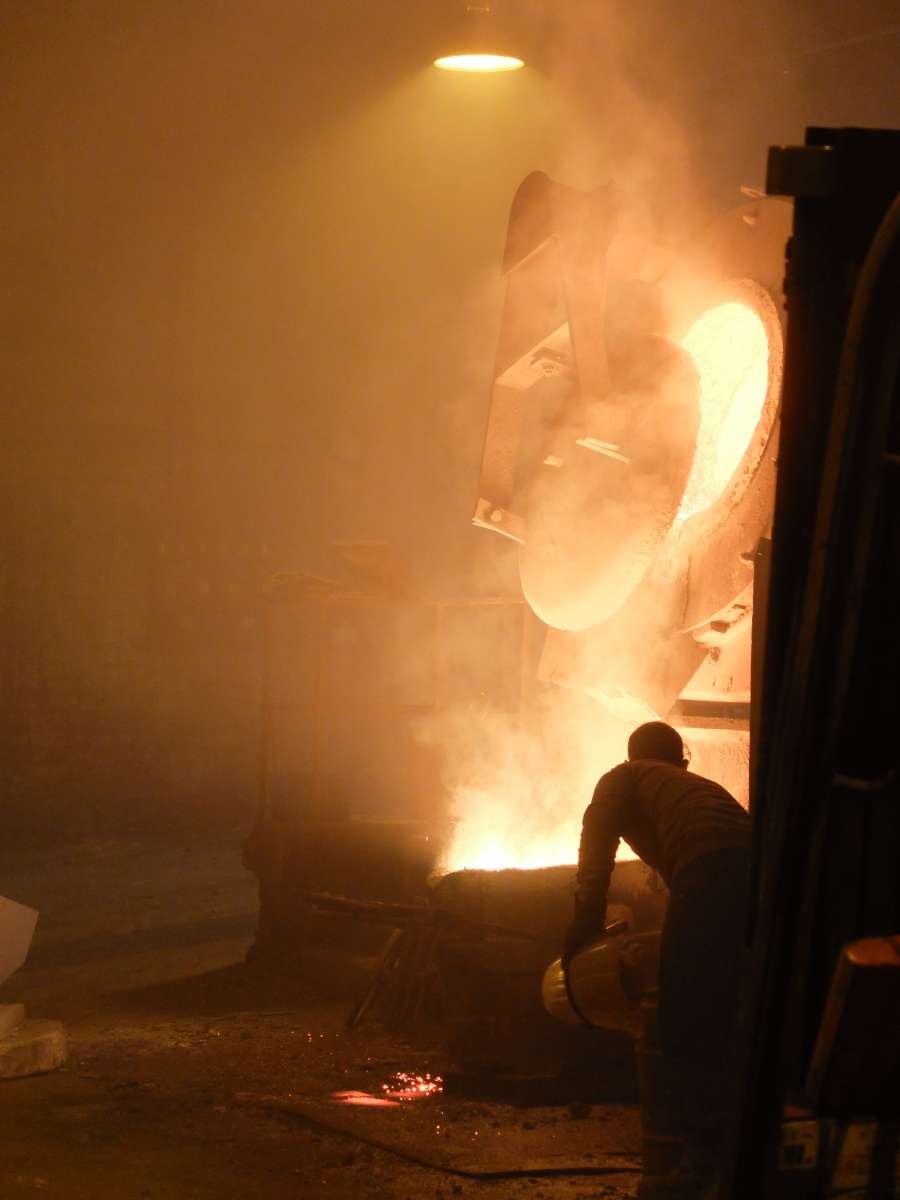
Blast furnace poring molten iron into the ladle
Casting
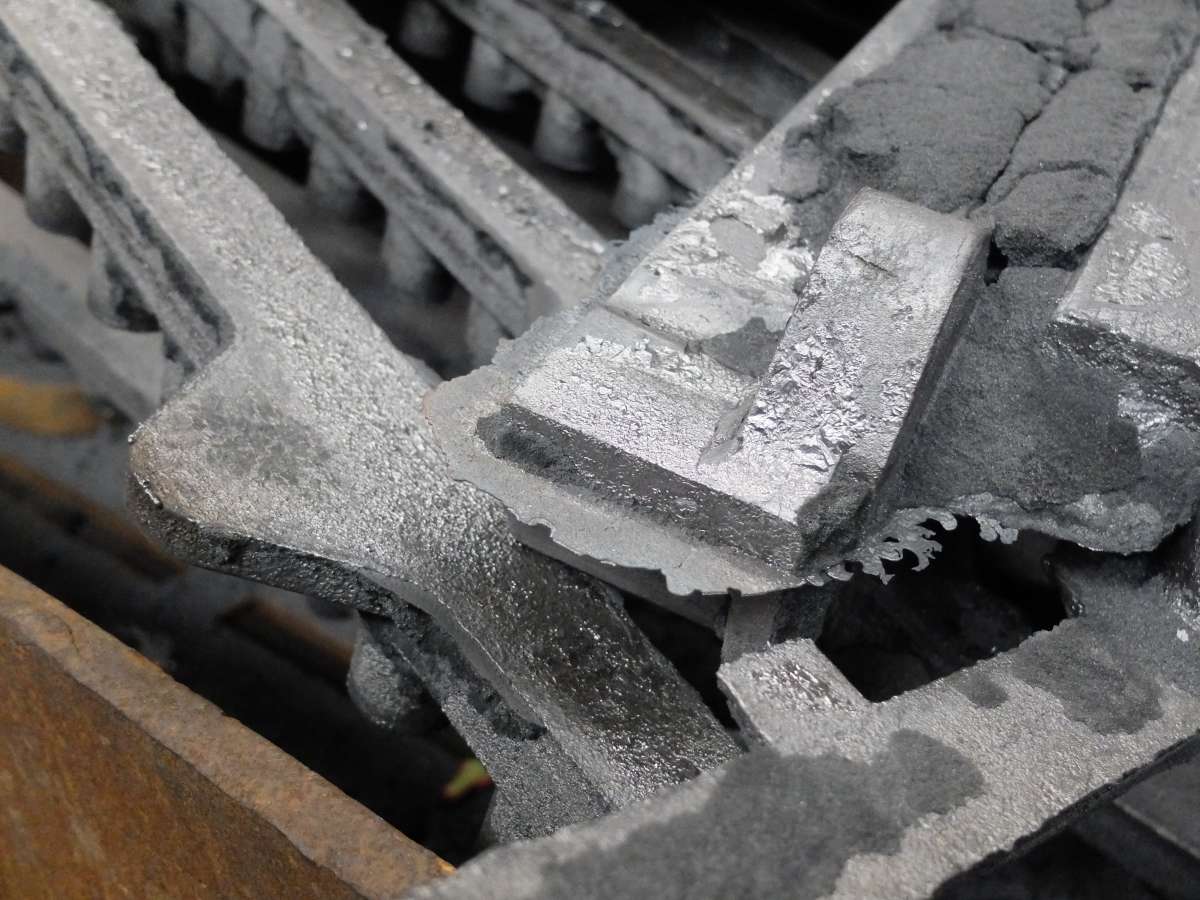
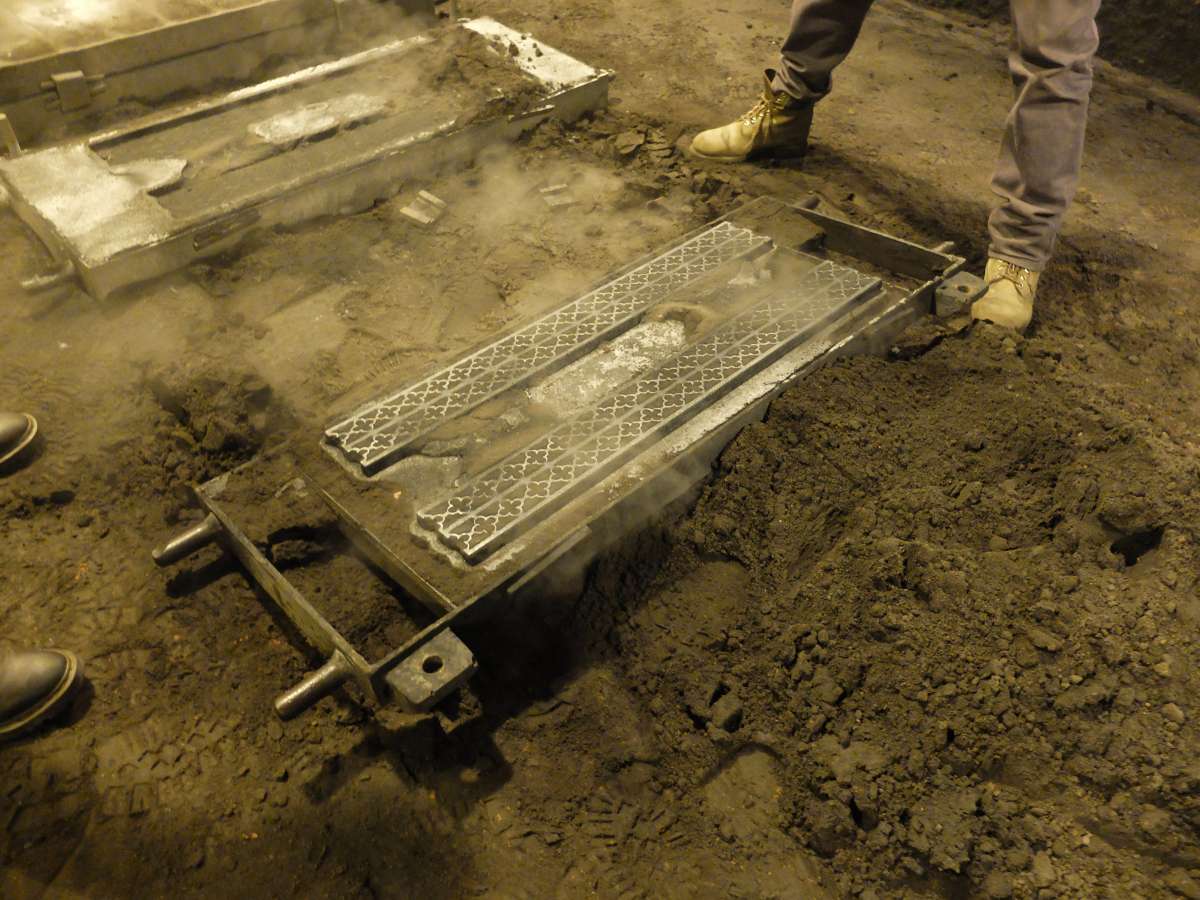
Molten cast iron is poured into sand moulds to form the shape of the element being produced. The mould itself is produced using a master pattern made from wood or aluminium, which is removed after sand has been compacted tightly around it in a moulding box (flask).
Finishing and Machining
After the cast iron has cooled and solidified, excess material from the casting process and flash is trimmed, and components may undergo various machining operations such as grinding, cutting, and drilling as required. Surface finishing techniques, including painting, galvanising, or powder coating, are applied to improve the appearance and increase the durability of the cast iron against environmental factors.